Why robot vacuum lifespan repairability matters more than raw suction
A robot vacuum should be a long term appliance, not a disposable gadget. When you look past marketing about suction power and obstacle avoidance, the real story is how easily you can repair the robot and replace worn parts over time. If you care about sustainability and cost effective ownership, you need to judge every vacuum cleaner by its repairability first and its shiny app features second.
Think about lifespan in concrete numbers rather than vague promises about a long runtime. A well designed robot vacuum running once a day on mixed floors should last at least five years, which usually means one or two batteries, several sets of brushes and filters, and a few minor repairs along the way. The brands that treat vacuums as durable cleaners rather than fashion items are the ones that keep parts and components available long after the marketing campaign moves on.
From a technical standpoint, the main limiter on robot vacuum lifespan repairability is the battery and how the robot manages battery charging. Lithium ion batteries lose capacity with every charge cycle, so a vacuum battery that is glued in or locked behind proprietary service menus turns a simple replacing battery job into an expensive professional repair. When a manufacturer designs the charging dock, internal wiring, and battery compartment for easy access, you can treat batteries as consumable parts instead of a reason to replace the whole robot vacuum.
Environmental impact is the other half of this equation, and it is not abstract. Every time a robot vacuum wins a place in your smart home but dies after two years, you send a large shell of plastic, motors, and electronic components to recycling or landfill, along with used batteries and piles of brushes and filters. A five year lifespan with occasional repair services cuts that waste dramatically, especially when you can repair robot models locally instead of shipping them across continents for service.
Regulators in the European Union are already pushing manufacturers toward better robot vacuum lifespan repairability through right to repair style rules. These policies, outlined in European Commission initiatives on sustainable products and ecodesign, do not just affect Europe; they shape global production lines, spare parts catalogs, and how long companies must support older robot vacuums with official repair service and customer support. If you buy a vacuum cleaner from a brand that already aligns with these standards, you are voting for a future where repairs are normal and throwing away a long serving robot after a minor fault feels as outdated as tossing a washing machine for a broken belt.
Brands, batteries, and the five year reality check
When you compare robot vacuums, the spec sheet rarely tells you how long the robot will stay repairable. You see suction in pascals, mapping features, mop washing modules, and obstacle avoidance sensors, but not whether you can still find batteries and parts three years from now. To judge real robot vacuum lifespan repairability, you need to look at brand behavior over time, not just the latest launch.
Premium brands such as iRobot and Roborock tend to keep components and official repair services available longer than many budget imports. You can usually order a vacuum battery, side brushes, main brushes, filters, and even wheels or sensors for Roomba and Roborock vacuums that are several generations old, which makes a five year lifespan realistic if you stay on top of cleaning and basic maintenance. By contrast, some fast moving Chinese brands cycle through models so quickly that vacuum repair becomes difficult after only two or three years because the exact parts vanish from their online stores.
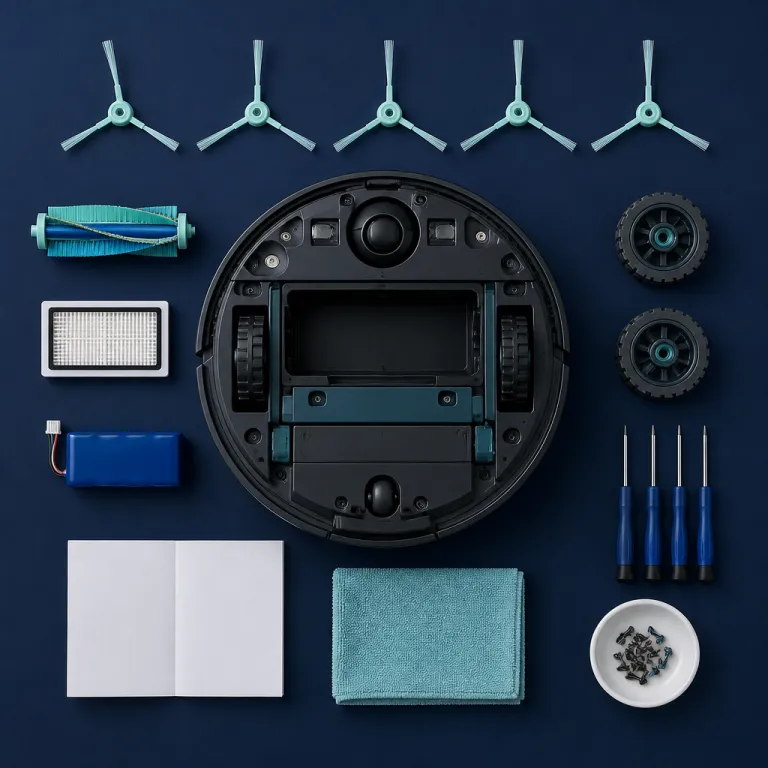
Battery replacement is where theory meets your living room floor. In a well designed robot vacuum, replacing battery packs is a ten minute job with a screwdriver, a new vacuum battery, and clear instructions from customer support or the manual. For example, many Roomba 600 and e series models use a battery compartment secured by a few Phillips screws and a pull tab, while some Roborock S series robots place the pack under a simple bottom cover. In a poorly designed cleaner the battery is buried under clips, hidden screws, or even glue. If you cannot access the battery without risking damage, you are effectively locked into professional repair or a full replacement when runtime drops below useful levels.
Cost matters as much as access, especially if you want a cost effective path to a long lifespan. A genuine battery for a mid range robot often costs between 15 and 25 percent of the original vacuum price, which is acceptable if you only need one or two over five years and can avoid extra repair services. As a reference point, official replacement packs for popular mid tier models frequently sit in the 60 to 120 dollar or euro range, while third party compatible batteries can be cheaper but may void warranties. The real red flag is when a brand only offers battery charging fixes or repairs through a central repair service at premium prices, because that turns a simple maintenance task into a major expense.
Before you buy, read the fine print on warranty and post warranty support. Some brands offer two year coverage on the robot but treat batteries, brushes, filters, and other wear parts as consumables with only a short guarantee, while others provide clearer timelines for both parts and labor. If you are shopping during a promotion, use guides about how to make the most of a robot vacuum sale for a cleaner home from specialist sites to balance upfront discounts against long term repair costs and the availability of local repair service.
How to read a spec sheet for repairability, not hype
Most product pages are written to sell you on features, not on robot vacuum lifespan repairability. That means you have to read between the lines and sometimes beyond the official website to understand how a robot vacuum will age in real homes. The goal is simple: you want a robot vacuum that you can repair, maintain, and keep cleaning for at least five years without heroic effort.
Start with the basics that manufacturers rarely highlight in big fonts. Check whether the vacuum cleaner has a user replaceable battery with visible screws and a documented procedure, because this single detail often decides whether your robot vacuums survive past the third year when batteries typically lose a big chunk of capacity. Look for exploded diagrams, spare parts listings, and clear naming of components such as wheels, sensors, brushes, filters, and mop washing trays, since these are the pieces most likely to need repairs.
Next, evaluate how the robot handles daily wear and common issues. A good design keeps hair away from wheel axles, allows easy access to the main brush for cleaning, and uses modular parts that you can swap without special tools, while a poor design hides screws, fuses components together, and turns simple cleaning into a chore. When a manufacturer treats every contact with customer support as an opportunity to sell a new model instead of offering straightforward repair services, that is a sign the vacuum will not win long term fans among owners who care about sustainability.
Real world testing from independent reviewers is invaluable here. Long term reviews of robot vacuum cleaners that truly work for real homes often mention how easy it is to clear clogs, reset the charging dock, or fix minor problems without sending the robot away for professional repair. Pay attention when testers describe how the robot behaves after months of dust, pet hair, and repeated battery charging cycles, because that is when design shortcuts around repairability start to show.
Finally, consider how the robot integrates into your broader cleaning routine and home layout. If your floors are mostly hard surfaces, a simpler vacuum with reliable obstacle avoidance and robust components may outlast a feature packed model that tries to combine vacuum and mop washing but uses fragile parts. The best robot vacuums for long term ownership are often the ones that treat cleaning as a daily, repeatable task rather than a flashy demo, and that philosophy usually shows up in how they handle vacuum repair, spare parts, and long term support.
Troubleshooting common issues without killing your robot’s lifespan
Even the best designed robot vacuum will eventually run into problems, especially in busy homes with pets, kids, and clutter. How you respond to those issues can either extend robot vacuum lifespan repairability or quietly shorten it by stressing components and batteries. Treat every fault as a chance to learn how the vacuum works rather than a reason to give up and replace it.
Power and charging issues are the most common complaints and the easiest to mishandle. If your robot vacuums start missing the charging dock or fail to start battery charging reliably, resist the urge to keep rebooting and instead inspect the contacts, clean them with a dry cloth, and check for bent metal or debris, because poor contact forces the vacuum battery to work harder and shortens its life. When runtime drops sharply, log how long the robot runs from a full charge and compare that time to the original specification before deciding whether replacing battery packs or seeking professional repair makes sense.
Navigation and obstacle avoidance problems usually trace back to dirty sensors or worn mechanical parts. Regular cleaning of bumpers, cliff sensors, and LiDAR windows, along with untangling hair from wheels and brushes and filters, prevents the robot from working its motors harder than necessary and protects the long term health of internal components. If the vacuum cleaner starts leaving uncleaned patches or spinning in circles, check for stuck wheels or damaged parts before assuming a fatal software fault that requires a full repair intervention.
Noise, scraping sounds, or sudden performance drops often signal that something physical is wrong. Stop the robot, flip it over, and inspect every moving part, including side brushes, the main brush, and any mop washing module, because a small stone or toy can chew through plastic housings and turn a cheap fix into an expensive repair service. When you cannot identify the cause, a local professional repair shop that handles vacuum repair for multiple brands can often diagnose issues quickly and tell you whether repairs are cost effective compared with replacement.
Throughout the life of your robot vacuum, keep records of every repair, spare part, and interaction with customer support. This log helps you judge whether the brand is living up to its warranty promises and whether their repair services remain accessible as the robot ages, which is crucial if you want a long robot lifespan rather than a short, frustrating ownership cycle. Over five years, a pattern of transparent support, available parts, and sensible repair costs matters more than any single feature on launch day.
Key figures on robot vacuum longevity and repairability
- Market research from multiple European Union policy briefs and technical studies on small appliances shows that batteries account for roughly 30 to 40 percent of robot vacuum failures after three years of use, which makes accessible battery compartments and affordable replacement packs the single biggest factor in extending lifespan.
- Analysts tracking the small appliance aftermarket, including firms such as Mordor Intelligence and Coherent Market Insights, report that sales of replacement parts for robot vacuums, including brushes, filters, and wheels, have grown at double digit annual rates, indicating that more owners are choosing repairs over full replacement when parts and repair services are easy to find.
- Lifecycle assessments published by European environmental agencies and academic research groups estimate that extending the average robot vacuum lifespan from three to five years can cut associated electronic waste by up to 40 percent per household, mainly by reducing discarded batteries, motors, and plastic housings.
- Consumer surveys in Europe and North America, cited in right to repair consultations and market reports, consistently show that more than half of robot vacuum owners would pay extra for models with guaranteed spare parts availability for at least seven years, yet only a minority of brands currently publish clear commitments on long term components support.
- Field data from independent repair networks indicates that simple professional repair jobs such as replacing battery packs, wheels, or charging contacts typically cost between 15 and 35 percent of the price of a new robot, which is significantly more cost effective than upgrading every two years when repairable options exist.
Further reading and references
Mordor Intelligence – reports on household appliance sustainability and repairability trends in the European Union, including data on spare parts growth and consumer expectations.
Coherent Market Insights – analyses of the global robot vacuum market, including aftermarket and spare parts growth, battery replacement trends, and brand strategies.
European Commission right to repair initiatives – official policy documents outlining future requirements for appliance repairability, parts availability, and minimum support periods for products such as robot vacuums.