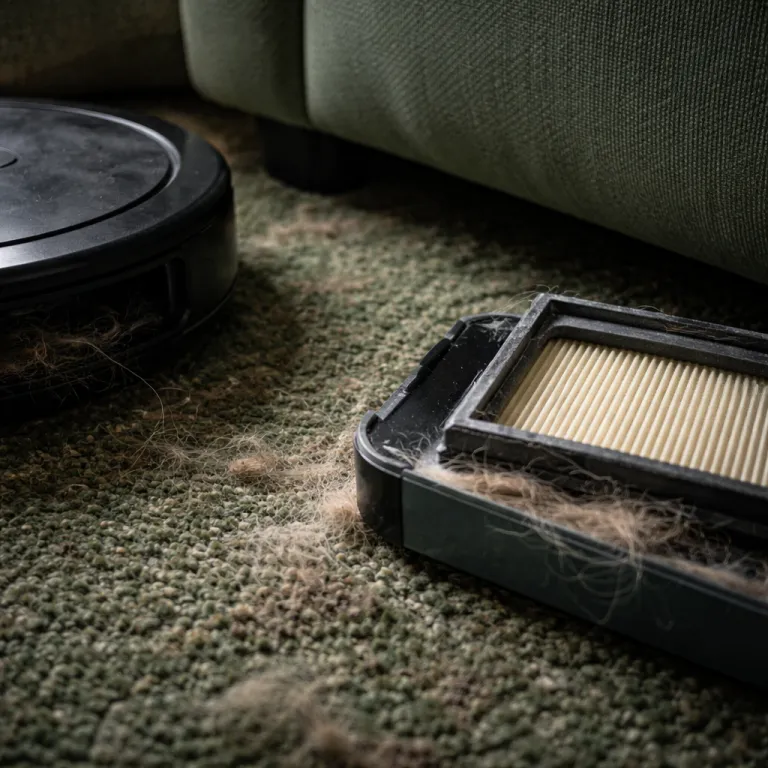
Why sealed HEPA matters more in multi cat homes
A robot vacuum with a sealed HEPA filter for pets is not just a gadget. In a multi cat or dog household, that robot becomes a frontline tool against dander, tracked litter and fine pet hair that trigger sneezing and itchy eyes. If the filtration path is not fully sealed, the vacuum can clean the floor while quietly leaking allergens back into the room.
Think of the robot as a moving air handler that drags air, dust and pet hair through a tight maze of chambers, gaskets and filters before it exits again. A true sealed HEPA system keeps every joint around the dust bin, filter frame and exhaust covered with rubber or foam so that air has only one path out, which is through the HEPA media itself. In standardized HEPA tests such as EN 1822 or ISO 29463, H13 media is rated to capture 99.95% of 0.1–0.3 micron particles at the most penetrating particle size, but that efficiency assumes zero bypass around the frame.
When a manufacturer simply drops a HEPA label on a filter inside an unsealed shell, the robot vacuums pet debris but allows microscopic particles to bypass the filter and ride the exhaust stream. RTINGS, for example, has reported in its upright and canister vacuum reviews that some units with HEPA cartridges still leak fine dust around the housing, which shows up as higher particle counts at the exhaust than the filter rating alone would suggest.
For people with asthma or strong allergies, that difference is not academic. A sealed robot vacuum with a high efficiency filter can reduce airborne allergens over weeks of daily cleaning, while an unsealed vacuum mop hybrid with leaks mainly makes carpets look clean but leaves the air unchanged. In multi cat homes where litter dust, pet waste residue and dog hair accumulate quickly, the best robot choice is one with a documented sealed body, a gasketed filter door and a self emptying base that uses a bag to trap what the robot vacuum collects.
| Feature | Sealed HEPA robot | Unsealed HEPA robot |
|---|---|---|
| Allergen leakage | Minimal when gaskets are intact | Fine dust can escape around joints |
| Impact on allergy symptoms | Can lower airborne dander over time | Often little change despite clean floors |
| Best use case | Multi cat or dog homes, asthma, allergies | Low sensitivity users, light shedding |
How to spot a real sealed HEPA system before you buy
Most product pages shout about HEPA features, but very few explain whether the filtration path is actually sealed. When you read the specifications for any robot vacuum, look for language about a fully sealed system, multi stage filtration and rubber gaskets around the dust bin and filter frame. If the description only mentions a HEPA style filter without talking about seals, assume that fine particles may leak around the edges.
On premium models such as the iRobot Roomba j9, the Roborock Q Revo and the Ecovacs Deebot X2 Omni, the marketing photos often show the dust bin removed, which lets you inspect the base of the bin and the cavity for visible foam or rubber. A sealed robot will usually have a thick gasket around the exhaust port, a tight fitting filter door and a bin that clicks in with a firm, even resistance across several inches of contact. When you compare these robots to cheaper vacuum mop combos, you often see bare plastic on plastic joints that look clean but allow air to slip through tiny gaps.
Independent testing from organizations such as RTINGS has highlighted that some bagless vacuums with HEPA filters are not fully sealed, letting particles escape around the filter housing. In several of their lab style tests, total particle counts at the exhaust were noticeably higher on unsealed designs even when the filter media itself was rated as HEPA or high efficiency. That same pattern shows up in robot vacuums where a strong motor with high suction power is paired with a loose filter frame that flexes under pressure.
If you want the best robot for allergies and pet hair, prioritize a sealed HEPA system over raw Pascal numbers, and read full lab style reviews, such as a detailed Roomba j9 review for pet owners, to see how each robot handles fine dust in real homes. Some reviewers now publish measured suction in kilopascals, noise levels in decibels and particle removal percentages for 0.3–10 micron dust, which makes it easier to compare how well different robots control allergens rather than just how clean the floor looks.
Brush roll design, pet hair and the reality of multi pet floors
Filtration only helps if the robot can actually pick up the pet hair and dander from your floor in the first place. In multi cat and dog homes, the brush roll design and side brush geometry matter as much as suction power, because tangled hair on the brush blocks airflow and reduces cleaning performance within minutes. A robot vacuum that looks excellent on day one can lose a third of its pickup ability if long hair wraps tightly around the brush and side brush hubs.
In controlled tests using seven inch strands, the best performers show close to zero percent hair wrap on the main brush roll, while average robots end up with around thirty eight percent of the hair stuck around the axle. RTINGS and similar labs typically run standardized hair pickup trials on hard floor and low pile carpet, then weigh how much hair remains on the brush versus in the bin, which gives a repeatable percentage for comparison.
Models such as the Roborock Q Revo and the Ecovacs Deebot X2 Omni use rubber finned brushes that flex and fling hair into the suction path instead of letting it knot, which keeps the vacuum mop head turning freely on both hard floor and low pile carpet. By contrast, older designs with bristled brushes and narrow dimensions in inches across the intake tend to trap dog hair and cat hair at the ends, forcing you to stop and clean the brush every few days.
Table style summaries from independent reviewers often show that robots with dual rubber rollers or comb style guards retain less than ten percent of long hair on the brush after a standardized pickup run, while basic bristle brushes can retain more than forty percent. If you share your home with several pets, look for a robot with a wide brush roll, a floating head that maintains contact across uneven floor boards and a side brush that does not scatter litter and pet waste fragments. Shark Ultra models, for example, use a comb style guard to strip hair from the brush as it spins, while some iRobot Roomba units rely on dual counter rotating rubber rollers that naturally resist tangles. The best robot for multi pet homes will combine that tangle resistant hardware with strong obstacle avoidance so the robot can reach under sofas with three to four inches of clearance and around feeding stations without smearing wet food or waste.
Dock design, self emptying and allergen exposure
Every time you empty a dust bin by hand, you release a small cloud of fine dust and pet dander back into the room. For allergy sensitive owners, the type of base station and self emptying system on a robot vacuum with a HEPA filter for pets can matter as much as the filter itself. Bagged docks trap that dust inside a sealed liner, while bagless designs rely on careful handling to avoid a visible puff of debris.
Bagged self emptying bases, such as those on many iRobot Roomba and Roborock Q Revo stations, use a disposable liner with a rubber collar that closes automatically when you pull it out. That design keeps the path from the robot to the bag sealed, so the robot vacuums pet hair, dander and litter dust into a container you can remove without seeing or smelling much. Bagless docks on some Shark Ultra and mid range vacuum mop combos can still work well, but you need to carry the canister outside before you open it and clean the internal filter more often to maintain suction power and cleaning performance.
Dock features also affect daily convenience in a busy multi pet home. A smart base that can wash and dry mop pads, such as the plumbed dock options described in detailed coverage of advanced robot vacuum docks, reduces how often you need to handle dirty water and pet waste residue. When you read about systems like the Narwal Flow 2 with a plumbed dock option, you see how automating pad washing and tank refills cuts down on manual cleaning minutes and keeps the robot ready to clean every floor level without you touching dusty components.
Cleaning schedules, battery life and practical setup for multi cat homes
In a home with two or more cats, a robot vacuum with a sealed HEPA filter for pets should run more often than in a single pet apartment. Litter tracking, airborne dander and loose hair build up quickly, so aim for at least one full cleaning run per day on hard floor areas and three to four focused passes per week on carpeted rooms. Short, frequent runs keep the dust load in the filter lower, which helps the HEPA media maintain its rated efficiency.
Battery life and mapping intelligence determine whether that schedule feels effortless or frustrating. A smart robot with reliable obstacle avoidance and an accurate map in its companion app can clean a typical eight hundred to one thousand square foot flat in about sixty to ninety minutes, then return to the base to empty and recharge without supervision. When the robot knows room boundaries, you can schedule extra passes around litter boxes and feeding zones where pet waste crumbs, kibble and hair tend to accumulate, while leaving low traffic bedrooms on a lighter schedule.
Pay attention to the stated dimensions in inches when you choose a model for a cluttered home. A low profile robot around three to three and a half inches tall can slip under most sofas and beds, where dog hair and cat hair drift into thick mats that a manual vacuum rarely reaches. If you want a combined vacuum mop unit, check that the water tank and mop plate do not increase the height so much that the robot loses access to those critical hiding spots, because a clean floor surface means less dust stirred into the air and less work for the HEPA filter.
Model examples and how to match them to your home
Choosing between the many robot vacuums with HEPA filters for pets comes down to matching real world needs, not chasing the highest spec sheet numbers. In a large multi cat home with mixed floor types, a flagship vacuum mop such as the Roborock Q Revo or the Ecovacs Deebot X2 Omni offers strong suction power, a sealed multi stage filter and a self emptying base that reduces allergen exposure. These robots pair high cleaning performance with advanced obstacle avoidance, so they can weave around cat trees, water bowls and toys without dragging them across the floor.
For smaller apartments or budgets, mid range models from Shark Ultra lines and selected iRobot Roomba units still provide excellent daily cleaning if you accept a simpler dock and slightly shorter battery life. Look for versions that explicitly mention a sealed system and a high efficiency or HEPA grade filter, along with a tangle resistant brush roll and a side brush that does not fling debris into corners. When you read full reviews that test dog hair pickup, pet waste handling and long term reliability, you will see that some of these vacuums pet focused models punch above their price in real homes.
If you already rely on an automated litter box, pairing it with a robot vacuum that can keep the surrounding floor clean makes the whole system feel more hygienic. Guides on choosing the optimal cat litter for an automated litter robot highlight how different granule sizes affect tracking, and that same tracking pattern tells you where to focus your robot’s scheduled passes. In the end, the best robot for your family is the one whose dimensions in inches fit under your furniture, whose filtration is truly sealed and whose app makes it easy to set a schedule that keeps your floors, air and pet zones consistently clean.
FAQ
How often should a robot vacuum run in a multi cat home ?
In a home with two or more cats, plan for at least one full cleaning cycle per day on hard floors and several targeted runs per week on carpets. Frequent passes prevent litter dust and pet hair from building up to levels that overwhelm the HEPA filter. If your robot and app support room based scheduling, add extra daily runs around litter boxes and feeding areas.
What is the difference between HEPA and a sealed HEPA system ?
A HEPA filter is a specific type of media that can capture very small particles when air passes through it. A sealed HEPA system surrounds that media with gaskets and tight joints so that all exhaust air is forced through the filter instead of leaking around the edges. For allergy sufferers, the sealed design is crucial, because even tiny leaks can release enough dander and dust to trigger symptoms.
Are bagged self emptying docks better for allergies than bagless ones ?
Bagged docks are usually better for allergy sensitive users because the dust and pet dander stay inside a sealed liner that closes when you remove it. With a bagless dock, you must open the canister and tip the contents out, which often releases a visible cloud of fine debris. If you choose a bagless design, empty it outdoors and clean the dock filter regularly to reduce exposure.
How can I tell if a robot vacuum will handle long pet hair ?
Check whether the robot uses rubber fins or combs on the brush roll and whether the manufacturer mentions anti tangle or self cleaning brushes. Independent tests that measure hair wrap percentages on seven inch strands are especially useful, because they show how much hair ends up stuck around the axle. In daily use, a good anti tangle design should let you go at least a week in a multi pet home without cutting hair off the brush.
Do vacuum mop combos work well in homes with pets ?
Vacuum mop combos can work very well on hard floors in pet homes if they have strong suction, a good brush design and a mop system that keeps dirty water separate from clean water. They are especially helpful for wiping up dried paw prints and fine dust that vacuums alone may leave behind. Just avoid using the mop mode near fresh pet waste and make sure the dock can wash and dry the pads to prevent odours.