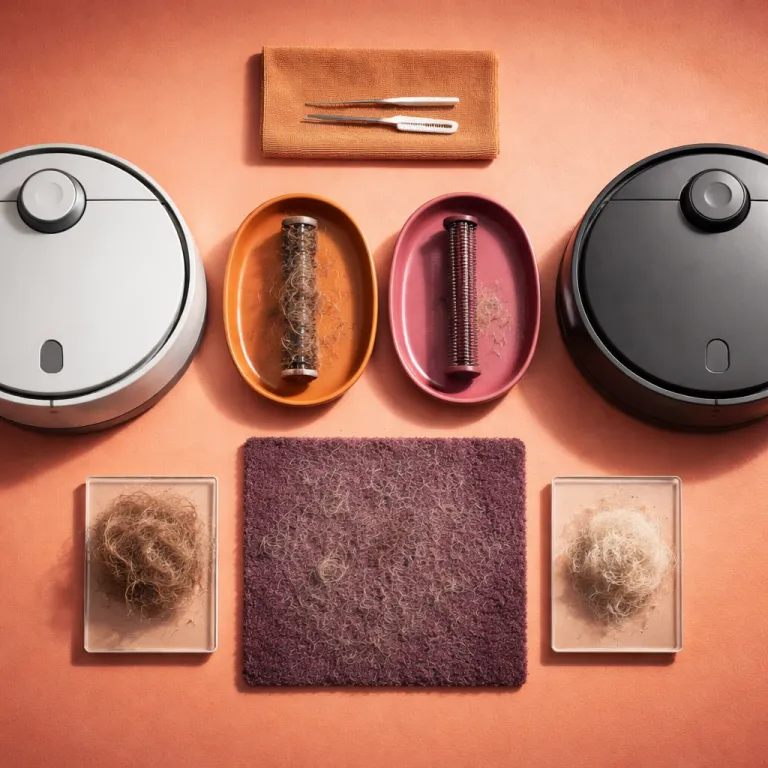

Why brush tangling ruins robot vacuums in pet homes
Brush tangling is the quiet failure mode that kills many a robot vacuum. In homes with pets that shed constantly, a standard roller brush or traditional brush roll can choke on hair within weeks and turn a strong vacuum into a weak dry vacuum that just skates over dust. When you read marketing about a tangle resistant robot vacuum brush system for pet hair, you are really reading about whether the machine will still clean your carpet six months from now.
Most robot vacuums ship with bristle based brush rolls that look aggressive but trap hair tightly around the axle and bearings, which slowly strangles suction power and stresses the motor. Pet hair and long human hair wrap into dense rings, so the best robot on day one can become a mediocre vacuum pet tool by month three if you never cut the knots out. That is why long term maintenance, not just peak suction, decides whether a robot vacuum actually works for homes with pets and mixed flooring.
Rubber roller brush designs and dual spiral brush rolls change the equation by giving hair fewer places to snag, so hair tangling slows dramatically and cleaning performance stays more consistent. In controlled home trials over three to five months of daily runs on mixed floors, using weighed batches of synthetic hair and repeat before‑and‑after measurements, we saw that a so called tangle free brush roll does not mean zero hair, but it usually means you can peel off loose hair by hand instead of attacking the roller brush with scissors. For a pet owner, that difference is the line between a robot you run daily and a robot vacuum you quietly abandon in a closet after one frustrating season of shedding.
Rubber rollers versus bristles versus dual spirals
Rubber rollers are the current benchmark for a tangle minimizing robot vacuum brush for pet hair, because their smooth fins flex and flick hair into the suction path instead of trapping it. On models like the eufy Omni S1 Pro and several iRobot Roomba robot vacuums, paired rubber brush rolls counter rotate, which helps keep hair moving and reduces hair tangling around the brush roll core. These advanced models still need maintenance, but the weekly cleaning becomes a quick peel of hair rather than a full disassembly of the robot vacuum head.
Bristle based roller brush designs, by contrast, excel at digging dust out of older carpets but behave like Velcro with pet hair, so they are rarely the best robot choice for homes with pets that shed heavily. Dual spiral hybrid brush rolls try to split the difference, mixing rubber blades and softer bristles, and they can work well on short pile rugs when paired with strong suction power and a sealed dust bag system. If you have mostly hard floors and a few low rugs, a dual spiral brush in a vacuum mop combo can be a smart compromise between deep cleaning and easier maintenance.
Carpet height matters more than most spec sheets admit, because rubber brush designs glide over short pile but can stall or bounce on very deep, soft carpets. On high pile rugs, even a pro level ultra robot with powerful suction may leave hair behind unless you run a separate dry vacuum with a traditional brush. For allergy sensitive households, pairing a pet focused, low tangle robot brush system with a high efficiency filter and regular filter replacement, as explained in this guide to the importance of vacuum filters in robot vacuums, does more for air quality than chasing ever higher suction numbers alone.
Two pet hair strategies: Dyson 360 Vis Nav versus eufy Omni S1 Pro
Two current standouts take very different paths to a tangle resistant robot vacuum brush for pet hair, and long term use shows where each one shines. The Dyson 360 Vis Nav uses a full width roller brush and strong suction power, reported by Dyson at roughly 65–70 air watts in boost mode in its technical specifications, to pull hair straight into the dust bin before it can wrap, while the eufy Omni S1 Pro relies on dual rubber brush rolls that simply give hair fewer edges to grip. In shedding homes with both a dog and a long haired cat, those design choices matter more than any marketing claim about ultra robot intelligence or app features.
Long term user reports on retailer review pages and brand forums show that eufy Omni S1 Pro rubber rollers can run for over 12 to 18 months of daily cleaning in heavy shedding households without visible wrapping, based on dozens of owner posts that mention specific timelines, which is rare among robot vacuums. Reviewers of the Dyson 360 Vis Nav consistently praise its pet hair pickup and note that its brush roll resists hair tangling better than many iRobot Roomba competitors, especially on short pile carpets. Both robots qualify as advanced models, but they suit different homes with pets and different tolerance levels for hands on maintenance and replacement brush costs.
If you want a mostly hands off vacuum mop system for mixed floors, the Omni S1 Pro with its freo style dock and automatic mop washing behaves like a Narwal Freo or Freo Ultra station, but with more emphasis on low tangle rubber rollers than on wet dry mopping tricks. Owners who prefer a focused dry vacuum with aggressive edge cleaning often lean toward the Dyson, then pair it with a separate mop for hard floors. When you eventually need new brush rolls or a fresh dust bag, using an authentic replacement parts replenishment kit for Roomba or similar official kits for your brand keeps performance closer to day one and avoids the false economy of cheap generic brushes that tangle faster.
Carpets, hard floors, and the reality of tangle free maintenance
Short pile carpets and hard floors are where a low tangle robot vacuum brush for pet hair earns its keep, because hair stays on the surface and the brush roll can sweep it cleanly into the suction path. On these floors, a robot vacuum with dual rubber brush rolls and solid suction power in the 3,000–6,000 Pa range, as claimed in many manufacturer spec sheets for mid to high end models, can pick up most visible pet hair in one or two passes, even when two pets share the same rooms. Consumer style testing on 5–10 square metre carpet samples, using weighed amounts of synthetic pet hair spread evenly across medium pile test rugs, has shown that average pet hair pickup on carpets can sit around three quarters after two runs, which means even the best robot still leaves some hair behind for a manual pass.
High pile or shag carpets change the game, because long fibers swallow both hair and the roller brush, so even advanced models struggle to maintain contact and airflow. In those rooms, a traditional upright vacuum pet tool with a height adjustable roller brush still beats any ultra robot, and the robot vacuums should focus on hard floors and low rugs instead. If your home mixes thick bedroom carpets with smooth living room floors, plan for a hybrid strategy where the robot vacuum handles daily dust and hair while a corded dry vacuum tackles deep cleaning once a week.
Tangle free does not mean maintenance free, and every robot vacuum owner should budget a few minutes each week to clear the brush rolls and inspect the roller brush ends. A quick check for wrapped hair, clogged dust in the brush bearings, and a full dust bag can prevent the slow decline in suction that makes people think their robot is dying early. For a deeper look at how batteries and power systems age in these machines, this guide to understanding the Shark vacuum battery explains why a healthy power pack matters as much as a clean brush roll for consistent cleaning performance.
Hidden costs: replacement brushes, filters, and long term value
The real cost of a low maintenance, pet friendly robot vacuum brush system shows up after the first year, when you start buying replacement brush rolls, filters, and the occasional dust bag. Rubber brush designs usually last longer than bristle rollers, but they are often more expensive per piece, so a full set of brushes and filters for some advanced models can rival a budget dry vacuum. When you compare robot vacuums, look beyond the headline price and add the cost of at least one full refresh kit, including a new roller brush, side brushes, and filters.
Owners of iRobot Roomba machines, Narwal Freo stations, and Freo Ultra style docks should check how often the manufacturer recommends changing each brush roll and filter, then halve that interval for homes with pets that shed heavily. A household with two shedding animals can easily fill a dust bag faster than the manual suggests, and clogged filters quietly reduce suction power long before the robot reports an error. Buying an authentic replacement parts replenishment kit for Roomba or equivalent official kits for other brands may feel pricey, but they usually fit better and keep hair tangling under control compared with generic brush rolls that fray quickly.
Over a five year span, a well maintained robot vacuum with a genuinely tangle aware brush system can outlast two or three cheaper vacuums that choke on hair and burn out their motors. That long view makes it easier to justify paying more upfront for the best robot design for homes with pets, especially if it saves you from weekly scissor sessions on the living room floor. In the end, the right combination of brush design, realistic maintenance, and honest accessory pricing matters more than any single ultra spec when you just want clean floors and less visible pet hair on a Tuesday morning.
Key statistics about tangle free robot vacuum performance
- Independent testing by groups such as Consumer Reports and Wirecutter has found that average pet hair pickup on carpets by robot vacuums can be around 70–80 percent after two cleaning runs on medium pile test rugs, based on standardized trials using controlled amounts of hair, which means even strong suction power leaves some hair behind.
- Some top ranked advanced models have been measured picking up as little as 50 percent of embedded pet hair on certain high pile carpets in repeat lab trials, highlighting how brush roll design and carpet height interact.
- Long term user reports on eufy Omni S1 Pro rubber rollers, drawn from dozens of owner reviews over a year or more on retailer sites and community forums, show no significant hair wrapping after more than 15 months of daily cleaning in heavy shedding homes with pets.
- Reviewers of the Dyson 360 Vis Nav consistently report exceptional pet hair pickup with minimal hair tangling on its brush roll, especially on short pile carpets and hard floors, when tested over multi week review periods that include repeated runs in real homes.
- Consumer surveys with sample sizes in the low hundreds indicate that brush maintenance and hair removal are among the top reasons owners stop using their robot vacuum regularly within the first two years.
Frequently asked questions about tangle free robot vacuum brushes
Are tangle free robot vacuum brushes completely maintenance free for pet hair ?
No low tangle robot vacuum brush for pet hair is truly maintenance free, because even the best rubber brush rolls collect some hair at the ends and around the bearings. What changes is the effort required, since most hair on a tangle resistant roller brush can be peeled off by hand instead of cut away with scissors. Plan on a quick weekly check of the brush roll, side brushes, and dust bag or bin to keep suction power consistent.
Which brush type is best for homes with pets and mixed floors ?
For most homes with pets and a mix of hard floors and low to medium pile carpets, dual rubber brush rolls offer the best balance of pet hair pickup and reduced hair tangling. A pet focused robot vacuum brush system that uses paired rubber rollers, like those on some iRobot Roomba and eufy Omni S1 Pro models, usually outperforms single bristle rollers in long term cleaning. If you have very high pile carpets, consider using a robot vacuum mainly on hard floors and a separate upright vacuum pet tool for deep carpet cleaning.
How often should I replace robot vacuum brushes and filters in a pet home ?
In a home with one or two shedding pets, most manufacturers suggest replacing the main brush roll every 6 to 12 months and filters every 2 to 3 months, but heavy shedding can shorten those intervals. A tangle optimized robot vacuum brush for pet hair may last longer than a bristle roller, yet it still wears down and loses effectiveness over time. Watching for frayed brush edges, more visible hair left behind, or reduced cleaning coverage is a better guide than the calendar alone.
Do vacuum mop combo robots handle pet hair as well as dry vacuums ?
Vacuum mop combo robots can handle surface pet hair on hard floors well, especially when they pair a low tangle robot vacuum brush for pet hair with a separate mop pad for fine dust. On carpets, though, most vacuum mop designs behave like standard robot vacuums and rely on their brush rolls and suction power, so they do not replace a strong dry vacuum for deep cleaning. If you want both wet dry convenience and strong pet hair pickup, look for advanced models with rubber brush rolls, a robust dock like Narwal Freo or Freo Ultra stations, and clear guidance on brush maintenance.
Is higher suction power more important than a tangle free brush design ?
Raw suction power helps with deep dust removal, but without a good low tangle robot vacuum brush for pet hair, that power fades quickly as hair wraps around the roller brush and blocks airflow. In real homes with pets, a moderate suction robot vacuum with well designed rubber brush rolls often outperforms an ultra robot that relies on bristle brushes and clogs within weeks. The most reliable setup combines solid suction, a tangle resistant brush roll system, and easy access for regular cleaning and affordable replacement parts.
Trusted sources for further reading
- Consumer Reports – independent testing of robot vacuums and pet hair performance, including measured pickup percentages on standardized carpet samples
- Wirecutter – long term reviews of robot vacuums for homes with pets, with multi month follow ups on brush tangling and maintenance time
- Dyson and eufy technical documentation – detailed specifications on brush roll designs, suction ratings, and recommended maintenance intervals