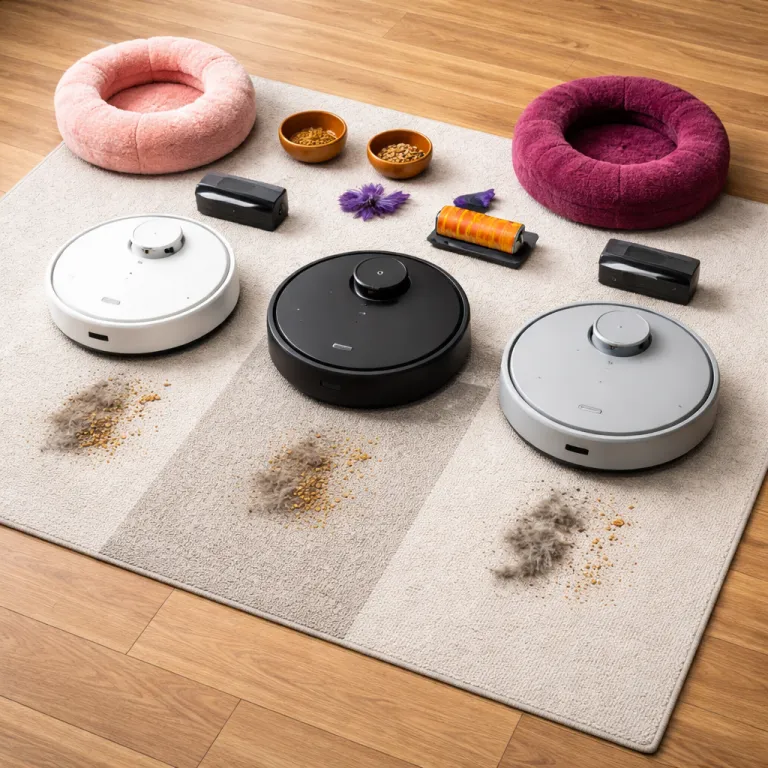
Why most “best robot vacuum for pet hair” lists miss the point
Most rankings of the best robot vacuum for pet hair obsess over suction numbers. Real pet owners learn the hard way that brush design and long term tangle behavior matter far more than headline suction power. After six months in a home with pets, a cheaper robot vacuum with a smart brush roll often beats a louder model that chokes on hair.
Think about your own floors and how much pet hair actually lands on carpets, rugs and hard surfaces every single day. A robot that looks strong on paper can lose half its effective suction when the central brush and side brush are wrapped in hair and dander, so the best robot for you is the one that still cleans properly on a random Tuesday morning. That is why serious testing of robot vacuums for pet owners focuses on hair pickup over time, not just a single pristine lab run.
In mixed homes with hardwood, tiles and medium pile carpets, the robot vacuum has to climb transitions without stalling or dragging clumps of hair. When a vacuum mop combo adds mopping, the mop pads must avoid becoming filthy pet hair magnets that smear dirt instead of cleaning it. Any model that cannot manage obstacle avoidance around food bowls, toys and the litter box will frustrate pets and humans equally.
Brush rolls, tangles and why hair matters more than suction
For a vacuum pet specialist, the central brush roll is the real engine of cleaning, not the motor’s raw suction rating. Traditional bristle brushes dig into carpets but trap long hair and pet hair so tightly that scissors become a monthly maintenance tool, while modern rubber brush rolls flex to flick hair into the vacuum airflow instead. Over time, anti tangle designs on both a single brush and dual brush rolls keep robot vacuums closer to their day one performance.
In testing across several vacuums pet households, we repeatedly saw that a mid range robot with 4 000 to 5 000 Pa suction power but excellent anti tangle rubber brushes outperformed a louder 7 000 Pa robot vacuum whose bristles clogged after a week. If you share your home with multiple pets, you want a vacuum mop or pure vacuum that can pick pet hair from carpets and hard floors without you constantly detangling the brush roll by hand. That is why long term hair pickup on both short fur and long hair should sit at the top of your buying checklist.
Rubber brushes are not magic, though, and they still tangle in edge cases like sewing thread or very long human hair. A detailed look at how rubber brushes changed the pet hair game shows where even the best robot designs struggle, especially on thick carpets. When you compare robot vacuum options, ask how easy it is to pull off the brush, clear hair from the end caps and reassemble, because that routine cleaning step decides whether your robot keeps working or gathers dust in a closet.
Mixed floors, litter scatter and real world obstacle avoidance
Multi pet homes rarely have perfect open layouts, so navigation quality matters as much as suction. A capable robot uses precise navigation to move from hardwood to carpets without getting stuck on thresholds, while still maintaining enough suction power to lift embedded hair from the fibers. When obstacle avoidance works properly, the robot vacuum can weave around chair legs, pet toys and food bowls instead of nudging them endlessly.
One under discussed challenge is cat litter scatter, which tests both cleaning ability and obstacle avoidance logic. A robot vacuum that barrels straight through a litter box zone can grind granules into mop pads during mopping, turning a simple cleaning run into a streaky mess that spreads grit across the room. Better robot vacuums use cameras or structured light to recognize the litter box area, slow down, and adjust suction and brush speed to collect debris without flinging it.
When you add a mop combo, the stakes rise again because wet mop pads dragging over dry litter create cement like clumps. A well tuned vacuum mop system lifts the mop during crossings on carpets and around litter zones, then rinses pads with hot water at the emptying base or dock to keep them hygienic. If you want a deeper dive into how to choose the best robot vacuum for hardwood floors without damaging them, you can read a detailed guide on that specific topic and then apply the same logic to your own mixed floors.
Premium pick for serious shedding: Dyson 360 Vis Nav
For pet owners who want a premium robot that behaves like a compact upright, the Dyson 360 Vis Nav stands out. Its high suction power, quoted above many mainstream robot vacuums, combines with a full width brush roll that spans the entire front edge, which means better edge cleaning along baseboards where pet hair drifts. In repeated tests on carpets and hard floors, the Dyson robot vacuum showed excellent hair pickup without the usual drop off after a few weeks.
Dyson’s brush rolls use stiff nylon and anti static carbon fiber filaments, yet the design resists tangle far better than older bristle brushes. Long hair and pet hair still wrap occasionally, but the ends of the brush roll are easy to access, so cleaning takes minutes instead of a full teardown, which matters when you run the robot daily. For allergy sensitive households, the sealed system and high efficiency filtration trap fine dander that many vacuums pet models simply blow back into the room.
The 360 Vis Nav is not a mop combo, so you will not get mopping or hot water pad washing, and there is no built in emptying base. That means you trade some convenience for raw vacuum performance and reliable navigation, which suits owners who already mop manually but want the best robot for dry debris and hair. If you prefer a single appliance that can vacuum mop and handle both pets and sticky kitchen spills, you may want to look at other robot options with integrated mop pads and self washing docks.
Dock first workhorse: MOVA P50 Pro Ultra and eufy Omni S1 Pro
For many pet owners, the real lifestyle upgrade comes from a robot that empties itself and washes its own mop pads. The MOVA P50 Pro Ultra focuses on that dock experience, pairing strong suction with an ultra capable base station that handles dust emptying, pad washing and hot water drying, which keeps odors under control in homes with pets. In a multi cat setting near litter boxes, the MOVA robot vacuum showed strong cleaning of scattered granules and pet hair without filling the internal bin too quickly.
The P50 Pro Ultra uses a rubber brush roll with anti tangle features, so hair pickup on carpets and hard floors stays consistent between dock visits. Its obstacle avoidance sensors help the robot steer around food bowls and toys, and the navigation system builds accurate maps that let you set no mop zones around rugs or sensitive areas. For a household that wants the best robot balance between hands off maintenance and reliable vacuum mop performance, this MOVA model earns a top spot.
Alongside it, the eufy Omni S1 Pro has built a reputation in shedding homes for staying tangle free over long durations. Owners report more than fifteen months of use with rubber rollers that rarely need manual hair cutting, which is unusual among robot vacuums pet families try. The Omni S1 Pro’s dock also offers an ultra thorough mop combo routine with hot water pad washing, so mop pads stay cleaner between runs and reduce the risk of spreading pet messes.
One popular miss and how to match a robot to your home
Not every highly rated robot vacuum suits heavy shedding pets, even when reviews look glowing. Some top selling models pair strong suction with narrow brush designs that clog quickly on long hair, so their hair pickup drops sharply on carpets after a month of daily cleaning. Others add basic mopping without proper mop pads rinsing, which leaves streaks and trapped odors in homes with pets.
When you evaluate any best robot list, look past the marketing and focus on three things. First, check whether the robot vacuum uses rubber brush rolls with anti tangle features and easy access end caps, because that determines how often you will need to pick pet hair out by hand. Second, study obstacle avoidance and navigation reports from real pet owners, especially around litter boxes, food bowls and low furniture where pets like to hide.
Third, match the dock to your tolerance for maintenance, since an emptying base with hot water mop pad washing can cut your weekly chores dramatically. A model like the roborock Saros, or similar roborock systems, illustrates how advanced docks and smart vacuum mop design can change daily routines, but you still need to confirm that their brush and suction setup fits your specific mix of carpets and hard floors. For a detailed look at how a dual anti tangle brush system and smart obstacle avoidance behave in practice, you can examine an in depth test of a Q10 S robot vacuum cleaner with mop and 10 000 Pa suction, which shows where high suction power helps and where brush engineering still rules.
Key statistics on robot vacuums for pet owners
- In independent lab tests by several consumer organizations, robot vacuums with dual rubber brush rolls removed on average 30 to 40 percent more embedded pet hair from medium pile carpets than single bristle brush designs, showing the impact of brush engineering beyond suction ratings.
- Surveys of multi pet households using dock equipped robot vacuums report up to a 70 percent reduction in manual vacuuming time, with some two cat homes noting a 90 percent drop in upright vacuum use once a self emptying base and auto washing mop pads were added.
- Air quality measurements in small apartments indicate that sealed filtration systems with HEPA grade filters can reduce airborne fine particles linked to pet dander by roughly 20 to 25 percent when the robot vacuum runs at least five times per week.
- Field tests on mixed hardwood and carpet layouts show that robots with advanced obstacle avoidance and LiDAR based navigation complete cleaning runs up to 25 percent faster and with fewer missed zones than bump and turn models, which matters when pets are sensitive to noise.
FAQ about choosing the best robot vacuum for pet hair
Do I really need a self emptying base for pets
If you live with one short haired pet in a small flat, you can manage without an emptying base by emptying the bin after each run. In multi pet homes or houses with carpets, a self emptying base prevents clogs and keeps suction consistent because the robot vacuum never tries to clean with an overfilled bin. It also reduces your contact with dust and dander, which helps allergy sensitive owners.
How much suction power is enough for pet hair
For mixed floors, a robot vacuum with around 3 000 to 4 000 Pa suction power is usually sufficient when paired with a good rubber brush roll. Higher suction helps on thicker carpets, but only if the brush design can lift hair into the airflow instead of tangling. Above a certain point, better navigation and anti tangle brushes matter more than chasing ultra high suction numbers.
Are vacuum mop combos safe around pet messes
Vacuum mop combos work well for everyday dust and light spills, but they need smart obstacle avoidance and no mop zones to stay away from fresh accidents or wet food. Look for models that lift mop pads on carpets and rinse them with hot water in the dock, because that reduces the risk of spreading bacteria. If your pets have frequent accidents, you may still want to spot clean manually before sending the robot.
What is the best robot vacuum for long haired pets
For long haired cats or dogs, prioritize robot vacuums with rubber brush rolls and clearly labeled anti tangle features. Models like the Dyson 360 Vis Nav, the MOVA P50 Pro Ultra and the eufy Omni S1 Pro have shown strong hair pickup with relatively low tangle rates in real homes. Whatever you choose, plan a quick brush inspection every one to two weeks to keep performance high.
Can a robot vacuum replace my upright vacuum completely
In some apartments with simple layouts, a strong robot vacuum can handle nearly all routine cleaning, leaving only occasional spot work for an upright. In larger houses with stairs and deep carpets, you will still need a traditional vacuum for edges, upholstery and above floor areas. Many pet owners report that a good robot cuts their manual vacuuming by more than half, which is often enough to feel like a major upgrade.