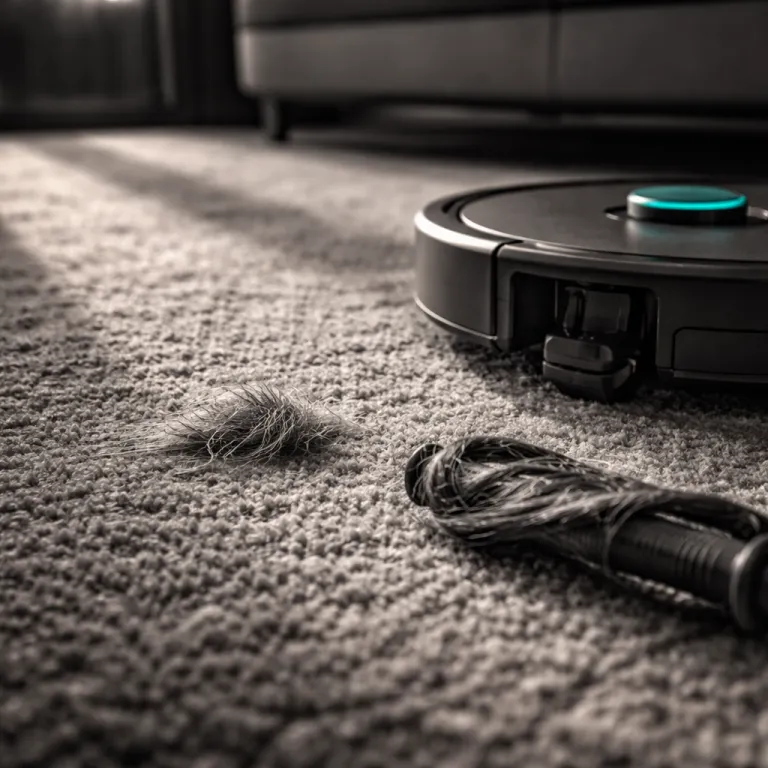

Why shedding season breaks your usual robot vacuum routine
When dogs and cats start dropping winter coats, your usual robot schedule collapses fast. During peak shedding, the same pet can fill a robot vacuum bin in a single run that previously took three, so any robot vacuum for pet hair must handle a much higher hair load without constant babysitting. That means stronger suction, smarter navigation, and a vacuum cleaner design that treats pet hair as the main job, not an occasional mess.
Most pet owners notice hair carpets forming along baseboards and under sofas, where standard robot vacuums glide past without enough suction or brush contact. A true pet-hair specialist uses a rubber brush roll with anti-tangle fins, high airflow, and precise obstacle avoidance to pull hair from carpets and hard floors before it mats, and the vacuums best at this keep hair pickup consistent even as filters clog between cleanings. Look for robotic vacuums with suction power in the same range as current mid to high-end models—around 4,000–8,000 Pa on many 2024 flagships, based on manufacturer specifications—and a wide brush that reaches edge zones, because weak robotic vacuums simply push fur around instead of lifting it.
Shedding season also exposes poor navigation and obstacle control, since clumps of pet hair wrap around wheels and confuse basic sensors. A robot vacuum with lidar navigation maps rooms accurately, avoids stray toys as an obstacle, and maintains straight cleaning lines that cover every corridor where pet hair drifts. When you combine strong suction, reliable obstacle avoidance, and a self-emptying dock that can store roughly 2–4 weeks of debris for one shedding pet—or closer to 1–2 weeks for two or three animals, depending on coat type—in a 2–4 liter bag, a robot vacuum becomes a daily pet hair appliance rather than a weekend chore gadget.
Key features that separate average robot vacuums from pet hair specialists
For homes with multiple pets, the best robot vacuum for pet hair starts with the brush system, not just headline suction numbers. A rubber brush roll resists tangles better than bristled designs, while dual counter-rotating brushes on some robot vacuums designed for pets grab long hair from carpets and hard floors without knotting around the axle. When a brush is poorly engineered, you will hear the motor strain and smell hot plastic as hair builds up, which is the warning sign that many vacuum cleaner owners miss until the unit fails.
Anti-tangle engineering matters more in April than in January, because hair volume spikes and even vacuums best rated on major retail sites can choke if their brush roll lacks escape channels for fur. Check whether the robotic vacuums you consider have removable end caps, easy access to the brush, and clear markings for cleaning intervals, since pet owners who ignore these details end up cutting hair out weekly with scissors. A best robot with a well-designed brush also improves hair pickup along skirting boards, where tumbleweeds of pet hair collect and standard vacuums for pets leave visible streaks.
Navigation and obstacle avoidance are the other half of the equation, especially in busy family rooms. Lidar-based robot vacuum navigation lets the robot map furniture precisely, set no-go zones around pet bowls, and maintain efficient paths even when toys or shoes become a new obstacle overnight. When you pair that with app-based auto control of suction levels and targeted cleaning zones, the robot vacuums can focus extra power on hair carpets in hallways while gliding more gently over delicate hard floors. Keep in mind that max suction and turbo modes shorten runtime compared with quiet or eco settings, so plan daily cleaning around a mix of power levels rather than expecting full advertised battery life at top power.
How to tune your robot vacuum for peak shedding season
Once shedding ramps up, the best robot vacuum for pet hair is the one you actually tune for the season, not the one with the flashiest marketing. Start by changing the schedule from every other day to at least once daily in high-traffic zones, because bin fill rate often triples when pets blow their coats and a robot vacuum that runs too rarely leaves visible hair carpets by midweek. In the app, set auto control rules so the robot vacuums boost suction on carpets and reduce power on hard floors, which balances hair pickup with battery life.
Filter maintenance becomes non-negotiable for pet owners during this period. Rinse washable filters every 7–10 days and replace them every 3–6 months, according to the manufacturer’s schedule, since clogged filters cut suction and force the vacuum cleaner motor to work harder, which shortens performance life and reduces cleaning efficiency on pet hair. If your model supports HEPA-grade filtration, use it consistently, because high-efficiency filters in robotic vacuums are designed to capture fine particles such as pet dander and dust, and studies on indoor air quality in pet homes have reported noticeable reductions in airborne allergens during and immediately after thorough vacuuming when HEPA or similar filters are used.
Brush care is the other seasonal adjustment that keeps a robot vacuum or vacuum mop combo running smoothly. Inspect the brush roll twice a week for wrapped hair, paying special attention to the ends where long hair hides under caps and silently strains the motor until hot water and manual cleaning are required. If your current brush is heavily bristled and constantly tangled, consider upgrading to a compatible anti-tangle rubber brush, since this retrofit can transform hair pickup and reduce maintenance time for the rest of the shedding period.
When a vacuum mop combo and premium docks make sense for pet owners
In homes where pets track in muddy paw prints as well as hair, a vacuum mop combo can be more practical than a pure robot vacuum. These hybrid robotic vacuums use suction for dry debris and attach mop pads for damp cleaning, which helps remove fine dust and dried paw marks from hard floors after the main hair pickup pass. The best robot vacuum for pet hair in this category balances strong vacuum performance with a controlled mop function that does not drag dirty water across carpets.
High-end systems such as the Dreame Ultra series or comparable flagship models from other brands add self-washing mop pads, hot water rinsing, and large self-emptying bases, which reduce hands-on maintenance for busy pet owners who already juggle grooming, feeding, and outdoor walks. For example, many Dreame Ultra variants advertise up to 5,000–7,000 Pa suction, around 180 minutes of runtime in quiet mode, and docks that wash mop pads with warm water while storing several weeks of dust and hair in a sealed bag, according to published product specifications. A dock that can hold several weeks of debris and automatically wash mop pads turns the robot into a near-autonomous cleaning appliance, especially when combined with lidar navigation and precise obstacle avoidance that keeps the robot away from pet beds and food bowls. For many households, this level of auto maintenance is what finally makes daily cleaning realistic rather than aspirational.
Price still matters, so do not assume the vacuums best ranked on amazon are automatically the best robot for your specific mix of carpets and hard floors. Focus on consistent hair pickup, reliable obstacle avoidance, and clear app control over suction, mopping zones, and no-go areas, because these factors shape everyday cleaning more than one-time lab tests. When you match a robot, a mop system, and a dock to your floor plan and shedding pattern, the result is a quieter home, fewer visible hair carpets, and a robot vacuum routine that actually keeps up with your pets.
Key seasonal statistics for robot vacuums in pet homes
- Peak shedding for many double-coated dog breeds in North America occurs during spring, which significantly increases daily pet hair accumulation on carpets and hard floors.
- High efficiency particulate air (HEPA) filtration is designed to capture very small particles, including much of the airborne pet dander released during robot vacuum cleaning sessions.
- Research on indoor air quality in pet homes has reported substantial reductions in airborne pet dander levels during and immediately after thorough vacuum cleaning cycles, especially when high-efficiency filters are used.
- Some self-emptying robot vacuum docks are designed to store multiple weeks of accumulated dust, hair, and debris, depending on household size and shedding intensity.
Frequently asked questions about robot vacuums for pet hair
How often should I run a robot vacuum during heavy shedding ?
During peak shedding, run your robot vacuum at least once daily in main living areas and hallways. High-traffic zones where pets sleep or play may benefit from a second short run focused on those rooms. This higher frequency prevents hair carpets from forming and keeps the bin from overfilling mid cycle.
Is a self emptying dock worth it for pet owners ?
For homes with one or more shedding pets, a self-emptying dock is usually worth the extra cost. The dock lets the robot vacuums empty their bins automatically, so suction stays strong and you are not forced to empty the bin after every run. This is especially helpful when you increase cleaning frequency during shedding season.
Do I really need HEPA filtration in a robot vacuum for pets ?
HEPA filtration is strongly recommended if anyone in the home has allergies or asthma. These filters capture very small particles, including much of the pet dander that becomes airborne when a vacuum cleaner agitates carpets. Even for non-allergic households, HEPA filters help keep dust and fine hair from recirculating into the air.
What type of brush is best for long pet hair ?
For long-haired dogs and cats, a rubber brush roll with anti-tangle fins is usually the best option. Rubber designs resist wrapping better than dense bristles and are easier to clean when hair does accumulate. Dual brush systems can improve hair pickup further, but only if both brushes are easy to remove and maintain.
Can a vacuum mop combo replace traditional mopping in a pet home ?
A vacuum mop combo can handle day-to-day dust and light paw prints on hard floors, reducing how often you need to mop manually. However, it does not fully replace deep cleaning with a traditional mop and hot water, especially after muddy walks or accidents. Think of the robot mop function as maintenance cleaning between more thorough sessions.