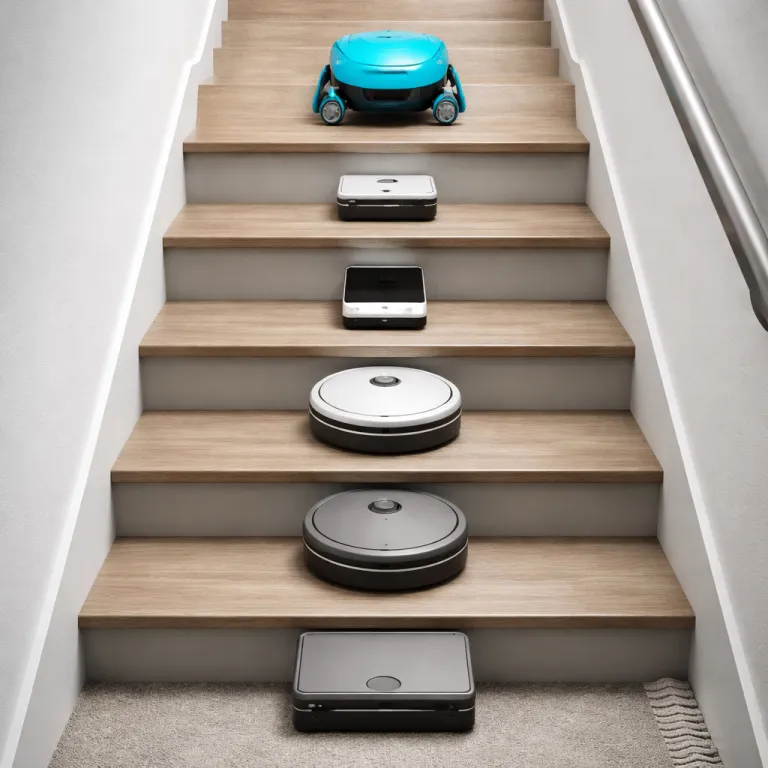
Why walking robot vacuum stairs tech matters more than another suction bump
Every two story homeowner knows the gap in automation when a robot vacuum stops at the first stair. Even the best robot vacuum with 6 000 Pa suction, a self empty dock and a polished app still leaves you carrying a cordless vacuum cleaner upstairs, which is why the idea of a walking robot vacuum stairs system feels like a genuine shift rather than another spec bump. The promise is simple yet radical for cleaning routines, because a single stair climbing robot that handles every floor and every stair finally replaces the awkward mix of vacuums, mops and manual spot cleaning.
Traditional robot vacuums rely on wheels that are brilliant on hard floor and carpets but terrible at any step higher than about 2 cm. That is why even premium vacuum robot models from Roborock, Dreame or Mova Zeus branded devices advertise obstacle avoidance and lidar navigation yet quietly admit that stairs remain a no go zone, forcing you to treat each stair and each landing as a separate cleaning project. The walking robot vacuum stairs concept flips that assumption, turning the stair from a cliff edge into just another mapped surface in a multi floor home and nudging the category toward true whole house, multi level cleaning.
Roborock’s Saros Rover prototype, shown at CES as the Roborock Saros concept rather than a shipping product, is one of the clearest signals that stair climbing is moving from science fiction to product roadmap. Instead of only wheels, this early stair climbing robot uses stork like legs that extend and retract, letting the robot vacuum lift its body onto each stair while keeping the center of gravity over the tread. In live demos the Saros Rover balanced while being hit with tennis balls, cleared 10 cm obstacles and performed controlled stair climbing, which matters more for family trust and perceived safety than any ultra high suction headline.
For a tech savvy homeowner, the key question is not whether a robot can climb one stair in a lab but whether a walking robot vacuum stairs design can handle a full staircase every day without drama. That means coping with pet hair on the edge of each step, dust on hard floors, and the occasional dropped sock that would jam a less capable vacuum mop combo. It also means integrating smart mapping, reliable obstacle avoidance and robust fall prevention so that the stair climbing robot vacuums best suited to multi floor homes feel boringly safe rather than thrillingly experimental.
Today’s best robot vacuum options already juggle vacuum and mop duties, often in a single mop combo chassis with a dock that washes pads with hot water. Models like the Dreame L20 Ultra or Roborock S8 Pro Ultra show how far suction, mopping and self maintenance have come, yet they still treat every stair as a void in the map, which is why owners of multi floor homes often buy two vacuums instead of one smarter climbing robot. Walking capability aims to collapse that duplication, but it only works if the price, reliability and cleaning performance match what people already expect from a premium vacuum mop system, so buyers should expect early stair capable units to compete directly with today’s flagship vacuum mop combos on everyday cleaning quality, not just on dramatic stair demos.
Why stairs have been unsolved: balance, brains and family level safety
Stairs are not just taller obstacles; they are a worst case scenario for any robot vacuum that carries a heavy battery, spinning brushes and a high speed fan for suction. A tumble down a full stair run risks destroying the product and anything it hits, which is why manufacturers have relied on simple cliff sensors that stop robot vacuums long before the first step. The walking robot vacuum stairs challenge is to replace that crude binary edge detection with confident stair climbing that still feels as safe as a dumb bumper sensor, and that requires both mechanical stability and far richer perception than current cliff detection.
Balance is the first hard problem, because a vacuum robot concentrates mass in the battery and motor assembly, which sits relatively high in the chassis. When a climbing robot lifts its front section onto a stair, the center of gravity shifts dangerously close to the edge, and any nudge from a child, pet or loose object can tip it over, so articulated legs and dynamic stabilization are not optional gimmicks but core safety features. Roborock Saros tackles this with a hybrid of wheels and legs that keep at least three contact points on the stair at all times, which is why it could keep cleaning even when hit with tennis balls during the CES demo, a simple but telling stress test for a future stair climbing vacuum.
The second problem is perception, because a robot vacuum needs to know not just that there is a drop but exactly where each stair tread and riser begins and ends. Roborock has described a StarSight 2.0 navigation stack on the Saros Rover that combines lidar navigation with depth cameras and inertial sensors, building a real time 3D model of uneven terrain so the robot vacuums can plan each step like a cautious hiker rather than a blind Roomba. That same perception stack underpins advanced obstacle avoidance, letting the climbing robot recognize toys, cables and pet hair clumps on the stair before committing weight to a foot placement, which is critical for a stair climbing robot that must avoid stepping on soft or rolling objects.
Families also worry about what happens when things go wrong, which is why recovery from slips matters as much as perfect stair climbing. A walking robot vacuum stairs system must detect when a foot loses traction on a dusty hard floor nosing, then shift weight and retreat without tumbling, and it must do this while still picking up hair, crumbs and grit from each stair edge. Multi pet homes are especially tough, because long pet hair can wrap around joints and wheels, so the best robot designs will need sealed actuators and self cleaning brushes that keep the vacuum cleaner agile even after weeks of use, and buyers should expect maintenance guidance that explicitly covers leg joints, side brushes and hair removal.
There is also the psychological safety threshold, the point at which a parent feels comfortable letting a climbing robot roam near a stair while kids play. That is where transparent logs, clear app alerts and conservative behavior matter more than raw suction or ultra glossy marketing videos, because people want proof that the robot will stop, back off and re plan when it sees a dangling blanket or toy on a step. For a deeper dive into why recognizing hundreds of objects is less important than how a robot behaves around them, it is worth reading this analysis of AI obstacle avoidance that actually matters, which frames the trade offs in plain language and highlights the kind of real world safety behavior that a stair climbing robot vacuum should demonstrate in independent tests.
From CES stage to hallway carpet: mapping, navigation and real shipping timelines
Prototype walking robots are impressive on a trade show stage, but a person seeking information about buying guides still needs to choose between mapping and random navigation in the robot vacuum they can order today. For the current product cycle, the practical choice remains between a smart lidar navigation robot that maps every floor and a cheaper random navigation vacuum cleaner that bounces until the battery dies, because stair climbing and legged multi floor robots will likely stay rare and expensive for a while. The walking robot vacuum stairs story is therefore less about what you can buy this month and more about how to future proof your cleaning setup while the tech matures and manufacturers move from concept videos to verified field tests.
Mapping based robot vacuums use lidar navigation or structured light to build a floor plan, then clean in straight lines, room by room. This approach is vastly more efficient than random navigation, especially in multi floor homes where you want to save separate maps for each level and maybe each stair landing, and it pairs naturally with features like no go zones, targeted room cleaning and vacuum mop scheduling. Random navigation vacuums best fit small, simple apartments where the robot can eventually hit every spot by chance, but they waste time and battery on larger hard floors and carpets, so buyers planning for a future stair climbing robot are usually better served by a mapping based ecosystem.
If you plan to adopt a future climbing robot such as a production version of Roborock Saros or a rival from Dreame or a Mova Zeus series model, investing in a mapping based ecosystem now makes sense. These brands already treat mapping, obstacle avoidance and vacuum mop control as a unified software stack, so when a stair capable model arrives, it can reuse your existing room labels, cleaning zones and mop combo preferences across every floor. A walking robot vacuum stairs unit will still need new algorithms for step detection and stair climbing, yet it will lean heavily on the same StarSight style mapping and lidar navigation foundations that already power today’s best multi floor robot vacuums.
History across consumer robotics suggests a lag of roughly two to three years between a flashy CES prototype and a reliable shipping robot vacuum, especially when the hardware involves new actuators and complex safety logic, although exact timelines depend on each manufacturer’s testing and certification process. That makes it reasonable to expect consumer grade stair climbing vacuum robots to appear gradually rather than overnight, with early units likely priced at the very top of the market and targeted at tech enthusiasts who already own the best robot models today. For most households, the smarter move is to buy a solid mapping based vacuum mop now, then plan to upgrade when walking capability and stair climbing features have been proven in long term reviews and warranty data.
If you want a deeper technical overview of how advanced cleaning, smart navigation and multifunctional solutions are converging in current products, the guide on vacuum robot technology and smart navigation is a useful reference. It explains why features like hot water pad washing, auto empty docks and multi floor map storage matter more to daily cleaning than another 500 Pa of suction, and it shows how these trends will carry over to walking designs. The same logic applies to mop combo systems, where a reliable vacuum mop that leaves hard floors streak free is more valuable than a theoretical stair climbing demo that never ships, so buyers should prioritize proven navigation and cleaning performance over speculative multi floor tricks.
Is stair climbing the right problem, or are two simpler robots still smarter
There is a strong counter argument that walking robot vacuum stairs technology solves the wrong pain point for most homes. A pair of well chosen robot vacuums, one for each floor, often costs less than a single ultra premium climbing robot will at launch, and it avoids the complexity of articulated legs, extra joints and higher maintenance. In that scenario, you park a best robot vacuum mop combo like a Dreame L20 Ultra or Roborock S8 Pro Ultra on the main floor, then run a simpler vacuum cleaner or even a compact Mova Zeus upstairs, creating a practical multi floor robot setup without waiting for a stair climbing vacuum.
This two robot strategy has practical advantages, because each vacuum robot can be tuned to its specific environment. The downstairs unit might focus on heavy pet hair pickup on rugs and hard floors, using strong suction and a robust brush design, while the upstairs robot vacuums prioritize quiet operation and gentle cleaning on bedroom carpets and a short stair landing. You still need to handle the stair itself with a handheld vacuum or stick, but that is a few minutes of work rather than a full floor, and it avoids trusting a brand new stair climbing algorithm with your banister and any fragile objects at the bottom of the stairs.
Where walking robot vacuum stairs designs could genuinely change the equation is in complex multi floor layouts with many split levels, mezzanines and short stair runs. In those homes, managing multiple maps, docks and schedules across several vacuums becomes messy, and a single stair climbing robot that can traverse every stair and every step might justify a higher price. The key will be whether the product delivers consistent cleaning, reliable obstacle avoidance and low maintenance on joints and legs, because no one wants to degrease a stair climbing mechanism clogged with hair every month or replace expensive leg actuators after a year.
For homeowners who care as much about mopping as vacuuming, it is worth paying attention to how these walking designs handle water, pads and hard floor care. A stair capable vacuum mop must keep dirty mop water and hot water washing cycles safely contained while climbing, and it must avoid dripping on each stair tread, which is harder than it sounds when the chassis tilts. If you are optimizing for pristine hard floors today, a detailed guide to streak free hardwood mopping modes will likely improve your results more than waiting for a future stair climbing mop combo, and it will also highlight the kind of water management features you should demand from any multi floor robot that claims to mop on stairs.
In the end, the smartest path for a tech savvy homeowner is to treat walking robot vacuum stairs capability as a promising future option rather than a reason to delay buying. Choose a mapping based robot vacuum with strong suction, good pet hair pickup and reliable app control now, ideally from an ecosystem that is clearly investing in climbing robot research such as Roborock or Dreame. When a production Roborock Saros or similar pro ultra grade stair climber finally arrives at a reasonable price, you will be ready to slot it into a home already optimized for smart cleaning rather than starting from scratch, and you will be able to compare its real world stair climbing performance against the two robot strategy you already understand.
Key figures and market signals for walking and stair capable robot vacuums
- Global robot vacuum sales exceeded 17 million units according to multiple market research firms such as Statista and Euromonitor, with mapping based models representing more than 60 % of revenue, which shows that smart navigation has already become the default expectation rather than a luxury feature for buyers of premium multi floor robot vacuums.
- Premium robot vacuums with self empty docks and mop combo functions typically launch at prices between 900 and 1 500 euros, based on recent flagship releases from brands like Roborock, Dreame and Ecovacs, suggesting that early stair climbing robots with articulated legs and advanced obstacle avoidance will likely debut at the upper end of this range or higher, so shoppers should budget accordingly.
- Most current high end robot vacuum models advertise suction ratings between 4 000 and 8 000 Pa, yet independent tests from reviewers such as Rtings and Wirecutter consistently show that brush design and airflow paths matter as much as raw suction numbers for real world pet hair pickup on carpets and hard floors, a lesson that will carry over directly to any future stair climbing vacuum.
- Consumer surveys in major markets report that more than 40 % of households interested in robot vacuums live in multi floor homes, which underlines why reliable stair climbing is seen as a significant future differentiator rather than a niche gimmick and explains why brands highlight multi level mapping and virtual boundaries even before true stair climbing arrives.
- Field reliability data from existing premium robot vacuums, including brand warranty reports and long term reviews, indicates that moving parts such as side brushes and mop lifting mechanisms are common failure points, so adding legged stair climbing hardware will require substantial engineering margins to maintain acceptable warranty rates, and buyers should look for published durability tests, clear maintenance schedules and generous warranties before trusting a stair climbing robot with daily multi floor cleaning.