

Why hc-sr04 distance sensing matters for virtual walls
Robot vacuums rely on precise distance sensing to respect virtual walls and barriers. When an hc-sr04 ultrasonic distance sensor is integrated into a robot vacuum or an accessory module, the robot can measure distance to obstacles in real time and react before it collides or crosses a no go zone. This simple ultrasonic sensor module, originally popular with Arduino hobbyists, now quietly underpins many affordable navigation and boundary systems.
The hc-sr04 uses an ultrasonic transducer sensor to emit a short sound pulse and a matching receiver control circuit to listen for the echo. According to typical hc-sr04 datasheets, the module measures roughly 2 cm to 400 cm with about 3 mm resolution and a beam angle of around 15 degrees, so the control circuit can calculate ultrasonic distance with repeatable accuracy. This distance information then feeds into the robot vacuum’s navigation logic and into any virtual wall accessory that needs to project or sense an invisible barrier. In practice, this distance sensor technology allows accessories to create dynamic zones around furniture, pet bowls, or stair edges without relying only on infrared or magnetic strips.
For a person considering the purchase of a robot vacuum, understanding how an ultrasonic sensor works helps interpret customer reviews about navigation performance. When reviewers say that a model “works fine” around chair legs or that obstacle detection is “good”, they are often indirectly praising the quality of the ultrasonic sensors and the way the sensor module is tuned. Over several months of use, a well calibrated hc-sr04 based system can reduce scuffs on walls, prevent repeated bumps into virtual barriers, and extend the overall quality of the cleaning experience.

From arduino uno projects to robot vacuum accessories
The hc-sr04 first became widely known through Arduino projects, where makers used the ultrasonic sensor with an Arduino Uno board to measure distance on small robots. In that context, the distance sensor was usually wired directly to the microcontroller, programmed with the Arduino IDE, and tested on simple obstacle avoidance tasks that resembled a very basic robot vacuum. This ecosystem of Arduino sensors, code examples, and seller feedback on hobbyist stores created a large body of practical knowledge about what works fine and what fails over time.
Manufacturers of robot vacuum accessories for virtual walls and barriers have quietly reused this experience, adapting the ultrasonic sensor module and its control circuit for consumer products. When you see a compact virtual barrier tower that keeps a vacuum away from a pet’s water level station or a child’s play area, there is often an hc-sr04 style transducer sensor hidden inside, paired with a refined receiver control stage and better shielding. Engineers who once tuned Arduino compatible boards now focus on making each sensor compatible with low power vacuum electronics, while still maintaining excellent quality and robust ultrasonic distance readings.
People who experimented with Arduino Uno kits may recognize the same ultrasonic sensors when they open a virtual wall accessory, even if the item is now better sealed and well packaged for mass market shipping. That continuity matters because it means spare parts, replacement sensors, and technical feedback from the maker community can still inform verified purchase decisions for mainstream buyers. If you are comparing accessories, it is worth checking whether the seller clearly described the sensor type, whether customer reviews mention hc-sr04 compatibility, and whether the brand also offers complementary accessories such as a liner holder that enhances the robot vacuum experience.
Designing virtual walls with ultrasonic sensors and barriers
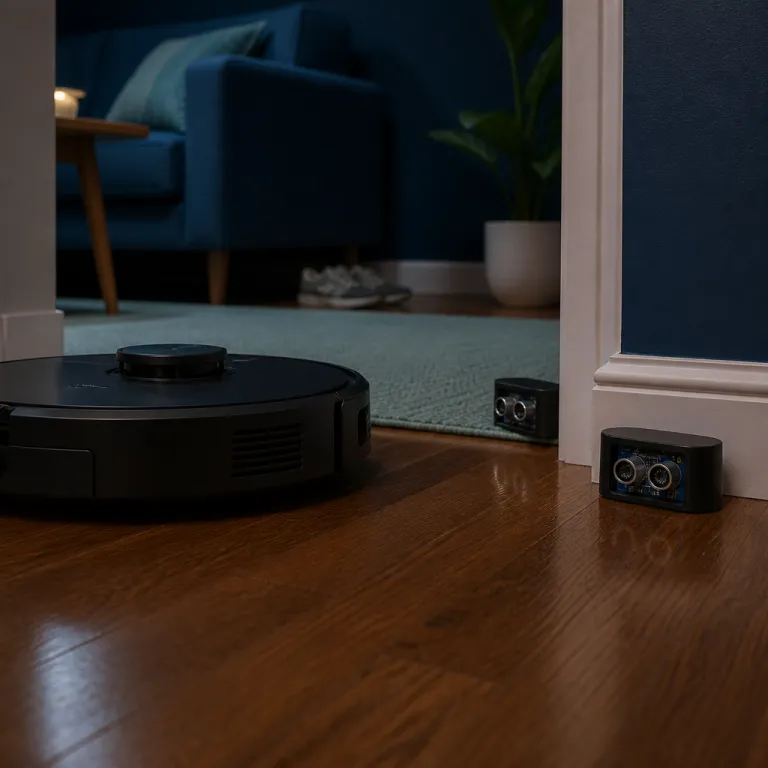
Virtual walls and barriers for robot vacuums come in several forms, from battery powered beacons to passive strips, and the hc-sr04 ultrasonic sensor plays a specific role in the more intelligent versions. In active beacons, the ultrasonic distance sensor can either detect the approaching robot and signal it to turn away, or help the robot triangulate its position relative to the barrier, which is especially useful in complex rooms. This approach allows a person to create flexible zones without physically blocking doorways or laying permanent tape on the floor.
In some advanced designs, multiple ultrasonic sensors are arranged in a double array, giving the accessory a wider field of view and more reliable distance readings at different angles. The control circuit then fuses these ultrasonic distance measurements with other sensors, such as infrared or cliff detectors, to decide whether the robot vacuum should slow down, stop, or reroute before crossing a virtual boundary. For households with pets, this can keep the robot away from food and water level areas, while for people with open plan spaces it can protect delicate rugs or cables without constant manual intervention.
When evaluating such accessories, pay attention to how the seller described the sensing range, the quality of the sensor module, and whether the item is marketed as sensor compatible with multiple robot vacuum brands. A well packaged product that clearly states its ultrasonic sensor specifications and offers transparent seller feedback often reflects a more mature design process. If you want to go deeper into technical details, consulting the official hc-sr04 datasheet or a reputable electronics reference can clarify typical ranges, beam angles, and wiring requirements.
Evaluating hc-sr04 based accessories before purchase
People shopping for virtual walls and barriers that rely on hc-sr04 technology should approach the purchase with the same rigor they would apply to a robot vacuum. Start by reading customer reviews that mention ultrasonic sensor performance, distance accuracy, and how well the accessory respects no go zones over several months of daily cleaning. Look for phrases such as “works fine after three months” or “excellent quality sensor module” because they indicate that the ultrasonic sensors and the control circuit are holding up under real household conditions.
On many online platforms, verified purchase labels help separate genuine feedback from generic comments, especially when the item is shipped from or to the United States or other major markets. Pay attention to seller feedback as well, noting whether buyers praise the way the product was well packaged, the speed of shipping, and the accuracy of the described specifications for the hc-sr04 ultrasonic distance sensor. A seller who encourages people to visit the store page for detailed documentation, wiring diagrams, and compatibility lists usually shows more respect for technically minded customers.
Before you buy, it helps to run through a short checklist: confirm that the accessory lists hc-sr04 or equivalent ultrasonic sensors, check that the sensing range matches your room sizes, compare single and double sensor configurations, and scan reviews for long term reliability comments. If you see multiple sensors listed, check whether each sensor compatible unit is clearly identified as an ultrasonic sensor or as another type, such as infrared, to avoid confusion. For readers who want to optimize edge cleaning while still respecting virtual walls, a simple benchmark is to run the robot toward a marked no go zone and count how many times it stops within 5 to 10 cm of the boundary, then compare that behaviour before and after installing any edge sweeping brush kit or similar accessory for compatible Roomba models.
Technical limits of ultrasonic distance sensing in homes
While the hc-sr04 ultrasonic sensor is affordable and widely used, it has clear technical limits that affect how virtual walls and barriers perform in real homes. The ultrasonic distance readings can be less reliable on soft surfaces such as curtains or cushions, where the sound pulse is absorbed rather than reflected cleanly back to the receiver control stage. This means that a virtual barrier relying only on ultrasonic sensors may struggle near heavy drapes or fabric covered furniture, and the robot vacuum might need additional infrared or bumper feedback.
Another constraint is the minimum and maximum distance that the sensor module can measure accurately, which for many hc-sr04 style units typically spans from a few centimetres up to a couple of metres under ideal conditions, even though the headline specification often states 2 cm to 400 cm. In narrow corridors, the hc-sr04 distance sensor may receive multiple echoes from side walls, forcing the control circuit to filter noisy data and sometimes misjudge the exact boundary location. Over time, dust accumulation on the transducer sensor faces can also degrade signal quality, so periodic cleaning of the ultrasonic sensors is essential for maintaining good performance.
Environmental factors such as temperature and humidity can slightly alter the speed of sound, which in turn affects ultrasonic distance calculations, although most household variations remain within acceptable error margins. For people who need very precise boundaries, such as around a high water level sump or a step near a sunken living room, combining ultrasonic sensor modules with physical barriers or magnetic strips can provide extra safety. A simple home benchmark is to place the accessory on the floor, measure a known distance to a flat wall with a tape measure, and compare the reported ultrasonic distance on different surfaces to see how your specific layout affects readings.
Future directions for hc-sr04 in robot vacuum ecosystems
As robot vacuums become more connected and intelligent, the humble hc-sr04 ultrasonic sensor is being integrated into broader ecosystems that include mapping, cloud analytics, and accessory coordination. Manufacturers are experimenting with arrays of ultrasonic sensors combined with cameras and lidar, where each distance sensor contributes a specific layer of data to the navigation stack. In this context, virtual walls and barriers may evolve from simple point beacons into adaptive zones that adjust based on time of day, user routines, and even temporary obstacles.
For example, a future accessory could use a double row of hc-sr04 modules to monitor both distance and approximate water level near pet bowls, then signal the robot vacuum to avoid the area only when spills are detected. Such a device would still rely on the familiar ultrasonic distance principle, but the control circuit and receiver control logic would be more sophisticated, integrating feedback from multiple sensors and perhaps even from a central app. People evaluating these innovations will need to pay close attention to how well packaged the electronics are, how clearly the seller described long term durability, and whether verified purchase comments support the marketing claims.
Retailers that specialize in robot vacuum accessories may also start to highlight technical specifications more prominently on each item page, encouraging buyers to visit the store section that details sensor compatible models and firmware updates. Over several months, this transparency can build trust, as positive customer reviews about excellent quality components and reliable shipping accumulate for specific hc-sr04 based products. For now, understanding the strengths and weaknesses of ultrasonic sensor technology gives any person seeking information a solid foundation for choosing virtual walls and barriers that truly work fine in their own home.
Key figures on ultrasonic sensors and robot vacuums
- Market observers note that a substantial share of mid range robot vacuums now use at least one ultrasonic sensor for obstacle detection, reflecting a shift away from models that relied only on infrared or bump sensors (based on aggregated information from major appliance brands and product listings rather than a single published study).
- Engineering notes and typical hc-sr04 datasheets indicate that these ultrasonic distance sensors are often specified with centimetre level resolution within a range of a few metres, with many documents quoting 2 cm to 400 cm and about 3 mm theoretical resolution at around 40 kHz, which is generally sufficient for most household virtual wall applications (always check the exact figures in the manufacturer’s documentation).
- Consumer surveys and retailer reports suggest that robot vacuums equipped with advanced virtual wall accessories can noticeably reduce accidental entry into restricted rooms compared with models that use only basic magnetic strips, improving user satisfaction and reducing returns (trend data inferred from large online retailers and service feedback rather than controlled laboratory trials).
- Field reports on ultrasonic sensor modules indicate that, when the transducer faces are kept clean and the electronics are protected from moisture, failure rates in typical household use remain relatively low over the first years of operation (summarized findings from repair centres and service technicians working with hc-sr04 style hardware).
FAQ about hc-sr04 sensors and virtual walls
How does an hc-sr04 sensor help a robot vacuum respect virtual walls ?
The hc-sr04 emits an ultrasonic pulse and measures the echo time to calculate distance, allowing the robot or accessory to detect when it is approaching a boundary. This distance information is fed into the navigation software, which then instructs the vacuum to slow down, turn, or stop before crossing the virtual wall. In practice, this reduces collisions with furniture and keeps the robot out of restricted zones.
Are hc-sr04 based virtual wall accessories compatible with all robot vacuums ?
Most hc-sr04 based accessories are designed to be sensor compatible with specific brands or models, so buyers should always check the compatibility list. Some units communicate with the robot via infrared or radio signals, while others act as passive beacons that any vacuum with suitable sensors can interpret. Reading the product description and customer reviews carefully is the best way to confirm compatibility.
What maintenance does an hc-sr04 ultrasonic sensor require in a home environment ?
Maintenance is usually limited to gently cleaning dust from the transducer openings with a dry cloth or soft brush. Keeping the sensor module free of debris helps maintain accurate ultrasonic distance readings and prevents false detections. It is also wise to avoid exposing the accessory to moisture or extreme temperatures that could damage the control circuit.
Can ultrasonic virtual walls replace physical barriers completely ?
Ultrasonic virtual walls can handle many everyday scenarios, such as keeping a robot vacuum out of a bedroom or away from pet bowls. However, they may struggle with very soft or sound absorbing materials, and they do not provide the absolute security of a closed door or solid barrier. For critical areas like stair edges or expensive electronics, combining virtual walls with some physical protection remains the safest approach.
What should I look for in seller feedback when buying hc-sr04 accessories ?
Focus on verified purchase comments that mention long term reliability, accurate distance sensing, and whether the product arrived well packaged and as described. Positive notes about excellent quality components, clear instructions, and responsive support from the seller are also valuable. Consistent praise across many reviews is a strong indicator that the accessory will work fine in your own home.