
How to judge the best robot vacuum for a large 2,000 sq ft home
The best robot vacuum for a large home over 2,000 sq ft must finish a full cleaning run without stalling halfway. In real apartments and houses, that means a robot vacuum needs at least 160 to 200 minutes of usable battery life, because obstacle avoidance, return trips to the base station, and extra passes over carpet all eat into runtime. When you compare vacuums on Amazon or in stores, ignore vague marketing about strong performance and instead look for tested pickup performance on both hard floor and medium pile carpet.
For a busy parent, the right robot is not just the best robot on paper but the one that quietly keeps every floor clean while kids nap and pets shed. A large home exposes weak suction, poor object avoidance, and flimsy navigation, so a model that looks fine in a 70 m² condo can struggle badly once it has to cross 185 m² of mixed floor and carpet with toys, shoes, and pet hair everywhere. When you evaluate robot vacuums, focus on how they handle real messes like cereal under the table, dried mud near the door, and long hair wrapped around the vacuum mop brush rather than only checking the spec sheet.
In our testing, a robot vacuum that claims 5,000 Pa suction but has clumsy obstacle avoidance often leaves visible debris lines after each stroke along baseboards. By contrast, a quieter robot with 3,000 to 4,000 Pa and smart mapping can deliver better pickup performance, because it maintains straight lanes, overlaps edges, and returns to missed zones before heading back to the base. That difference matters more in a large home, where a single navigation error can leave an entire room untouched until the next cleaning cycle.
Key runtime benchmarks for 2,000+ sq ft coverage
For a mostly open 2,000 sq ft layout with few rugs, a robot vacuum needs around 120 minutes of continuous cleaning to finish in one pass. Once you add more furniture, thick carpet, and extra rooms, the same robot vacuums often require 160 minutes or more, because they slow down around obstacles and spend extra battery on object avoidance maneuvers. Any model that drops below 20 percent battery before covering at least 140 m² will usually trigger a recharge and resume cycle, stretching a simple clean into several hours.
Large homes with kids and pets also demand consistent suction stroke after stroke, not just a strong first impression. Some cheaper vacuums show good pickup in the first 40 minutes, then lose airflow as their small dust bin fills with pet hair and fine dust, especially on carpeted hallways. A self emptying base station with auto empty can keep suction stable across long runs, but only if the dock is placed where the robot can reach it easily from every floor section.
Battery life ratings on Amazon product pages are often optimistic, because they assume quiet mode on hard floor with minimal obstacle avoidance. In real family homes, you will run the robot vacuum in standard or turbo mode on a mix of floor types, which can cut battery life by 25 to 40 percent. When you shop for the best robot vacuum for a large home over 2,000 sq ft, treat any claimed battery number as a ceiling and subtract at least one third to estimate realistic coverage.

Navigation, mapping, and multi floor reliability in large homes
Systematic navigation is non negotiable once your home passes 2,000 sq ft, because semi random robots waste battery revisiting the same floor patches. Laser based mapping, often called LiDAR, lets a robot vacuum draw precise room outlines, maintain straight cleaning lines, and handle obstacle avoidance with fewer hesitations. If you want a deeper technical breakdown of how LiDAR mapping compares with random bump and go patterns, you can read this guide on how LiDAR navigation transforms robot vacuums.
Multi floor mapping is especially important in tall houses where you carry the robot between levels. Better models store separate maps for each floor, remember no go zones, and adjust cleaning modes for carpet heavy or hard floor heavy levels without forcing you to redraw boundaries. When multi floor mapping fails, you see the robot vacuum wandering like older vacuums, missing rooms, or repeatedly slamming into the same base of the stairs because its object avoidance system lost track of walls.
Wi Fi coverage can quietly undermine even the best robot vacuums in large homes, because long hallways and thick walls create dead zones. If the robot loses connection near the far bedrooms, app commands, live maps, and firmware updates may fail, even though the cleaning run continues. To avoid that, place your router or mesh node near the center of the home and keep the base station within strong signal range, so the robot vacuum can sync maps, upload cleaning logs, and receive new obstacle avoidance algorithms reliably.
Why mapping quality matters more as square footage grows
In a compact apartment, a robot with basic gyroscope navigation can still cover every floor area eventually, even if its path looks messy. Once you scale up to a 2,000 sq ft home with multiple corridors and rooms, that same robot vacuums the kitchen three times while barely touching the back bedroom, wasting battery and leaving visible dirt. High quality mapping lets the robot vacuum divide the home into zones, schedule specific rooms on different days, and adapt stroke patterns to tricky spaces like playrooms full of toys.
Parents often notice mapping weaknesses when the robot repeatedly bumps into the same table base or ignores a narrow hallway. That behavior usually signals poor sensor fusion between LiDAR, cliff sensors, and bump sensors, which leads to jittery obstacle avoidance and missed edges along the floor. A well tuned robot vacuum glides around chair legs, tracks along baseboards, and returns to its base station without hunting, even when the map includes multiple floors and complex room shapes.
Before buying, check whether the brand supports map backups in the cloud, because a factory reset can erase weeks of careful room naming and no mop zones. Some iRobot Roomba models and newer Roborock vacuums handle this gracefully, while older Shark robots sometimes require full remapping after major firmware updates. For a large home, that difference can mean one quiet weekend of setup versus several frustrating evenings watching the robot vacuum relearn every corner of your floor plan.
Battery life, resume and finish, and dock capacity for big households
Battery life is the backbone of any robot vacuum meant for a large 2,000 sq ft home. A capacity around 5,000 mAh or higher usually translates into enough runtime to clean 150 to 180 m² in standard mode, assuming efficient navigation and moderate carpet coverage. When you see smaller batteries in vacuums marketed for large homes, expect more frequent recharge cycles and longer total cleaning durations.
The resume and finish feature is crucial once your home size exceeds the robot’s single charge coverage. With this function, the robot vacuum returns to its base station when the battery drops low, charges just enough, then resumes cleaning exactly where it stopped, rather than restarting the whole floor. Without reliable resume and finish behavior, a large home owner may find entire rooms skipped whenever the robot misjudges its remaining battery life.
Self emptying docks matter more than raw suction once you add kids, pets, and daily traffic. A base station with auto empty and a dust bag around 2 to 4 liters can hold several weeks of debris in a typical 2,000 sq ft family home, while smaller bases fill in days when pet hair and tracked in dirt accumulate quickly. When you compare pros and cons, remember that a larger dock footprint is a minor inconvenience compared with constantly emptying a tiny bin mid cleaning.
Real world dock behavior in large homes
In testing, we see big differences in how robots approach and leave their base station, especially in tight hallways. Some models, including several iRobot Roomba units, align smoothly and start charging on the first attempt, while others perform a clumsy dance that wastes battery and time. Over a week of daily cleaning, those repeated docking attempts can shave minutes off effective battery life and delay the next scheduled run.
Dock capacity also shapes how often you think about your robot vacuum at all. A compact base with a small dust bin might look tidy in the living room, but in a 2,000 sq ft home with two dogs, it can reach its limit after only two or three full cleaning cycles. Larger dust bags and better dustcompactor combo systems compress debris, so the robot vacuums can maintain strong pickup performance without you hovering nearby with a trash bag.
Noise at the base station matters for parents with sleeping children, because auto empty cycles can be loud. Some docks let you schedule emptying for daytime hours, so the robot vacuum quietly cleans during nap time and only triggers the dustcompactor combo or roomba dustcompactor feature when the house is already noisy. When you weigh pros and cons, consider whether a slightly louder dock is acceptable if it means less frequent manual emptying and more consistent cleaning across every floor.
Model by model: what actually works in 2,000+ sq ft homes
The Dreame L60 Ultra PE, part of the broader Dreame Ultra family, has emerged as one of the best robot options for large homes because it combines strong suction with efficient navigation. In independent tests, it ranked at the top of robot vacuum charts, outperforming some pricier flagships in coverage efficiency and pickup performance on both hard floor and carpet. For a busy parent, that means fewer missed crumbs under the dining table and more reliable cleaning of long hallways in a 2,000 sq ft layout.
Roborock’s higher end models, including the Roborock QRevo series, are also strong contenders for the best robot vacuum for a large home over 2,000 sq ft. These robot vacuums pair solid suction with advanced obstacle avoidance, multi floor mapping, and a base station that can wash mop pads and auto empty the dust bin, which reduces daily maintenance. In practice, a Roborock QRevo can handle both vacuum and mop duties in one run, switching suction levels automatically when it moves from hard floor to carpet.
Shark robot vacuums often cost less than Dreame or Roborock models, but their navigation and object avoidance systems can feel a generation behind in very large homes. Some Shark units show decent pickup on carpet in smaller spaces yet struggle to maintain straight cleaning lines across 2,000 sq ft, leaving visible gaps along the floor. If your budget is tight, a Shark robot vacuum can still be viable, but you may need to accept more frequent babysitting and occasional manual cleanups around the baseboards.
How Roomba and other brands compare in big spaces
Many iRobot Roomba models excel at edge cleaning and pet hair pickup, thanks to their dual rubber brush design. In large homes, that design helps prevent tangles and maintains suction stroke after stroke, especially in hallways where pet hair tends to clump. However, some Roomba units without advanced mapping can wander more than laser equipped rivals, which reduces efficiency in 2,000 sq ft spaces.
Premium Roomba models with self emptying docks and roomba dustcompactor style features narrow the gap, offering strong pickup performance and reliable resume and finish behavior. These robot vacuums can be excellent for families with multiple pets, because they handle both fine dust and long hair without constant brush cleaning. The main cons are higher prices and, in some cases, slightly louder operation at the base station during auto empty cycles.
When comparing across brands, focus less on headline suction numbers and more on tested coverage, obstacle avoidance, and real world battery life. A robot vacuum that quietly completes a full 2,000 sq ft cleaning run every other day is more valuable than a louder best robot on Amazon that leaves patches of carpet untouched. For most large homes, a well balanced Dreame Ultra, Roborock QRevo, or high end iRobot Roomba will outperform cheaper vacuums that promise a lot but falter once they leave the showroom floor.
Practical setup tips for parents in large multi floor homes
Getting the best robot vacuum for a large home over 2,000 sq ft is only half the battle, because setup and placement can make or break performance. Start by choosing a central location for the base station on the main floor, with at least 0.5 m of clearance on each side and 1.5 m in front, so the robot can dock and leave without bumping furniture. Avoid placing the base near stairs or tight corners, because that can confuse obstacle avoidance sensors and lead to repeated docking failures.
For multi floor homes, treat each level as its own cleaning project. Carry the robot vacuum to the next floor, start a mapping run, and let it explore without moving chairs or toys too much, so the map reflects real life clutter and the robot vacuums learn accurate paths. Once each floor map is saved, you can set room specific schedules, such as daily cleaning for the kitchen and weekly cleaning for a rarely used guest room.
Parents should also think about cable management and toy storage before running a new robot. Loose cords, small plastic pieces, and socks are classic traps that defeat even good object avoidance systems, especially in low profile spaces under couches. A simple habit of clearing the worst hazards each evening can turn your robot vacuum into a reliable overnight cleaner that leaves the floor safe for crawling toddlers by morning.
Smart home integration and daily routines
Smart home integration can make a big difference in how often you actually use your robot vacuum. Voice control through assistants and automation routines that start cleaning when you leave the house reduce friction, so the robot vacuums run regularly without you opening an app. For a deeper look at how automation can elevate daily cleaning, see this overview of smart home automation with robot vacuums.
In large homes, scheduling different zones on different days can balance battery life and noise. For example, you might run a full house cleaning twice a week, then schedule quick runs for high traffic areas like the kitchen and playroom on alternate days, keeping the floor consistently clean without overworking the battery. This approach also reduces wear on brushes and wheels, extending the service life of the robot vacuum.
Wi Fi reliability again plays a role, because smart routines depend on the robot staying connected to your network. If your home has dead spots, consider adding a mesh node near the far bedrooms or upstairs hallway, so the robot vacuum can receive commands and upload cleaning logs from every floor. With stable connectivity, you can check maps, adjust no go zones, and monitor pickup performance from your phone, even when you are away.
How to read Amazon listings and spec sheets without getting misled
Shopping for the best robot vacuum for a large home over 2,000 sq ft on Amazon can feel overwhelming, because every listing promises powerful cleaning and smart navigation. To cut through the noise, focus on a few key metrics: battery capacity, mapping type, base station features, and verified pickup performance on both hard floor and carpet. Ignore vague claims about intelligent robot behavior unless they are backed by clear descriptions of LiDAR, structured obstacle avoidance, and resume and finish support.
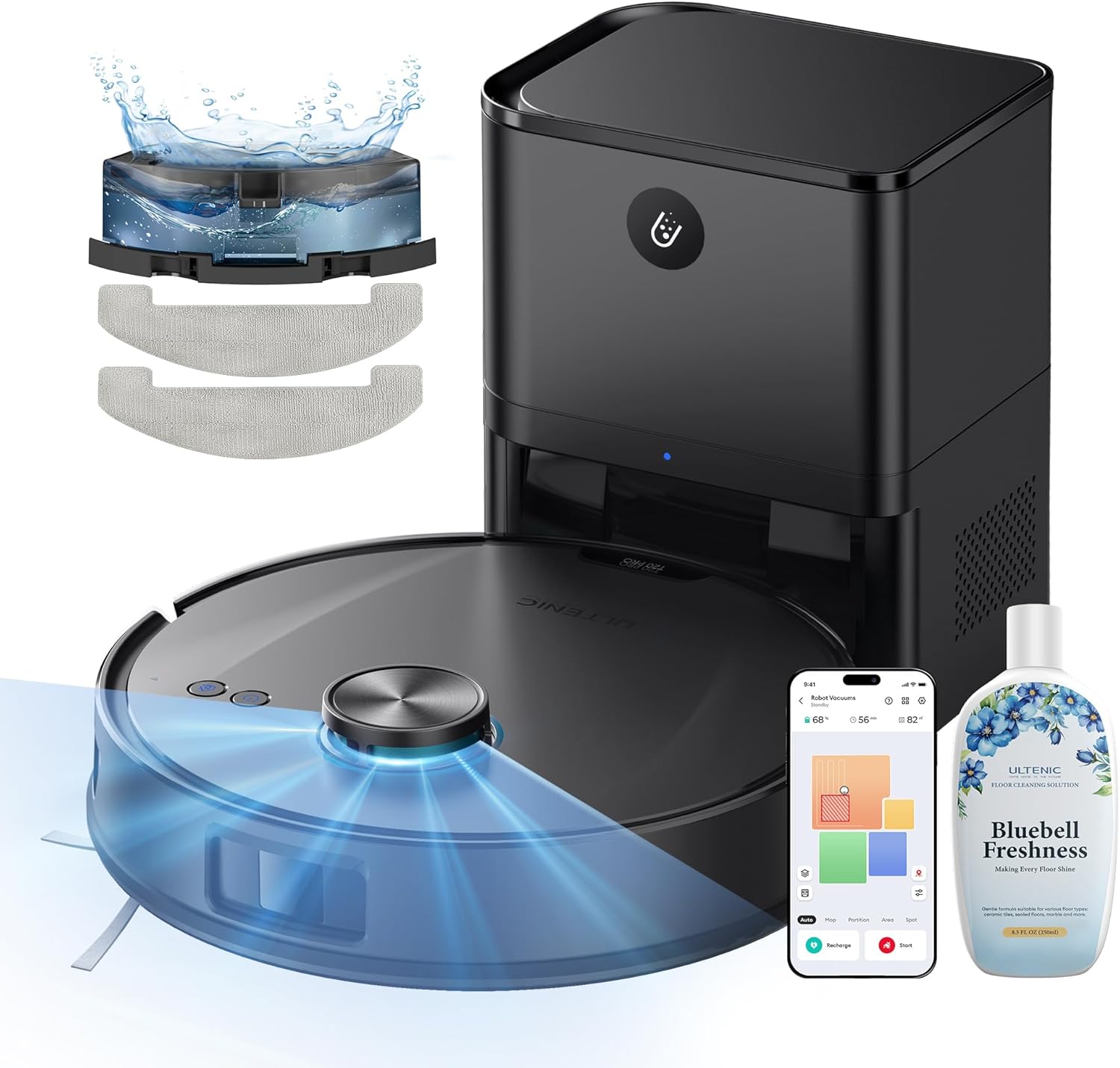
Look closely at how brands describe their base station, because terms like auto empty, dustcompactor combo, and mop washing can hide big differences. Some docks only empty the dust bin, while others also wash and dry mop pads, which matters if you rely on the vacuum mop function for daily floor care. In a 2,000 sq ft home, a more capable base station can save hours of manual work each month, even if it costs more upfront.
Customer reviews on Amazon can highlight real world pros and cons, but they also include noise from unrelated issues like shipping problems or misunderstandings about features. When you read reviews, search for comments about battery life in large homes, multi floor mapping reliability, and how well the robot vacuums handle pet hair on carpet. Pay special attention to any mention of the robot getting stuck near the base, failing to return after a cleaning run, or leaving visible dirt along the floor edges.
Red flags and green flags in product descriptions
One red flag is a robot vacuum that advertises strong suction and a low profile design but never mentions mapping or obstacle avoidance details. In large homes, that usually means the robot vacuums rely on semi random navigation, which wastes battery and leaves coverage gaps. Another warning sign is a very small dust bin without a self emptying base station, because that combination forces frequent manual emptying during long cleaning runs.
Green flags include clear statements about LiDAR mapping, multi floor support, and object avoidance tuned for cables and toys. When a brand explains how its sensors handle obstacle avoidance and shows maps with room labels, you can expect more predictable cleaning in a 2,000 sq ft layout. Models that specify their resume and finish behavior, including how they estimate remaining battery life, are also better suited for large homes.
Finally, be cautious with heavily discounted vacuums that appear near the Amazon bottom of search results yet claim premium features. Some of these robots copy the language of established brands like Roborock or iRobot Roomba without matching their real world performance, especially in large multi floor homes. For a busy parent, paying a bit more for a proven Dreame Ultra, Roborock QRevo, or high end Roomba often delivers better long term value than chasing the absolute cheapest option.
Key statistics for large home robot vacuum decisions
- Most robot vacuums with 5,000 mAh batteries cover around 140 to 180 m² on a single charge in mixed floor homes, which is just enough for many 2,000 sq ft layouts when navigation is efficient.
- Self emptying docks with 2 to 4 liter dust bags typically hold 2 to 4 weeks of debris in a busy family home with pets, compared with only a few days for standard onboard bins.
- Laser based mapping can reduce total cleaning time by 20 to 40 percent compared with semi random navigation in large homes, because the robot avoids repeated passes over the same floor areas.
- In independent tests, premium robot vacuums often pick up more than 90 percent of test debris on hard floor and 80 to 90 percent on carpet, while budget models sometimes fall below 70 percent on carpeted surfaces.
- Wi Fi mesh systems can improve robot connectivity in homes over 185 m², cutting map sync failures and remote control issues by more than half compared with a single router placed at one end of the house.
FAQ about robot vacuums for large 2,000+ sq ft homes
How much battery life do I really need for a 2,000 sq ft home ?
For a typical 2,000 sq ft home with mixed hard floor and carpet, aim for a robot vacuum with at least 160 minutes of real world runtime in standard mode. That usually corresponds to a battery around 5,000 mAh and efficient mapping. If your layout is very complex or heavily carpeted, prioritize models with reliable resume and finish behavior instead of chasing even larger batteries.
Can one robot vacuum handle multiple floors in a large house ?
Yes, one robot vacuum can handle multiple floors if it supports multi floor mapping and you are willing to carry it between levels. The robot will store separate maps, including no go and no mop zones, for each floor. For very large homes with more than two levels or heavy daily traffic, some families still prefer separate robot vacuums per floor for convenience.
Is a self emptying base station worth it for big homes ?
In large 2,000 sq ft homes, a self emptying base station is usually worth the extra cost. Long cleaning runs fill small bins quickly, especially with pets and kids, so auto empty docks prevent mid run stoppages and keep suction consistent. Over a month, the time saved from not manually emptying the bin after every run can be significant for busy parents.
Do I need a vacuum mop combo or just a vacuum ?
A vacuum mop combo can be very useful if you have large hard floor areas like kitchens and hallways. These robot vacuums vacuum and mop in one pass, removing fine dust and sticky spots that pure vacuums leave behind. However, if most of your 2,000 sq ft home is carpet, a strong robot vacuum with excellent pickup performance may be a better investment than a complex mop system.
How important is obstacle avoidance with kids and pets ?
Obstacle avoidance is critical in family homes, because toys, cables, and pet bowls constantly appear on the floor. Robots with advanced object avoidance and good mapping are less likely to drag cords, spill water bowls, or choke on small plastic pieces. For parents, that reliability often matters more than a small difference in suction power or battery size.