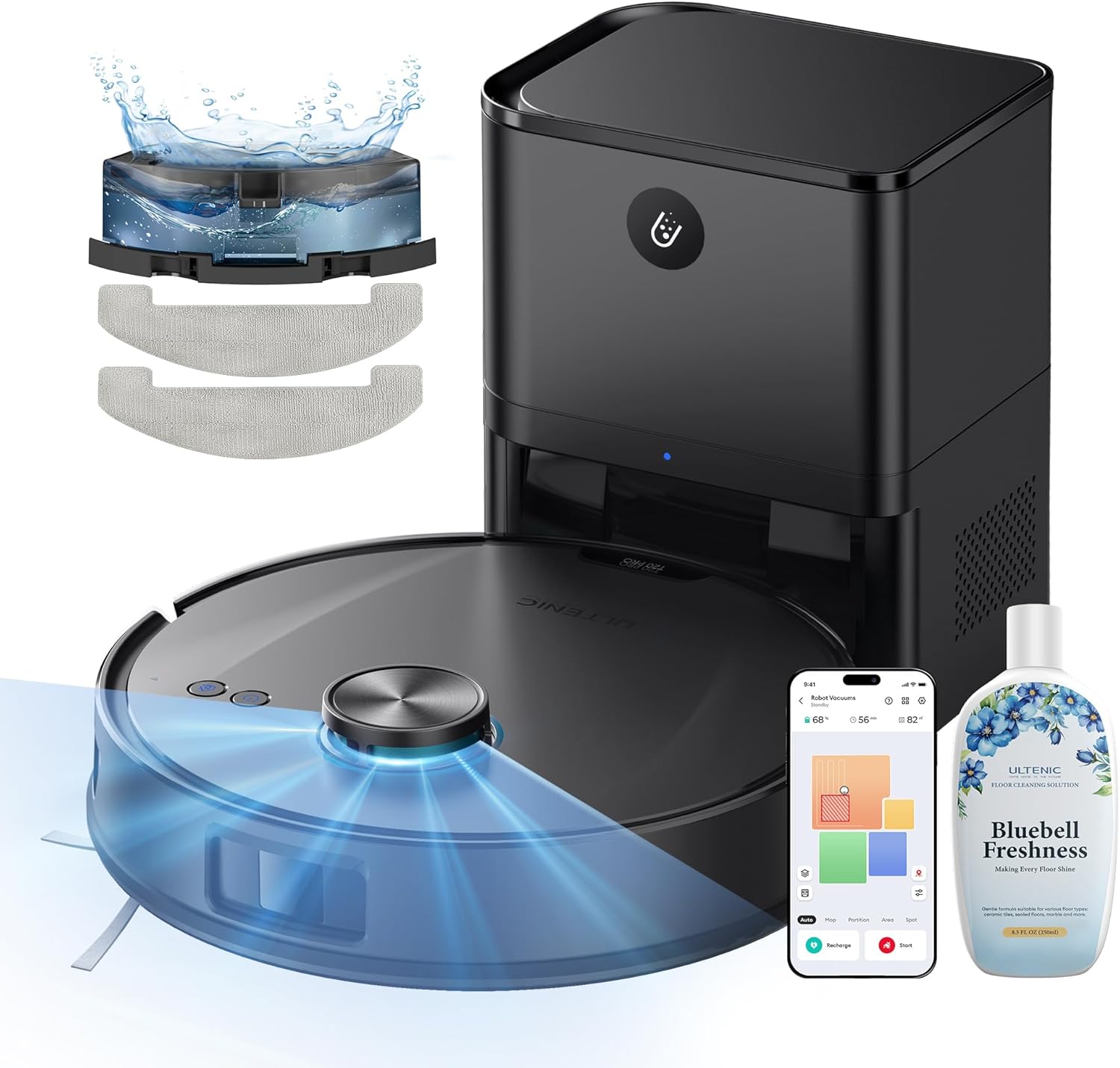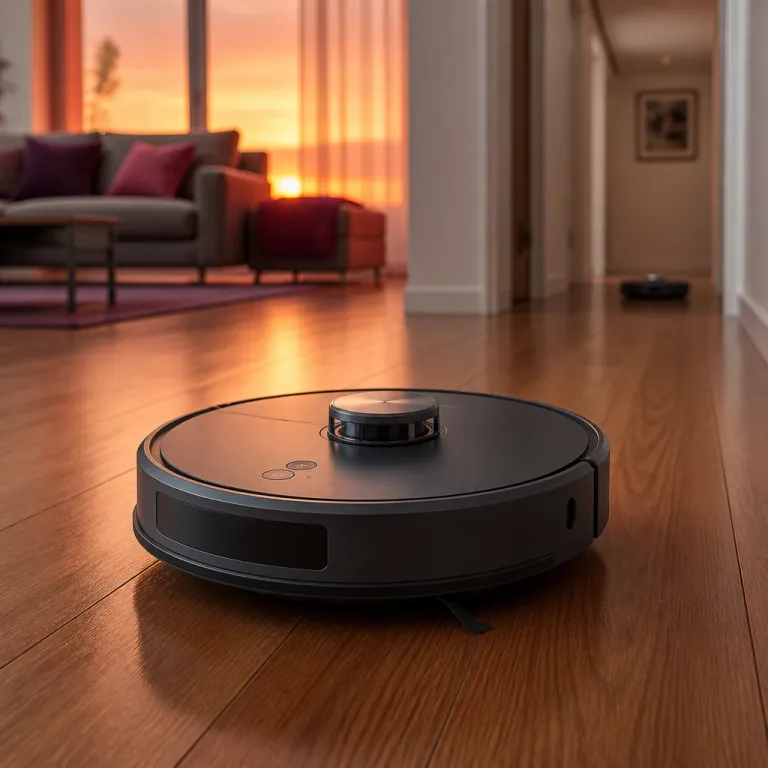

TL;DR: Robot vacuums that use laser-based mapping (lidar) clean more methodically than bump-and-go models. They build a live floor plan, follow orderly paths, and usually miss fewer spots, especially in larger or complex homes. Expect a higher upfront price but better long-term efficiency, smarter app controls, and more reliable updates than most random-navigation robots.
Why lidar scanner navigation changes how robot vacuums map your home
Robot vacuums that rely on a lidar scanner build a structured map instead of wandering. By rotating a laser scanner across a wide degree lidar field, the robot measures distance to every nearby object and converts those readings into geometric data. This process of laser scanning happens in real time and lets the vacuum plan efficient routes rather than repeating the same spots.
At the heart of each lidar system is a lidar sensor that emits a laser beam, times its return, and turns that timing into a precise distance point. Thousands of these points form a point cloud, and modern lidar sensors can generate dense point clouds with high resolution that capture walls, furniture, and narrow gaps with impressive clarity. Compared with random navigation, which only reacts to bumps and basic infrared sensor input, this structured lidar view gives the robot a far better understanding of room shape and obstacle layout.
This mapping approach is similar to what a drone uses when it performs a terrain scan with a professional lidar scanner kit. The robot vacuum does not fly, but it still uses scanning to create a 2D point cloud map that guides every cleaning pass. For buyers, the key benefit is that lidar systems reduce missed areas, shorten cleaning time, and help remove unwanted overlaps that waste battery and create noise.
- + Silencieux
- + Connecté avec WiFi/Bluetooth/Alexa/App
- + 6 Modes de Nettoyage
- + Auto-Charge
- + 8000 Pa de puissance d'aspiration

Mapping vs random navigation: how lidar scanning changes cleaning patterns
Random navigation robot vacuums move in semi chaotic lines, bouncing off each object and slowly covering the floor. They rely on simple collision sensor feedback and basic camera or infrared systems, so they cannot maintain a consistent scanning radius or remember where they have already been. In contrast, a lidar system uses structured scan lines and point cloud data to track its position and follow parallel paths that resemble professional floor cleaning patterns.
When a lidar scanner rotates, it measures distance across a 360 degree lidar field, building a live map that updates as the robot moves. The lidar sensor records each point, and the onboard processor fuses these points into point clouds that show walls, table legs, and even narrow chair bases as distinct shapes. Because the robot knows its own position inside this lidar view, it can return to the charging dock, resume cleaning after a pause, and avoid repeatedly crossing the same area, which random navigation models often do.
This difference becomes even more important in complex homes with stairs, split levels, and long corridors where random navigation can easily miss zones. Advanced research into walking robot vacuums, such as the concepts discussed for stair capable designs in emerging stair climbing robot vacuums, still depends on accurate mapping, and lidar systems are the leading candidate for that role. For a person seeking information, the practical takeaway is simple: if you want predictable coverage and fewer untouched corners, a lidar scanner based mapping robot is usually the safer investment than a random navigation model.
How lidar data, point clouds and AI navigation work together
Inside a mapping robot vacuum, lidar data does not stay as raw distance numbers for long. The lidar scanner converts each laser reflection into a point, then the navigation software groups these points into point clouds that represent walls, furniture, and open floor. Modern lidar systems combine this geometric map with AI algorithms that learn which paths clean fastest and which obstacles tend to move, such as chairs or pet bowls.
Some high resolution lidar sensors can even assign a color point or rgb point to each measurement when paired with a camera, although most home robot vacuums still rely on grayscale or intensity values. This fusion of camera and lidar sensor information helps the robot distinguish between a dark carpet and a drop, reducing the risk of unnecessary cliff avoidance. Research into advanced AI navigation robots, including analyses of AI navigation performance, shows that combining lidar view maps with learning based planning can cut cleaning time while maintaining coverage.
In technical imaging fields, gaussian splatting is used to turn point clouds into smooth 3D scenes, and similar mathematics can help robot vacuums interpret noisy lidar data. While your vacuum will not render cinematic graphics, it still benefits from algorithms that remove unwanted outlier points and stabilize the map when the sensor sees reflective surfaces. The result is that a lidar system can maintain accurate localization even when the robot passes shiny table legs, glass doors, or complex chair frames that would confuse simpler random navigation systems.
Evaluating lidar scanner specifications when buying a robot vacuum
When you compare robot vacuums, the phrase lidar scanner on the box hides several important specifications. The first is scanning range, which tells you how far the lidar sensor can reliably measure walls and objects, and longer range usually means better planning in large rooms. The second is scanning radius or field of view, because a full 360 degree lidar turret can see all around the robot, while partial systems may have blind spots that affect mapping quality.
Resolution matters as well, since a high resolution lidar system produces denser point clouds and more accurate obstacle outlines. In practice, this helps the robot distinguish between a slim chair leg and a solid wall, which reduces collisions and lets it plan tighter paths around furniture. Some premium lidar sensors also support real time updates at higher refresh rates, so the robot can react quickly when a pet, child, or moving object crosses its path.
Buyers should also look at how the robot uses its lidar view inside the app, including whether you can set virtual walls, no go zones, and room labels. A well designed system will let you edit the point cloud based map, merge or split rooms, and remove unwanted partitions that the robot misdetected during its first scan. For a deeper breakdown of how to separate genuine engineering from marketing language in these lidar systems, you can consult analyses on what separates trustworthy robot vacuum specifications from pure marketing, then apply those criteria to the lidar scanner claims on each model.
Price, value and when lidar systems justify the premium
Robot vacuums with a lidar scanner usually cost more than random navigation models, but the price difference has narrowed. Entry level lidar systems now appear in mid range products, giving you structured mapping without paying for every possible smart home kit or camera feature. When you evaluate price, focus on how much floor area you clean each week and how often you want to intervene manually.
In a small studio flat with simple layouts, a cheaper random navigation robot may eventually cover the whole floor, even if it wastes time. In a multi room home with long corridors, pets, and mixed flooring, the efficiency of a lidar system quickly repays the extra cost through shorter cleaning cycles and fewer missed spots. High resolution lidar sensors also tend to age better, because firmware updates can unlock smarter path planning on the same hardware, while random navigation robots have limited room for improvement.
Some brands bundle lidar scanner technology with extras such as a mop kit, self emptying docks, or extended warranties, so compare total package value rather than lidar price alone. Look for clear specifications about scanning range, scanning radius, and lidar sensor durability, instead of vague marketing terms like premium laser. If you prefer to test mapping quality before committing, some retailers offer risk free trial periods, which let you see how well the lidar view matches your actual rooms and whether the robot reliably removes unwanted overlaps in its cleaning routes.
Emerging lidar technologies and what they mean for future robot vacuums
Advances in lidar scanner design are flowing from industrial and drone applications into home robots. Compact solid state lidar sensors, originally developed for automotive systems, promise fewer moving parts and potentially lower failure rates than traditional spinning turrets. As these lidar systems shrink and drop in price, more mid range robot vacuums will gain precise mapping without large sensor housings on top.
Technologies such as real time kinematic positioning, used in surveying grade drone kits, show how accurate localization can become when lidar data is combined with external references. While consumer robot vacuums are unlikely to integrate full RTK systems indoors, they already borrow ideas about error correction and drift reduction from those fields. Some experimental platforms even pair a compact solid state lidar sensor with advanced processors that can handle gaussian splatting like reconstruction, turning raw point clouds into richer internal maps.
Looking ahead, we can expect lidar scanner modules to integrate more tightly with onboard camera systems, enabling better rgb point mapping and object recognition. A future robot vacuum might use a small solid state lidar sensor for geometry, a camera for texture, and AI to classify each object as furniture, clutter, or hazard in real time. For buyers today, the key is to choose a robot with a robust lidar system and clear software support roadmap, so that upcoming mapping improvements can arrive through updates rather than forcing a full hardware replacement.
Key statistics about lidar scanner navigation in robot vacuums
Independent tests and manufacturer documentation provide indicative figures for how laser-based mapping performs in practice. The numbers below summarize trends reported by well-known brands and review labs; exact values vary by model, floor plan, and test method, so treat them as typical ranges rather than guarantees.
- Independent lab tests and industry comparisons have reported that mapping robot vacuums with lidar systems can cover roughly 15 to 25 percent more floor area per cleaning cycle than comparable random navigation models of the same battery capacity, although exact figures vary by test method and floor layout.
- In manufacturer documentation for several leading brands, lidar sensor modules are typically rated at under 5 watts of power during operation, which is a small fraction of the total robot power draw but yields significant gains in navigation accuracy.
- Field testing by robotics research groups has reported localization errors on the order of a few centimeters for home scale lidar scanner based robots operating on flat floors, compared with errors often exceeding 10 centimeters for robots that rely only on bump sensors and basic cameras.
- Surveys of robot vacuum owners published by major retail platforms indicate that models with structured mapping, including lidar view based navigation, receive higher long term satisfaction ratings, often exceeding 4.4 out of 5 stars, while many random navigation models cluster closer to 4.0.
| Example model | Navigation type | Typical cleaning pattern | Best suited for |
|---|---|---|---|
| Roborock S8 series | Lidar-based mapping | Orderly, room-by-room paths | Multi-room homes, mixed flooring |
| iRobot Roomba 600 series | Random navigation | Semi-chaotic bump-and-go | Small, simple apartments |
FAQ about lidar scanner robot vacuums and navigation
Does a lidar scanner make a robot vacuum better than one with a camera only system ?
A lidar scanner gives the robot precise distance measurements in all directions, which usually leads to more accurate maps than a camera only system that depends on lighting and texture. Camera based robots can perform well in bright, feature rich rooms, but lidar systems are more consistent across different lighting conditions. Many premium models now combine lidar sensors with cameras to balance geometric accuracy and visual recognition.
Can a lidar scanner see black carpets or glass surfaces reliably ?
Lidar sensors can struggle with very dark or highly reflective materials, because these surfaces absorb or scatter the laser beam. However, modern lidar systems use signal processing to filter noise and recover distance data from challenging surfaces. In practice, most robot vacuums with lidar scanner navigation handle black carpets and glass doors better than random navigation robots that rely mainly on bump detection.
Is a lidar scanner safe for pets and children in the home ?
Consumer lidar sensors in robot vacuums use low power laser diodes that comply with international eye safety standards for household electronics. The laser scanning beam is typically classified as eye safe at normal exposure distances, and the sensor housing directs the beam horizontally rather than upward. As with any device, you should avoid deliberate close range staring into the emitter, but normal use around pets and children is considered safe.
How often does a lidar scanner need maintenance or cleaning ?
The main maintenance task for a lidar scanner in a robot vacuum is to keep the sensor window free of dust and smudges. A soft, dry cloth or slightly damp microfiber wipe is usually enough to restore a clear lidar view without scratching the plastic or glass cover. Internal components of lidar systems are sealed, so users rarely need to service them unless the robot suffers a strong impact or liquid damage.
Will a lidar scanner help my robot vacuum handle multi level homes ?
A lidar scanner cannot let the robot climb stairs, but it does help the vacuum recognize drop offs and avoid falls. Many lidar system based robots support multiple floor maps, so you can carry the robot to another level, let it perform a new scan, and save that layout in the app. This makes it easier to manage cleaning schedules across several floors compared with random navigation models that forget room layouts every time they move.