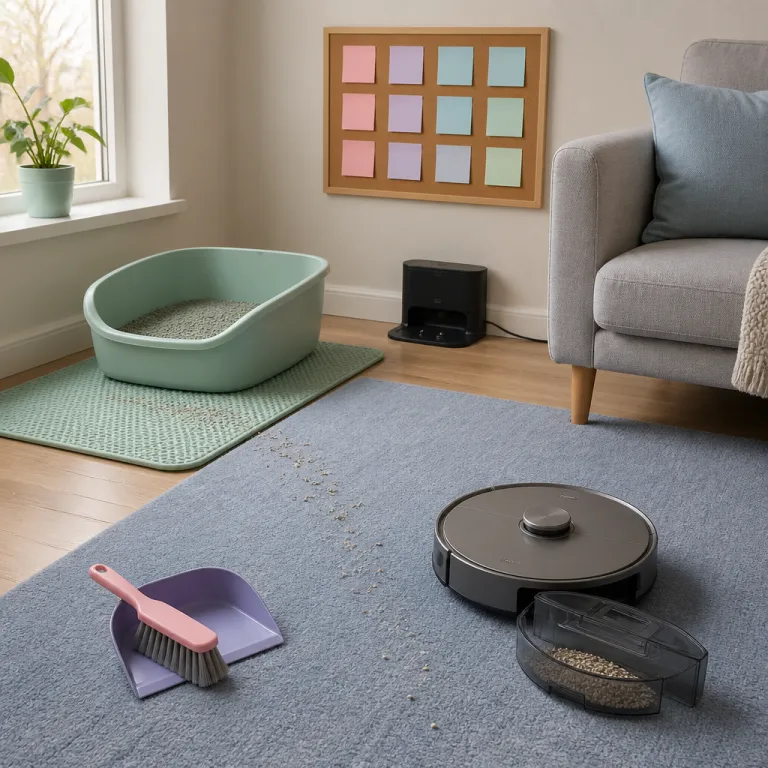
Why cat litter challenges robot vacuums more than pet hair
Cat litter looks harmless until you watch a robot vacuum push it around. Those pale granules are heavier than loose pet hair, and they roll across hard floors instead of clinging to fibers. On tile or laminate floors near the litter box, the grains bounce, skid, and spread several meters from where cats first jump out.
Each step your cat takes from the litter box shakes off more litter and fine dust. That dust behaves differently from cat hair because it seeps into floorboard gaps and under baseboards, where weak suction from older vacuums cannot reach. When a vacuum cleaner hits a dense patch of cat litter, the bin can fill in a fraction of the time it would take with normal household dust and crumbs.
Pet owners often assume that any robot with strong suction power will solve litter tracking. In practice, the best robot for this job balances suction with brush design, bin capacity, and navigation that keeps the robot vacuum circling the high traffic litter zone. A basic robot with poor brushes can grind litter into vinyl floors or scatter it into carpet pile, where even the best vacuum cleaners struggle to pull it back out.
Think about your floors as a system that channels litter. Smooth hard floors let granules roll freely, while rugs near the litter box act like a net that traps both cat hair and cat litter. A robot vacuum that excels on carpets may bog down on scattered litter on hard floors, especially if its wheels slip on loose granules or its brushes flick debris sideways instead of toward the suction inlet.
For cat owners, the goal is not just cleaning what you see but controlling where litter travels. That is why robot vacuums with smart mapping and zone cleaning can be more effective than cheaper vacuums that wander randomly. When you can tell a roomba robot or another robot vacuum to patrol a two meter radius around the litter box several times a day, you reduce the total litter load before it migrates through the entire home.
Brushes and rollers that pick up litter instead of scattering it
The heart of robot vacuum cat litter tracking cleanup is the brush system. Side brushes, main rollers, and the gap between them decide whether litter granules go into the bin or shoot under your sofa. On hard floors, long bristle side brushes can act like cat paws, batting litter away from the suction path instead of feeding it toward the vacuum.
Rubber rollers on many modern robot vacuums, including several Roomba and Narwal models, handle litter better than old style bristle brushes. Rubber fins flex around cat litter pieces and pet hair, pulling them into the suction channel without grinding them into delicate floors. Bristle rollers can still work for cleaning carpets, but on hard floors they often flick lighter debris sideways, which makes robot vacuum cat litter tracking cleanup feel endless.
If you share your home with multiple cats, prioritize a robot vacuum with dual rubber rollers and strong suction. The dual design helps separate pet hair from heavier litter, so the vacuum cleaner does not choke when both arrive at the intake at the same time. In mixed debris tests, robots with this setup left less dust and fewer granules around the litter box than single roller vacuums with similar suction power ratings.
Side brush design matters just as much as the main roller. Shorter, stiffer side brushes tend to sweep litter inward on hard floors, while long, whippy brushes can scatter it into corners that even the best vacuum might miss. If your robot allows side brush speed control or a quiet night mode, as discussed in guides to quiet night cleaning for nervous pets, slowing the brush can reduce scatter while still catching cat hair along baseboards.
For pet owners who also want a vacuum mop combination, check how the vacuum mop head sits relative to the roller. You want the roller to grab dry litter and cat hair first, then let the mop pad handle any remaining dust film. If the mop pad leads, it can push dampened litter into grout lines, making later cleaning harder for both robots and traditional vacuum cleaners.
Rubber rollers, suction power, and real world litter pickup
Marketing often shouts about suction power numbers, but cat litter tells a more nuanced story. A robot with 4 000 Pa suction and poor airflow can still leave a halo of granules around the litter box, while a 2 500 Pa model with efficient channels and rubber rollers can pull more litter in less time. For robot vacuum cat litter tracking cleanup, airflow stability and brush contact with the floor matter as much as raw suction.
Rubber rollers maintain consistent contact with both hard floors and low pile rugs, which keeps suction focused where litter and pet hair actually sit. Bristle brushes tend to ride up on larger debris, letting air leak around the sides and reducing effective suction power at the point of contact. When you add in cat hair, which wraps around bristles, the brush can stiffen and start bouncing over litter instead of capturing it.
Some premium robots, such as the Ecovacs Deebot T20 Omni and Ecovacs T90 Pro Omni, pair strong suction with self cleaning docks that wash mop pads and empty bins. In independent tests on pet hair and cat litter, these pro level systems handled mixed debris on hard floors better than many older Roomba robot models that relied on bristle brushes. If you are comparing options for a pet household, detailed reviews of the Ecovacs T90 Pro Omni for pet homes can help you weigh suction specs against real litter pickup.
Self emptying docks raise a fair question for cat owners who worry about long term wear. Litter granules are abrasive, and over time they can scuff plastic channels in both robot vacuums and their docks, especially if the system uses very high suction to pull debris from the bin. In practice, most docks are designed to handle small hard particles, but you should still check the bin and dock pathways regularly for cracks or clogs if your cats use a clay based litter.
For homes with several cats and large litter boxes, the best robot strategy is often to combine strong suction with a generous dustbin and a robust dock. That way, the robot vacuum can handle repeated cleaning runs around the litter box without stopping every few minutes for a full bin. When you pair this with a smart schedule, you reduce the total amount of cat hair, cat litter, and dust that ever reaches the rest of your floors.
Dustbins, docks, and schedules that match real litter traffic
Cat litter fills a robot dustbin faster than almost any other household debris. A single enthusiastic vacuum cat pass around a busy litter box can collect more weight in granules than an entire apartment run focused only on pet hair and crumbs. That is why robot vacuum cat litter tracking cleanup lives or dies on bin capacity and how often the robot can empty itself.
For one cat and a compact litter box, a mid sized bin in a basic robot vacuum may be enough if you run short, targeted cleaning cycles. With multiple cats or a large litter robot style automatic box, you will want either a self emptying dock or a habit of emptying the bin by hand after every litter zone run. Pet owners who skip this step often find their best vacuum leaving trails of litter because the bin door cannot close properly once it is packed with dust and granules.
Scheduling is where you can outsmart the mess. Instead of one long daily cleaning, set your robot vacuums to run short, high frequency passes in the litter area, ideally ten to twenty minutes after your cats’ most active times. Many cats use the box right after meals or play, so aligning the robot vacuum schedule with those patterns keeps litter from migrating across hard floors and into carpeted rooms.
Night schedules can work if your cats are not afraid of robots, but some pets react badly to a roomba robot humming near the litter box in the dark. If you need quiet operation, look for models with low noise modes similar to those highlighted in night mode cleaning guides, and keep the robot away from bedrooms during sleep hours. The goal is to maintain clean floors without stressing cats or light sleepers, which is why flexible scheduling and zone controls matter as much as suction power.
Over weeks of consistent use, a well tuned schedule reduces the total litter load your vacuum cleaners must handle. You will still need occasional deep cleaning with a traditional vacuum cleaner, especially on rugs that trap cat hair and fine dust, but the daily grind of gritty litter under bare feet will ease. When the robot handles the repetitive work, you can focus your own cleaning time on spots the robot cannot reach, such as high shelves or tight corners behind the litter box.
Positioning the litter box, mats, and robots for less tracking
Even the best robot cannot win if the litter box sits in the worst possible spot. When a box opens directly onto a long hallway of hard floors, every leap from the box sends litter and dust straight down a runway your vacuums must patrol constantly. A small layout change can cut the distance that cat litter travels before the robot vacuum ever rolls out.
Place the litter box in a corner or alcove where you can create a short path to the main living area. A textured litter mat in front of the box will catch a surprising amount of granules and cat hair before they hit the wider floors, which lightens the load on both robot vacuums and upright vacuum cleaners. For cat owners with nervous pets, choose a mat large enough that cats do not have to step directly onto cold tile after using the box, which can make them bolt and scatter more litter.
Think about how your robot approaches the litter zone. If the robot vacuum must cross the mat at an angle, it may bunch the mat up and spill trapped litter back onto the floor, undoing some of your cleaning work. Heavier mats with rubber backing stay flatter under roomba robot wheels and under the wheels of other best robot models, especially when the robot uses strong suction that can tug at loose fabric.
Odor control products around the litter box can also affect cleaning. Powdered deodorizers add extra dust that clings to pet hair and can cake inside a vacuum cleaner bin, so use them sparingly if your robot runs several times a day. Covered boxes trap smells but can encourage cats to dig more vigorously, which throws extra litter and dust out the front opening and onto the path your robot must clean.
For homes with both cats and dogs, position food bowls away from the litter area so robots do not have to navigate around water spills while handling litter. A vacuum mop combo can handle light damp spots, but wet litter turns into cement like clumps that stick to mop pads and rollers. By separating water, food, and the litter zone, you give your robot vacuum the best chance to keep floors clean with minimal intervention and less wear on brushes and bins.
Choosing the right robot vacuum for cat litter tracking cleanup
When you shop for a robot vacuum as a cat owner, start with your floors and litter habits, not the spec sheet. Homes with mostly hard floors and clay based litter need robots with excellent edge cleaning and rubber rollers, while carpet heavy homes benefit from models that balance litter pickup with deep pet hair removal. The phrase robot vacuum cat litter tracking cleanup should translate into a checklist, not a marketing slogan.
Look for robots that combine strong suction with smart navigation and a decent sized bin. Models like the iRobot Roomba j7 Plus, Roborock Q Revo, and Narwal Freo X Ultra pair strong suction power with dual rubber rollers and self emptying docks, which helps them handle both cat hair and cat litter around busy boxes. For pet owners who prefer a simpler vacuum cleaner without a dock, mid range robot vacuums from brands like Eufy and Yeedi can still perform well if you are willing to empty the bin after each litter zone run.
Pay attention to how each robot handles mapping and no go zones. You want to be able to send the robot vacuum directly to the litter box area for quick cleaning, while keeping it away from fragile items or water bowls that could complicate vacuum mop operation. Detailed buying guides, such as those on how to choose the best robot models for your home, can help you match features to your specific mix of cats, floors, and litter types.
Do not overlook filtration and odor control. A robot that traps fine dust from litter and cat hair in a high efficiency filter will keep the air around the litter box fresher, especially in small apartments where pet odors build quickly. While no robot can replace good litter box hygiene, a well chosen model can reduce the visible dust halo and the subtle grit underfoot that remind you the box is nearby.
Finally, consider long term maintenance. Rubber rollers are easier to clean of pet hair than bristle brushes, and replacement parts for popular roomba robot and Narwal pro style models are widely available. When you choose a best vacuum setup that you can maintain easily, you are more likely to keep brushes, bins, and filters in top shape, which keeps robot vacuum cat litter tracking cleanup effective month after month.
FAQ
Do I really need a self emptying dock for cat litter?
You do not strictly need a self emptying dock, but it helps. Cat litter fills a robot dustbin much faster than normal dust, so frequent manual emptying becomes essential without a dock. If you have several cats or large litter boxes, a dock keeps performance consistent with less daily effort.
Which brush type is best for cleaning tracked litter?
For most homes, dual rubber rollers outperform bristle brushes on tracked litter. Rubber rollers keep close contact with hard floors and do not flick granules sideways as easily. They also resist tangles from pet hair, which keeps suction focused on the litter path.
Can a robot vacuum replace manual sweeping around the litter box?
A good robot can handle most daily litter tracking, but not every edge. You will still need occasional manual sweeping or vacuuming in tight corners and under low furniture. Think of the robot as your first line of defense, not your only cleaning tool.
Will cat litter damage my robot vacuum over time?
Cat litter is abrasive, so it can wear on plastic parts if neglected. Regularly checking the brush housing, wheels, and bin for embedded granules reduces long term damage. Replacing worn rollers and filters on schedule keeps the robot running safely.
How often should I run my robot near the litter box?
Most cat owners get good results with two to four short runs daily. Scheduling them shortly after typical litter box use prevents granules from spreading through the home. You can then add a longer whole home run once or twice a week for general cleaning.