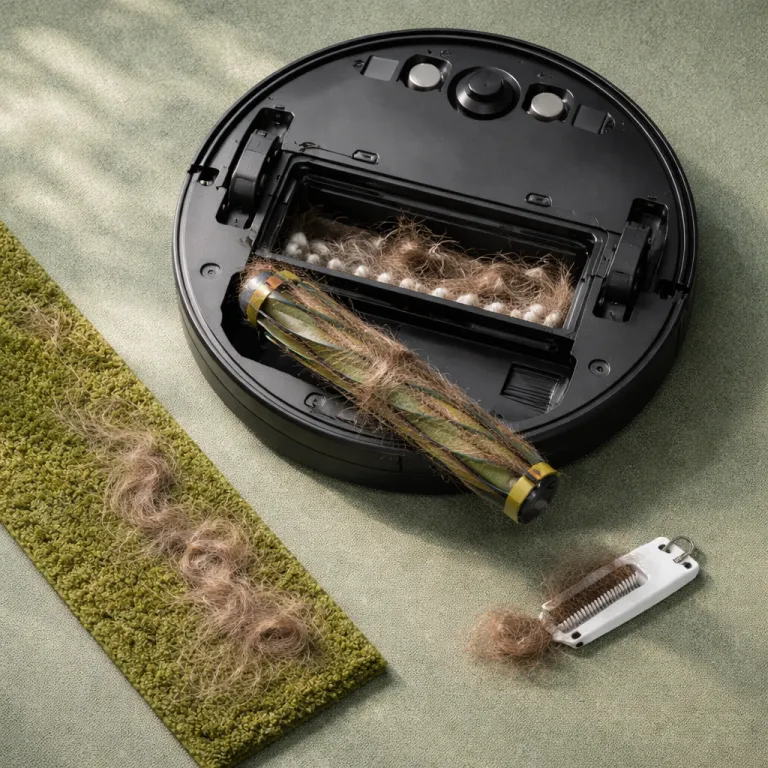

Why pet hair breaks weaker robot vacuums first
Pet owners quickly learn that the best robot vacuum for pet hair is less about shiny apps and more about raw cleaning stamina. When a robot vacuum faces daily drifts of dog hair and cat dander, its suction, brush design, and dust bin capacity are stressed harder than in any lab tests. A model that looks like the vacuums best choice on paper can choke once hair carpets the rollers and clogs the air path.
Think about what actually happens on your carpets and hard floors during a busy week with a shedding pet. Long hair and short fur wrap around the main brush, pack into side brushes, and form dense mats that block suction power before the vacuum cleaner even reaches the dust bin. If the robot cannot maintain airflow and keep its brush turning freely, its performance on pet hair collapses long before the battery life runs out.
Rubber brushes were created to solve this, and they do help a lot with pet hair and mixed debris. Compared with old bristle designs, rubber paddles flex to flick hair into the intake instead of trapping it, which keeps robot vacuums cleaning more consistently across different floor types. Yet even the best robot with a modern brush still needs regular maintenance, because no design is completely immune to long strands, string, or forgotten shoelaces.
How rubber brushes really handle pet hair tangles
Manufacturers now market rubber brush systems as the magic answer for pet hair, but the geometry matters more than the material. Paddle style designs with deep cut outs, like those on higher end robot vacuum models, give hair fewer continuous edges to wrap around, so the brush can keep spinning even when the carpets are heavily shed on. Dual roller layouts go further by counter rotating to pull hair into the suction path instead of letting it twist into knots around a single axle.
Independent tests on anti tangle systems show why this design focus matters for pet owners. In controlled cleaning trials, the Dreame P50 CleanChop anti tangle brush achieved 0% hair wrap on 7 inch strands versus 38% average for traditional bristle brushes, which is a huge difference when you live with long haired pets. That kind of performance means less time cutting hair from the brush and more time letting the robot vacuum quietly clean while you handle other tasks.
Real homes still expose the limits of rubber though, especially when hair and string mix. Very long human hair, curly fur, and thread like debris can still bind around the brush ends, even on premium robot vacuums with strong suction and careful obstacle avoidance. If you want a practical cleaning companion for pet owners, such as the type examined in this detailed pet focused robot vacuum review, plan on a quick brush inspection every few days rather than assuming the hardware will stay perfectly clean.
Dual rubber rollers versus single brushes on carpets
On thick carpets loaded with pet hair, dual rubber rollers usually beat single brush systems for both pickup and reliability. Two coordinated rollers can agitate hair carpets from different angles, lifting fur that a lone brush might skate over while still keeping enough suction to pull dust and dander into the dust bin. This is why many best robot contenders for multi pet homes now pair dual rollers with high suction power ratings and smart navigation.
Take the Roborock Q10 S5 as a concrete example of how design choices translate into daily cleaning performance. Its strong vacuum mop configuration, high airflow, and carefully tuned brush geometry allow it to maintain deep cleaning on carpets without constantly stalling from wrapped hair, which matters more than any marketing claim about ultra suction. A long term review of this model, available as a mighty suction with minimal maintenance analysis, shows how a well balanced robot can handle both pet hair and routine mopping in one schedule.
Single rubber brushes are not useless though, especially in smaller flats with more hard floors than rugs. A compact robot vacuum with one main brush can still be the best robot choice for a mixed home if its navigation is reliable, its mop pad system is easy to manage, and its battery life is long enough to reach areas that collect fur. The key is matching the brush layout and suction to your actual floor plan instead of chasing the highest advertised numbers.
Maintenance, mopping systems, and real world usability
Even the best robot vacuum for pet hair needs regular hands on care, and rubber brushes mainly change how that work feels. Instead of combing fur from stiff bristles, you usually peel hair from smooth rubber paddles, which takes seconds if you keep up with it and empty the dust bin before it overfills. Side brushes, wheels, and sensors also need attention, because trapped dust and hair can quietly degrade obstacle avoidance and navigation accuracy over time.
Modern vacuum mop combinations add another maintenance layer for pet owners, especially when mopping around food bowls and litter areas. Systems like the Dreame Ultra style docks, which automatically wash mop pads and then dries mop surfaces with warm air, reduce the daily effort but still require you to clean the fresh water tank, waste tank, and internal filters. If you ignore those parts, dirty water and fine dust can circulate back onto hard floors, undercutting the whole promise of automated cleaning.
Some robot vacuums now include virtual barriers in their apps, letting you block water sensitive zones or thick rugs from any mopping routine. This matters when a vacuum mop crosses from tiles to carpets, because a wet mop pad dragged over fabric can leave damp tracks that trap more pet hair than it removes. For a deeper breakdown of how to choose the best robot for real homes and busy lives, including maintenance trade offs, you can read this guide on how to choose the best vacuum robot for everyday cleaning.
When bristle brushes still make sense for pet owners
Bristle brushes have a bad reputation with pet hair, yet they are not always the wrong choice. On mostly hard floors with minimal rugs, a traditional brush can sweep fine dust and grit effectively, especially when paired with strong suction and a well sealed air path. In these cases, hair tends to slide across the surface rather than burrow into fibers, so the brush spends less time wrestling with tangles.
Some budget robot vacuum models still ship with bristle based designs because they are cheaper to manufacture and easy to pair with simple navigation systems. If your pets shed lightly and you mainly want a robot to keep crumbs and surface dust under control, these vacuums can be the best value even if they are not the best robot for heavy pet hair carpets. The trade off is more frequent brush cleaning when hair does accumulate, which means keeping a small comb or scissors near the charging dock.
Rubber and bristle brushes have similar lifespan ranges, typically six to twelve months before wear affects performance, so replacement cost is not a decisive factor. What matters more is how each design handles your specific mix of hair, floor types, and debris, from long human strands to granular litter. If you understand where rubber excels and where it still tangles, you can choose a robot, mop system, and brush layout that actually keeps your home clean instead of just looking ultra advanced in marketing photos.
FAQ
What makes a robot vacuum genuinely good for pet hair ?
A strong pet focused robot vacuum combines high suction power, an efficient rubber brush, and a generous dust bin so it can handle dense fur without constant emptying. Reliable navigation and obstacle avoidance help it reach areas where hair collects, such as under beds and around furniture legs. For most pet owners, consistent pickup on both carpets and hard floors matters more than any single ultra high suction rating.
Are vacuum mop robots safe to use around pet bowls and litter ?
Vacuum mop models can work well in pet zones if you manage their settings carefully. Use virtual barriers or no mop zones in the app to keep wet mop pads away from food bowls, litter trays, and thick rugs. Regularly cleaning the mop pads and ensuring the dock properly dries mop components will prevent odors and stop dirty water from spreading across hard floors.
How often should I clean the brushes on a robot vacuum in a pet home ?
In a home with one or two shedding pets, checking the main brush every three to four runs is usually enough to prevent serious tangles. Rubber brushes make this faster, because you can peel hair away instead of cutting through dense knots in bristles. If you have long haired pets or family members, plan on a quick brush and side brush inspection after almost every full house cleaning cycle.
Do higher suction numbers always mean better pet hair cleaning ?
High suction ratings help, but they do not guarantee better pet hair pickup on their own. Brush design, airflow path, and how well the robot maintains contact with carpets and hard floors all influence real world performance. A balanced system with moderate suction, smart navigation, and a well designed brush often cleans pet hair more effectively than a louder model that simply chases maximum power.
Is a self emptying dock worth paying for in a pet household ?
Self emptying docks are particularly useful for pet owners because fur fills small onboard dust bins quickly. A dock that automatically empties the robot after each run lets you schedule daily cleaning without worrying about midweek overflows. If you have multiple pets or thick carpets that shed heavily, this feature can be more impactful than minor differences in suction or battery life.
Key statistics about robot vacuums for pet hair
- The Dreame P50 CleanChop anti tangle brush achieved 0% hair wrap on 7 inch strands versus 38% average for traditional bristle brushes in controlled tests.
- Rubber and bristle brushes show comparable lifespan ranges, typically six to twelve months before wear noticeably reduces cleaning performance.
- Dual roller systems on robot vacuums improve pet hair pickup on carpets by agitating fibers from multiple angles while maintaining suction.
- Self emptying docks significantly reduce maintenance frequency in multi pet homes by offloading fur and dust after each cleaning run.