IRobot’s mid range relaunch and what the new Roomba 2026 lineup changes
iRobot is using the new Roomba 2026 family to claw back ground in a robot vacuum market dominated by Chinese rivals. The company’s five new Roomba robots with self emptying docks all land under 1 000 dollars, positioning each Roomba robot directly against models like the Dreame L60 Ultra PE and Ecovacs T80S Omni while trying to stay the best option for U.S. households watching every dollar. For a budget conscious buyer comparing many robot vacuums and traditional vacuums, that pricing shift matters more than any flashy suction number on a spec sheet.
The flagship Roomba Max 775, as described in iRobot’s preliminary product brief and other launch marketing, sits at 999.99 dollars and anchors the new Roomba 2026 range with 3D LiDAR navigation, a heated mop plate that iRobot says reaches about 75 °C, and a redesigned autoempty dock that handles both dust and water emptying in one footprint. Below it, the Roomba Max 715 at 699.99 dollars focuses on strong suction power as a vacuum only robot vacuum, skipping the mop to keep costs down while still promising enough power to pull embedded pet hair from medium pile carpets. Three Plus series Roomba robots — Plus 575 at 799.99 dollars, Plus 515 at 699.99 dollars, and Plus 415 at 599.99 dollars — round out the robot vacuums lineup with smaller bodies, lighter combo robot hardware, and simpler docks that still offer hands free bin emptying.
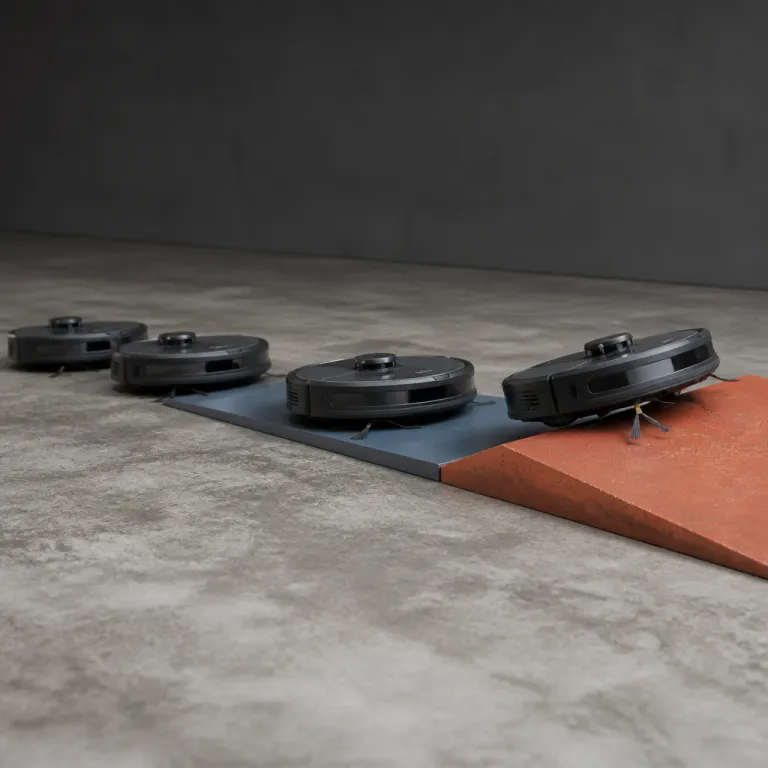
According to iRobot’s launch materials and spec sheets, every new Roomba robot in the Plus line is about 46 percent smaller than its predecessor, with a body slim enough to slip under furniture with roughly 9 centimeters of clearance, which is a real life gain if your current vac robot keeps missing the sofa. That compact design also lets each Roomba combo or standard Roomba robot weave more easily between chair legs and under low TV stands, so the robot vacuum spends less time stuck and more time cleaning where dust actually hides. For anyone who has watched a Roborock Qrevo or other best robot contender wedge itself under a recliner, this change in Roomba robots dimensions may be as valuable as raw suction power.
iRobot is also betting that a separate Roomba Electro Plus floor cleaner at 399.99 dollars will appeal to people who want mop level cleaning without committing to a full combo robot. This non robotic unit uses electrolyzed water that iRobot claims kills 99.99 percent of germs on hard floors in its marketing, promising a chemical free way to clean kitchens and bathrooms while you keep a traditional robot vacuum or upright vacuum for carpets. It does not replace a Roomba combo or vacuum mop robot autowash system, and it still needs pad rinsing and tank refills, but it gives iRobot one more way to reach households that still hesitate about fully hands free robot cleaning.
For readers still mapping the basics, a detailed Roomba vacuum buying guide for smarter everyday cleaning remains a useful starting point before you weigh the new Roomba 2026 models. That kind of guide explains how suction, navigation, and dock design interact in real homes, not just in lab tests, and why you should also look at runtime, battery capacity, and dustbin or water tank sizes when you compare robot vacuums. Once you understand those fundamentals, the differences between a Roomba Max 775, a Plus 575, and a rival like the Roborock Qrevo become much easier to judge on their actual merits.
How the new docks, combo mops, and cleaning systems work in daily life
The most visible hardware change in the new Roomba 2026 range is the family of autoempty dock designs that now ship with every Roomba robot in this launch. Each dock is built to keep the user as hands free as possible, pulling dust from the robot vacuum’s bin into a larger bag while some models also manage mop water, which directly reduces how often you think about emptying or refilling anything. For busy households juggling work, kids, and pets, that kind of invisible cleaning support can quietly save hours of life over a year, even though you still need to swap dust bags and top up clean water on a regular schedule.
On the Roomba Max 775, the autowash dock goes further by heating mop water to about 75 °C, scrubbing the mop pad, and then drying it to limit odors, which brings it closer to the robot autowash systems seen on premium stations from brands like Dreame and Ecovacs. That autowash dock setup means the Roomba combo hardware on the Max 775 can tackle sticky kitchen spills and dried footprints with more consistent cleaning power, instead of just dragging a damp cloth around the floor. In practice, that makes this Roomba combo robot feel more like a true vacuum mop system and less like a token add on, though baked on stains and grout lines will still need occasional manual mopping.
The Plus 575 and Plus 515 keep the same basic combo robot idea but with simpler docks that focus on dust emptying rather than full autowash cycles, which helps keep their prices under 800 dollars while still offering hands free bin emptying. These Roomba combo models rely on the robot vacuum itself to manage water tanks and mop pads, so you will still handle some manual cleaning tasks and pad washing, but you gain the core benefit of not having to dump the dustbin after every run. For many apartments with mostly hard floors and limited pet hair, that trade off between dock complexity, ongoing maintenance, and price will feel like the best balance.
The entry Plus 415 skips the mop entirely and behaves like a classic Roomba robot vacuum with an autoempty dock, which suits buyers who care more about deep carpet cleaning than shiny tile. Without a mop module, the robot vacuums in this tier can devote more battery and suction power to pulling grit from rugs, and they avoid the maintenance overhead of tanks, pads, and autowash dock plumbing. If you already own a separate Braava style mop or the new Electro Plus hard floor cleaner, pairing it with a vacuum only Roomba robot can be a smarter way to save money while still keeping every surface clean, especially once you factor in replacement bags, filters, and brushes over several years.
Navigation and obstacle handling also see incremental upgrades across the new Roomba 2026 family, especially on the Roomba Max 775 with its 3D LiDAR sensor array. That system maps rooms more precisely and better avoids obstacles like shoes, charging cables, and pet toys, which reduces the number of times you need to free a stuck vac robot mid cycle. The result is not just a cleaner floor but a more predictable cleaning schedule, which matters when you want to run robot vacuums while you are out and come home to a reliably clean space, even if exact runtime, suction in pascals, and battery size will depend on final production specs.
To make those dock and combo mop differences easier to scan, the table below summarizes how the Roomba 2026 models compare with the Dreame L60 Ultra PE, Ecovacs T80S Omni, and Roborock Qrevo on a few headline features, using manufacturer specifications and public product pages as primary sources.
| Model | Approx. price (USD) | Vacuum / mop | Dock type | Navigation |
|---|---|---|---|---|
| Roomba Max 775 | 999.99 | Vacuum + heated mop | Autoempty + hot water autowash | 3D LiDAR |
| Roomba Max 715 | 699.99 | Vacuum only | Autoempty | Advanced mapping |
| Roomba Plus 575 | 799.99 | Vacuum + mop | Autoempty | Smart mapping |
| Roomba Plus 515 | 699.99 | Vacuum + mop | Autoempty | Smart mapping |
| Roomba Plus 415 | 599.99 | Vacuum only | Autoempty | Room mapping |
| Dreame L60 Ultra PE | Typically 400–600 | Vacuum + mop | Autoempty + pad wash | LDS LiDAR |
| Ecovacs T80S Omni | Typically 800–1 000 | Vacuum + mop | Omni station with hot wash | LiDAR + AI camera |
| Roborock Qrevo | Typically 600–900 | Vacuum + mop | Autoempty + pad wash | LiDAR |
Value, competition, and who should actually buy the new Roomba 2026 models
iRobot’s pricing strategy for the new Roomba 2026 lineup is clearly aimed at the mid range, where models like the Roborock Qrevo, Dreame L60 Ultra PE, and Ecovacs T80S Omni have been quietly winning value focused shoppers. By keeping every new Roomba robot with an autoempty dock under 1 000 dollars, iRobot is signaling that it wants to compete on real world value rather than luxury features that only a few households use. For a first time robot vacuum buyer, that means you can compare Roomba robots and rival robot vacuums on cleaning performance, navigation, and long term life costs instead of just staring at list prices.
The Roomba Max 775 will appeal most to larger homes with mixed floors, multiple pets, and people who want a single combo robot to vacuum and mop without constant supervision. Its stronger suction power, heated mop, and more advanced control options through the iRobot app justify the premium within this family, especially if you routinely deal with pet hair tumbleweeds and dried kitchen spills. If your budget stretches that far and you want one of the best robot options that still stays under four figures, this Roomba Max tier model is the logical pick, provided you are comfortable with higher costs for replacement bags, filters, and mop pads over time.
For smaller spaces or tighter budgets, the Plus 575 and Plus 515 hit a more comfortable middle ground by pairing solid vacuum performance with basic combo mop functions and a simpler autoempty dock. These Roomba combo units will not match the full robot autowash experience of the Max 775, but they still keep your hands free from daily bin emptying and handle routine cleaning on both hard floors and low pile rugs. In many apartments, that balance of features, price, and maintenance effort will feel like the best everyday fit, especially if you do not need the longest battery life or the very strongest suction figures on the market.
The Plus 415 and the non robotic Electro Plus cleaner target a different buyer who is more interested in stretching every dollar than chasing the latest dock technology. A Plus 415 paired with a separate Braava style mop or the Electro Plus unit can match much of the cleaning coverage of a high end combo robot while keeping hardware simpler and easier to service over the life of the products. If you are willing to push a mop occasionally and focus your robot vacuum on carpets and general dust, this split strategy can quietly save money without leaving your floors any less clean, though it does trade away some of the fully automated convenience that premium stations offer.
Shoppers who are still undecided between iRobot and rivals like Roborock should look closely at long term support, spare parts pricing, and how often each brand actually updates its apps and firmware. A detailed analysis of how iRobot previously shrank its LiDAR Roomba bodies by about one quarter, available in this Roomba LiDAR reboot overview, shows that the company has been steadily refining navigation and chassis design rather than chasing gimmicks. For a budget conscious buyer, that track record, combined with the new Roomba 2026 focus on sub 1 000 dollar pricing, makes these Roomba robots a serious alternative to a Roborock Qrevo or other best robot contenders when you care about both cleaning performance and long term reliability, even if some detailed specs like exact suction in pascals or water tank capacity are still emerging.