
Summary
Editor's rating
Value for money: strong cleaner if you don’t need fancy extras
Design and build: practical, a bit chunky, not fancy
Battery life and daily use: good endurance, some small annoyances
Durability and maintenance: solid build, but you need to stay on top of cleaning
Cleaning performance: strong suction, decent mop, a few quirks
What you actually get and what it’s meant for
Pros
- Strong suction and very good carpet cleaning for the price
- LiDAR navigation gives accurate maps and systematic coverage
- App control is clear and flexible (per-room power, no-go zones, schedules)
Cons
- Mop doesn’t lift high and struggles with thick carpets, leaves edges unmopped
- Potential risk for softer wood floors and needs regular maintenance to avoid clogs

Specifications
View full product page →| Brand | roborock |
A robot vac that mostly just shuts up and works
I’ve been running the Roborock Q7 M5 in a flat with hard floors, a couple of rugs, and one very hairy pet. Before this I tried a cheap no-name robot and briefly a higher model (Q10). Both annoyed me more than they helped: constant errors, dumb mapping, and they loved smashing into furniture. The Q7 M5 is the first one I’ve used that I can mostly forget about once it’s set up, which is kind of the whole point of a robot vacuum.
Out of the box, setup was straightforward: connect to 2.4 GHz Wi‑Fi, run the first mapping, tweak the zones in the app. The first mapping run was quick and surprisingly accurate compared to the older inertia-based models I tried. No repeated wall-bashing, no weird ghost rooms. After that, I just set a schedule and let it do its thing. It’s not perfect, but it’s reliable enough that I don’t feel the need to babysit it.
Where it stands out for me is consistency. It doesn’t try to be clever with gimmicks; it vacuums on time, returns to base, and the app control is clear. Suction is strong enough that my carpets look cleaner than with the cheap robot, and pet hair is finally not building up in corners as much. The mop is more of a bonus than a full replacement for manual mopping, but for light maintenance it’s fine as long as you know its limits.
If you’re expecting a magic box that deep-cleans like a corded vacuum and mops like a person on their knees, you’ll be disappointed. It’s not that. But if you want something that handles daily crumbs, dust, and pet hair so you only do a proper clean once a week instead of every other day, this is a pretty solid option. Just be aware of some quirks with the mop, wood floors, and the small water tank.
Value for money: strong cleaner if you don’t need fancy extras
Looking at the price bracket and the Amazon rating (4.2/5 with over 2,600 reviews), the Q7 M5 sits in that middle zone: not cheap, not premium. For what you pay, you get strong suction, solid navigation, decent app control, and basic mopping. No self-emptying dock, no mop-lift, no fancy camera obstacle avoidance. For a lot of people, that’s actually a good trade-off: fewer things to break, and you pay mainly for cleaning performance and mapping.
Compared with cheaper robots I’ve tried, the extra money mainly buys you reliability and mapping. The cheap ones technically “vacuum,” but they get stuck, miss big sections, slam into furniture, and end up annoying you. One Amazon reviewer summed it up nicely: they tried a Q10 and a cheap no-name, hated both, and said the Q7 just quietly does the job on schedule without fuss. That’s pretty much how I’d describe its value: not flashy, but it actually works like a tool instead of a toy.
Where the value drops a bit is if you mainly want the mop function or have sensitive wood floors. The mop is fine for maintenance but not strong enough to justify a big part of the price on its own. And if you have bamboo or other softer woods, the risk of marks plus the complaint about surface damage could be a deal-breaker. In that case, a simpler robot vacuum without a roller that aggressive, plus a separate manual mop, might be smarter.
Overall, for mixed floors (tiles, laminate, normal carpets) and at least some pet hair, I’d say the Q7 M5 offers good value for money. You’re paying for reliable navigation and strong vacuum performance, not for the latest fancy features. If you want a robot that just vacuums well and occasionally mops, and you don’t mind emptying the bin and cleaning the mop pad yourself, the price makes sense. If you want full automation, detergent in the tank, or zero maintenance, this isn’t it and you’ll need to spend more on a higher-end model with a base station and mop lift.

Design and build: practical, a bit chunky, not fancy
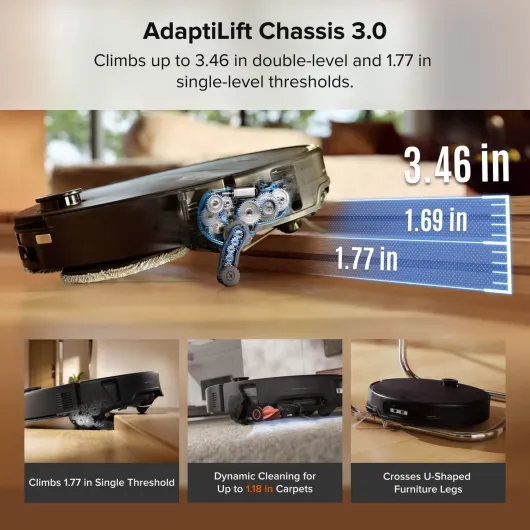
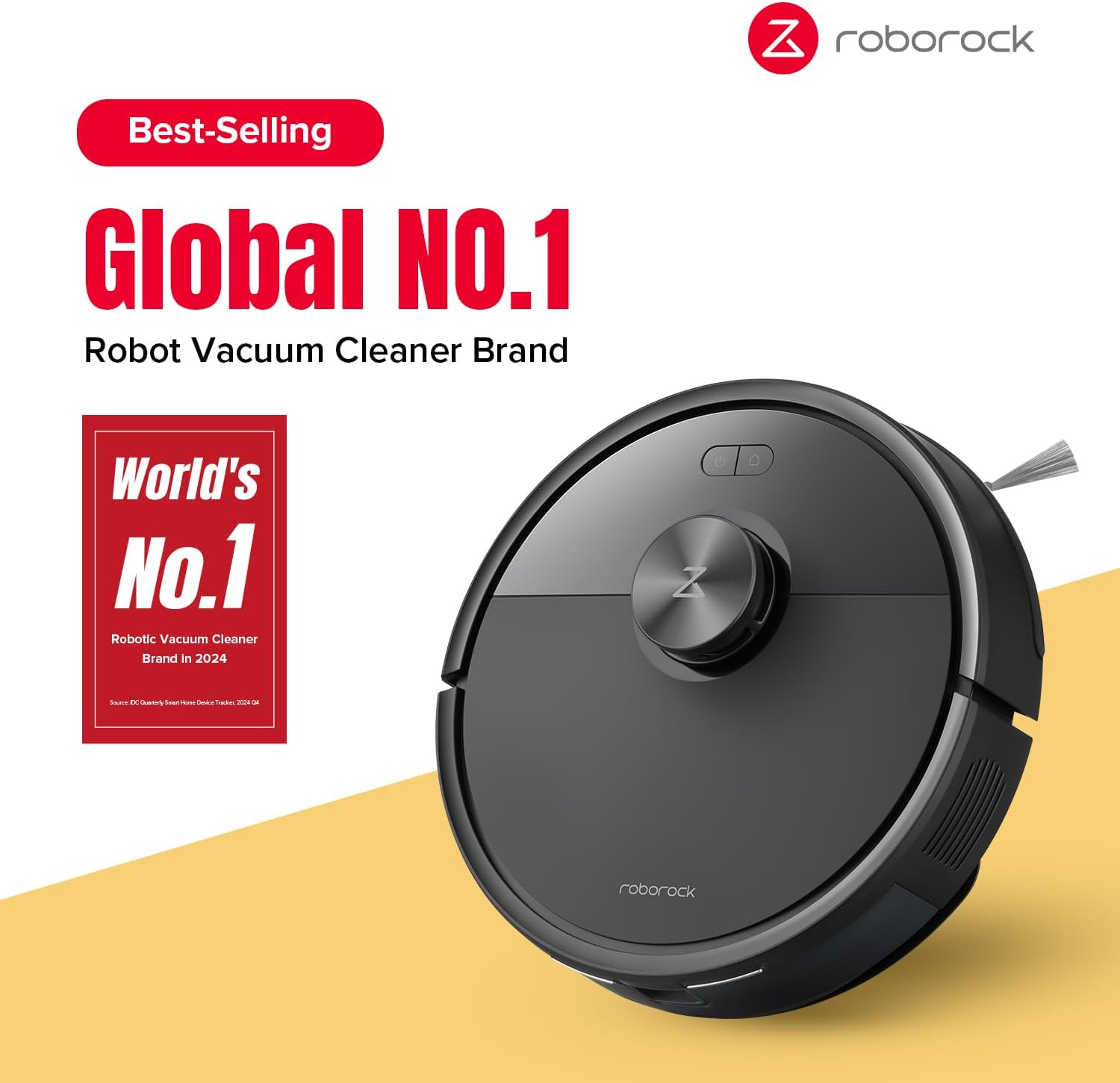
Design-wise, the Q7 M5 is pretty standard for Roborock: round, black, with a LiDAR bump on top. It’s not trying to be a design object, and that’s fine. It feels reasonably solid and well put together. Nothing rattles, the lid opens smoothly to access the dustbin, and the water tank slides in without feeling flimsy. It’s definitely on the bigger side, which is both good and bad: good because it can climb over some obstacles, bad because it doesn’t squeeze into tight chair legs or narrow spaces.
One user mentioned it being a “mountain climber” because it can actually climb onto a 1-inch square metal bed base, clean under the bed, and then struggle to get back out. I’ve seen the same sort of thing with thick thresholds and awkward lips: sometimes it clears them easily, other times it gets stuck or sits there complaining. So yes, the chunky wheels help, but they also mean it occasionally gets itself into trouble on things it technically can climb but not always climb back over.
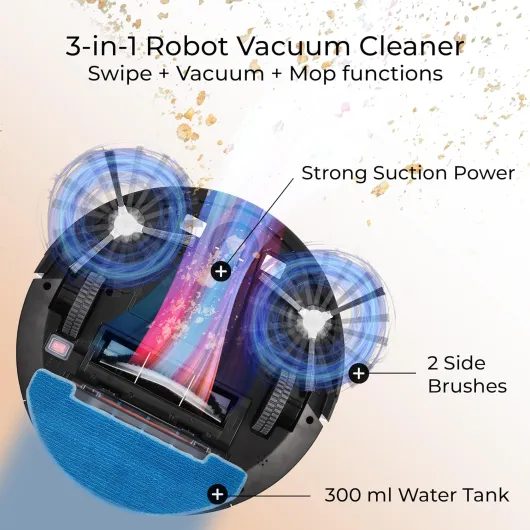
The single side brush is something to note. It spins fast and does a decent job at dragging dust from edges, but because there’s just one, on some runs you’ll see a narrow untouched strip at certain angles, especially along baseboards or furniture edges. It’s not horrible, but if you’re picky, you’ll notice it. Another user also complained that it doesn’t mop right up to the edges, leaving a few inches dry; that matches my experience – it’s fine for open spaces, less good for tight corners and wall edges.
One real design downside is for people with thick carpets and hard floors in the same room: the mop plate doesn’t lift high. A reviewer mentioned the robot simply can’t drag itself over thick carpet with the mop installed. I had the same issue with a shaggy rug: either I remove the mop or I block off the rug. So if your layout is “carpet in front, tiles in back,” the design is a bit annoying, because you’ll be clipping the mop on and off more than you’d like.
Battery life and daily use: good endurance, some small annoyances
The advertised 150 minutes of battery life is basically accurate, but with a catch: that’s under lighter settings, especially mop-only or low suction on hard floors. In mixed real-world use (medium suction on hard floors, higher on carpets), I usually see around 70–90 minutes before it heads back to the dock, which is still enough for most average-sized homes in one go. For a larger house, you’ll probably see it recharge and resume if you ask it to clean everything at once.
The good news is that you don’t really think about the battery most of the time. You set a schedule in the app (for example, downstairs daily at 10am), and as long as the map is correct and it starts from the right floor, it just runs. One user did point out a quirk: if you forget to switch the active map back to “downstairs” after using it upstairs, the schedule might not trigger because it thinks it’s still on the other floor. I’ve hit the same thing – not a battery problem, but it affects how “automatic” it feels.
The charging dock is basic but stable enough. It doesn’t have a self-emptying system; it just charges. From low battery to full takes a couple of hours, and the robot will automatically return to base when it’s done or when it needs more juice mid-clean. The return path is usually clean and direct thanks to the LiDAR, not that random spinning you see with cheaper bots that can’t find their home.
In day-to-day life, I’d say battery is good enough that it’s not the limiting factor. The real bottlenecks are more about maintenance (emptying the bin, cleaning the filter, dealing with the mop pad) than battery. As long as your place is under roughly 120–140 m² of actual floor area, you’re probably fine with one pass per day without any battery stress. For bigger houses, you’ll want to plan room-based runs or accept that it might need a recharge in the middle.
Durability and maintenance: solid build, but you need to stay on top of cleaning
I haven’t had this unit for years obviously, but based on a few weeks of daily use plus reading through longer-term Amazon reviews, it seems fairly robust. One user called it “robust and efficient” and mentioned it handling 6 rooms daily without failing to return to charge. No reports of big mechanical failures in the first months, which is already better than my cheap no-name robot that started throwing sensor errors after two weeks.
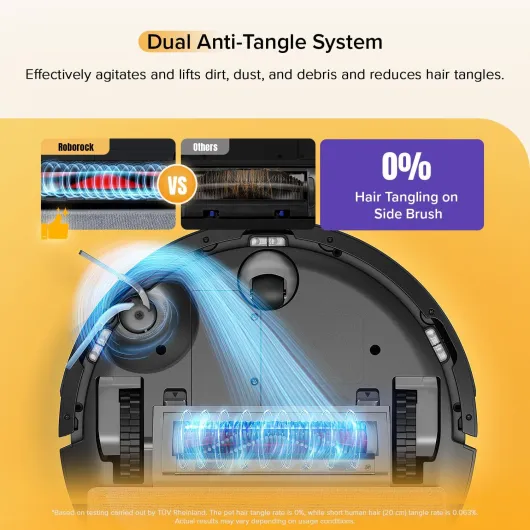
Where you do need to put in effort is maintenance. The dual anti-tangle system (main JawScrapers comb brush + tangle-free side brush) does reduce how often hair wraps around the rollers, but it doesn’t eliminate it. With a pet, I still need to pull hair off the main brush about once a week if I want to keep suction strong. The HEPA filter also clogs if you ignore it; a quick tap-out every few runs and a proper wash now and then keeps it going. If you skip this, you’ll start to see weaker pickup and maybe more noise.
The mopping system is more sensitive. Because it’s dragging water and picking up dust at the same time, the bin and internal channels can get coated in a kind of muddy paste if you use high water flow often, especially in kitchens. One reviewer complained strongly about this, saying the robot sucks up its own water and cakes the dustbin with hard-to-remove scum. That’s a bit exaggerated in my experience, but the direction is right: you do need to rinse the mop pad and wipe the bin more often when you use mopping a lot. Also, you can’t use detergent, which means greasy dirt will stick more than you’d like.
On floors, durability is where I’d be cautious. The complaint about bamboo floors getting their top layer damaged by the bladed roller is a red flag if you have soft or easily marked wood. I didn’t see damage on my standard laminate and tile, but if you have expensive or softer wood, I’d test in a corner first or keep suction lower and make sure there isn’t grit building up. Overall, build quality feels solid for the price, but it’s not fully “set and forget” – you need to treat it like a machine that needs regular cleaning if you want it to last and keep performing.
Cleaning performance: strong suction, decent mop, a few quirks
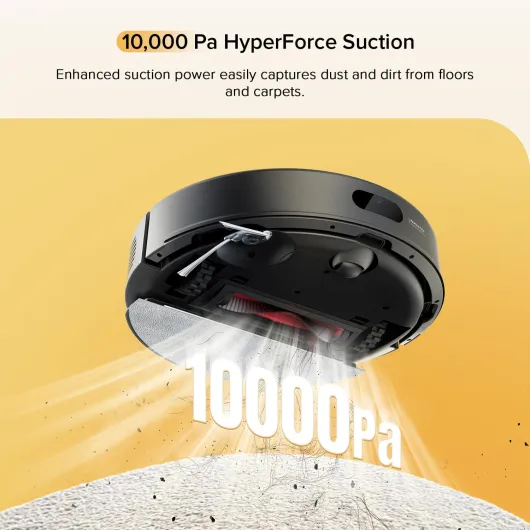
On the vacuum side, performance is the main reason to buy this thing. The 10,000 Pa figure is marketing, but in real use, it genuinely pulls up a lot of dust and pet hair. On low and medium power, it already picks up everyday crumbs and fur on hard floors without drama. On rugs and carpets, bumping it to high or max actually makes a visible difference: carpets look fluffed up and you see a lot more fine dust in the bin than with cheaper models. One Amazon reviewer said it cleans carpets “very very well,” and I’d agree – that’s one of its strong points.
Coverage is also solid. The LiDAR mapping means it cleans in straight, systematic lines instead of random wandering. In my place (about 70 m² usable area), it takes roughly 45–60 minutes to do a full run at normal power. It almost always finds its way back to the dock without hunting around. One review mentioned it reliably doing 150 m² in around an hour and always making it back to charge, which lines up with how efficient the pathing is.
The mop function is more mixed. For light dust and footprints on tiles or laminate, it’s fine. The electronically controlled tank with three water levels is useful: low for wood, medium for normal tiles, high for kitchen spots. But don’t expect it to scrub dried stains or sticky messes; it just drags a damp cloth in a straight pattern. Another user said without the mop, hard floors kept a very fine layer of dust, and that’s true: the mop does help finish the job, but it’s not a replacement for a proper deep mop every now and then.
There are some real downsides, though. One reviewer absolutely hated it on bamboo floors: the bladed roller apparently damaged the top layer of their wood, and they also complained that the intake blocks with pet hair and that the mop leaves a 3-inch unmopped gap near edges. I didn’t have damage on my floors, but I can see how a stiff brush plus grit could mark softer wood over time. Pet hair can indeed clog the intake if you go too long without emptying and cleaning the brush, especially on high flow mopping where it sucks up more wet gunk. So for performance: vacuuming is strong, mopping is “okay but limited”, and you need to keep up with maintenance more than the marketing suggests.
What you actually get and what it’s meant for
The Q7 M5 is a fairly standard Roborock-style robot: round, low profile, LiDAR turret on top, and a dock. In the box I had the robot, the detachable mop plate with pad, the water tank (270 ml), and the usual charging base. No fancy self-emptying station or remote control here; it’s all app or button-based. If you want a self-emptying dock, this isn’t the model for you, you’ll be emptying the 400 ml dustbin yourself every few runs.
On paper, it’s pitched as a 10,000 Pa suction robot with dual anti-tangle brushes, LiDAR navigation, and app-controlled mopping. In practice, the key points that matter day-to-day are: it maps fast and accurately, it follows a neat back-and-forth pattern, and it covers about 150 minutes on a single charge in mop-only mode, which roughly matches what users mention (around an hour for 150 m² with vacuuming). The rated 150 minutes is realistic if you don’t run it on max suction the whole time.
The app (Roborock app) is where most of the control lives. You can:
- Set schedules by room or whole floor
- Adjust suction and mop water level per room
- Create no-go and no-mop zones
- Save multiple maps (upstairs/downstairs)
Compared to the chaos of cheaper robots that rely mainly on bump sensors, this one actually feels like it “knows” the layout. One user review calling out how their older inertia robot slammed into everything is spot on; this one is much gentler and more predictable.
Overall, in terms of positioning, I’d say: it’s a mid-range robot that focuses on reliable navigation and strong suction, without the extras like auto-empty or mop-lift. If you’re fine emptying the bin and clipping the mop on/off yourself, the feature set is enough for most flats and regular houses, especially with pets and mixed floors.
Pros
- Strong suction and very good carpet cleaning for the price
- LiDAR navigation gives accurate maps and systematic coverage
- App control is clear and flexible (per-room power, no-go zones, schedules)
Cons
- Mop doesn’t lift high and struggles with thick carpets, leaves edges unmopped
- Potential risk for softer wood floors and needs regular maintenance to avoid clogs
Conclusion
Editor's rating
The Roborock Q7 M5 is a practical, mid-range robot vacuum that focuses on doing the basics well: strong suction, reliable LiDAR navigation, and simple app control. In daily use, it’s the kind of device you can schedule and mostly forget, as long as you keep up with emptying the bin and cleaning the brushes. For homes with hard floors and a mix of carpets or rugs, plus pets, it handles regular dust and hair much better than cheap random-bounce robots. Several users, and me included, noticed that carpets in particular come out noticeably cleaner.
The weak spots are mainly around the mop and certain floor types. The mop doesn’t lift high, so it can struggle with thick carpets when attached, and it doesn’t clean right up to edges. It’s more of a maintenance wipe than a proper mop. The complaint about damaging bamboo floors is something to take seriously if you have softer wood; this brush and suction combo may be too aggressive for that. And because there’s no self-emptying dock, you do still have a bit of daily/weekly work to keep it running smoothly.
Who is it for? People who want a reliable robot vacuum first, mop second, in a home with mainly tiles, laminate, and standard carpets. Pet owners will likely be happy with the anti-tangle brushes and suction, as long as they’re okay with regular cleaning of the roller and filter. Who should skip it? Anyone with sensitive wood floors, very thick carpets mixed with hard floors in the same area, or someone who wants full automation with minimal maintenance. In short: a pretty solid workhorse that gets the job done, not a fancy showpiece.