

Why pet owners need a different kind of vacuum and robot vacuum
Living with a pet changes what you need from a vacuum cleaner. When dog fur and cat hair build up on carpets and hard floors, only a vacuum designed for pet hair can keep surfaces hygienic and the air reasonably free from allergens. A standard vacuum often lacks the suction power, brush design and filtration that serious pet owners quietly rely on every single day.
Pet hair behaves differently from ordinary dust, because it clings to fabric, wraps around a brush roll and wedges into carpet fibres. That is why vacuums for pet households usually combine stronger suction, a more robust brush and a sealed HEPA filtration system that traps microscopic particles instead of blowing them back into the room. If you add a robot vacuum to the mix, you gain frequent automated cleaning that stops fur removal duties from becoming a weekend long battle with tumbleweeds of hair.
People often ask whether a single pet vacuum can replace both an upright vacuum and a robot vacuum. In practice, the most effective setup for pet hair is usually a small ecosystem of cleaners used in different ways, with a cordless stick or ball animal style upright for deep cleaning and a robot vacuum for daily maintenance. Matching the right combination to your home layout, number of pets and flooring types matters more than chasing one mythical machine that claims to do everything perfectly.
How robot vacuums handle dog hair and cat hair on carpets and hard floors
Robot vacuums have transformed how pet owners manage shedding between deeper cleaning sessions. A well designed robot vacuum for pet hair uses strong suction, a tangle resistant brush roll and smart navigation to cover both carpets and hard floors without constant supervision. When you choose an automated cleaner for pet hair, you are really choosing how much of the daily work you want the machine to handle for you.
On low pile carpet, a robot vacuum with a powered brush can lift embedded pet hair almost as effectively as some compact upright vacuum models. Thick carpet still favours a full size vacuum cleaner, but frequent passes from a robot reduce how much dog hair and dust reach deep into the pile, which makes later cleaning faster and easier. On hard floors, a robot vacuum excels because it can sweep hair, crumbs and fine dust before they scatter, leaving the surface visibly free of debris and less likely to trigger allergies.
Pet owners comparing models quickly notice that not every robot vacuum is marketed as a pet vacuum, even when the hardware looks similar. Look closely at the brush design, the quoted suction power and whether the dust bin is large enough to handle several days of pet hair without overflowing. For a detailed look at how a premium model copes in demanding homes, you can read this analysis of the best robot vacuum for demanding homes with pets, which explains how advanced navigation and self emptying docks change daily cleaning habits.
Key features that define the best vacuum for pet hair in real homes
Three features separate an ordinary vacuum from the best vacuum for pet hair in a busy household. First comes suction power, because dog hair and cat hair are heavier than dust and often stuck to carpet or upholstery, so a pet vacuum must maintain strong airflow even as the dust bin fills. Second comes the brush roll, which needs a design that reduces tangles while still grooming fibres on carpets and sweeping hair on hard floors.
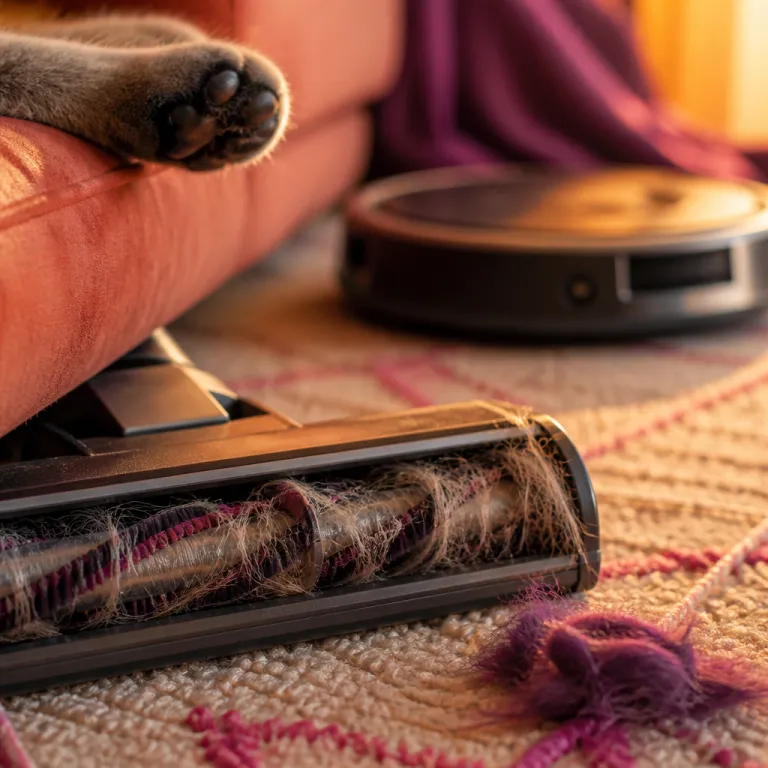
Rubberised brush rolls on some robot vacuums and cordless vacuum models have improved how vacuums pet owners use cope with long hair, but they are not completely tangle free in every situation. Long human hair and certain dog hair types still wrap around the brush roll, which is why regular maintenance remains essential even with the best vacuum for pet hair. For a deeper technical explanation of these trade offs, this guide on how rubber brushes changed the pet hair game shows where they still tangle and why design details matter.
The third critical feature is filtration, because a HEPA filter in a vacuum cleaner traps fine dander and dust that trigger allergies in sensitive pet owners. A sealed system keeps air pathways tight so that suction power is not wasted and dirty air does not leak back into the room during cleaning. When you evaluate any upright vacuum, cordless vacuum or robot vacuum, always check whether the manufacturer specifies HEPA filtration and whether replacement filters are easy to buy and simple to change.

Comparing dyson, shark and miele options for pet owners
Among traditional vacuums, Dyson, Shark and Miele dominate conversations about the best vacuum for pet hair, because each brand approaches the problem differently. Dyson focuses on high suction power and advanced cyclone technology, with models like the Dyson Ball Animal upright vacuum and the Dyson V series cordless vacuum lines that many pet owners already recognise. Shark emphasises value and versatility, with the Shark Rotator upright vacuum and various Shark cordless models that include dedicated pet tools for dog hair and cat hair on furniture.
Miele takes a more conservative engineering approach, building canister vacuums and uprights with strong but measured suction, excellent HEPA filtration and long service life. The Miele Guard style sealed systems in their pet vacuum ranges help keep dust and allergens inside the bag, which appeals to pet owners who prioritise air quality over cordless convenience. While Dyson vacuums often win on raw power and Shark vacuums pet households appreciate for flexible cleaning modes, Miele vacuums tend to impress with quiet operation, durable components and consistent performance on both carpets and hard floors.
Robot vacuums from these brands play a smaller role than their corded or cordless vacuum lines, but they still matter in a complete pet hair vacuum strategy. Dyson Detect technology in some cordless models, often referred to as Dyson Detect, uses a green laser to highlight invisible dust on hard floors, which helps you see what the robot vacuum might have missed along edges or under furniture. Shark and Miele both offer robot vacuum models, yet many pet owners still pair their favourite upright vacuum or cordless vacuum with a separate specialist robot from another brand to balance deep cleaning power with daily automation.
How to choose a robot vacuum for pet households on amazon and beyond
Shopping for the best vacuum for pet hair on Amazon or any large marketplace can feel overwhelming, because hundreds of vacuums claim to be ideal for every pet. Start by filtering for robot vacuum models that explicitly mention pet hair, dog hair or cat dog households, then read how real pet owners describe performance on carpets and hard floors rather than relying only on star ratings. Pay attention to comments about suction power, noise levels, navigation reliability and how often users need to cut hair from the brush roll.
Price alone rarely tells you whether a robot vacuum will cope with your specific mix of pets, flooring and furniture. A mid range robot vacuum with solid suction, a well designed brush and a decent HEPA filter can outperform a more expensive model that lacks a proper pet vacuum focus, especially when you run it daily. Look for clear descriptions of how the robot handles transitions between carpet and hard floors, whether it can climb low thresholds and how large the dust bin is, because frequent emptying discourages consistent cleaning.
Many pet owners now combine a robot vacuum with a cordless vacuum or upright vacuum to cover different tasks, buying both through Amazon for convenience and fast delivery. The robot vacuum handles routine hair vacuum duties under tables and beds, while a more powerful vacuum cleaner tackles stairs, upholstery and stubborn dog hair on thick carpet. When you evaluate bundles or promotions, remember that the best vacuum for pet hair is the one that fits your habits, not just the one that appears first in an online search result.
Balancing robot vacuums with manual cleaning for a fur controlled home
No robot vacuum, however advanced, can fully replace a strong upright vacuum or a versatile cordless vacuum in a home with multiple pets. The best vacuum for pet hair strategy uses the robot for frequent, low effort cleaning and reserves manual vacuums for targeted, high power work on carpets, upholstery and stairs. This balance keeps floors visibly free of pet hair while reducing how often you need to haul out a heavy vacuum cleaner.
Think of your robot vacuum as a preventative tool that stops dog hair and cat hair from accumulating in the first place. When it runs once or twice a day, especially in rooms where pets sleep or play, the robot collects loose hair and dust before they settle deep into carpet fibres or under furniture. Then a weekly session with a ball animal style upright vacuum, a Dyson Ball or a comparable Shark Rotator model refreshes carpets, lifts embedded dog hair and restores pile texture.
Pet owners who prefer lighter tools often rely on a powerful cordless vacuum for quick interventions between robot runs. A compact pet vacuum with a motorised mini brush can remove dog hair from sofas, car seats and pet beds faster than any robot vacuum, because you can angle the brush roll exactly where it is needed. Over time, this layered approach delivers the best vacuum for pet hair results, with cleaner air, less visible fur and fewer hours spent wrestling with tangled brushes and overflowing dust bins.
What to check before buying: floors, pets, allergies and maintenance
Before you commit to any vacuum or robot vacuum, map your home and your pets realistically. Count how many animals share the space, whether they shed heavily and how much time they spend on carpets versus hard floors, because these details shape what the best vacuum for pet hair looks like for you. A single short haired cat in a small flat demands a different pet vacuum strategy than three large dogs in a multi level house.
Allergy concerns should guide your choice of filtration and dust handling, especially when fine dust and dander trigger symptoms. A vacuum cleaner with a sealed HEPA system, such as many Miele Guard equipped models or certain Dyson Ball and Shark Rotator vacuums, keeps more particles inside the machine during cleaning and emptying. Robot vacuums with self emptying bases can also reduce exposure, because you handle a larger bag less often instead of tipping a small dust bin full of pet hair into an open bin every day.
Maintenance is the final piece that separates a realistic purchase from a frustrating one, even when the vacuum promises to be tangle free. Check how easy it is to remove the brush roll, wash filters and clear blockages, because every best vacuum for pet hair still needs regular care to keep suction power high. When you understand these trade offs, you can choose a combination of vacuums pet owners trust, from Dyson Detect cordless models to Shark and Miele options, that fits your cleaning style rather than fighting it.
Key figures about pet hair, floors and vacuum performance
- Studies from allergy associations report that up to 30 % of people with asthma are sensitised to cat or dog dander, which makes HEPA filtration in a vacuum cleaner critical for many pet owners. For example, the American Academy of Allergy, Asthma & Immunology notes sensitisation rates in this range for common pet allergens in its educational material on indoor triggers.
- Independent lab tests on modern robot vacuums, such as controlled pick up trials published by organisations like Consumer Reports and Wirecutter, show that top models can remove more than 90 % of surface level pet hair from hard floors in a single pass, while performance on medium pile carpet often ranges between 70 % and 85 % depending on brush design and suction power under their standardised test conditions.
- Consumer surveys from large appliance retailers and review platforms consistently indicate that households with at least one shedding dog run their primary vacuum several times per week, but those using a robot vacuum daily often reduce manual vacuuming to roughly once per week without seeing more visible hair on carpets or floors, according to aggregated user feedback summaries.
- Filter tests on HEPA equipped vacuums, based on the U.S. Department of Energy HEPA standard, demonstrate that certified systems can capture 99.97 % of particles down to 0.3 microns, which includes most airborne pet dander and fine dust stirred up during cleaning when evaluated in controlled laboratory conditions.
FAQ about choosing the best vacuum for pet hair
Is a robot vacuum enough for heavy shedding dogs ?
A robot vacuum can handle daily surface hair and dust from heavy shedding dogs, but it rarely replaces a powerful upright vacuum or cordless vacuum for deep cleaning. Most pet owners with large dogs still use a traditional vacuum cleaner weekly on carpets, stairs and upholstery. The robot vacuum reduces how much dog hair builds up between those sessions, which makes the manual work faster and less tiring.
Do I really need a HEPA filter if I am not allergic ?
A HEPA filter benefits more than just allergy sufferers, because it traps fine dust and dander that would otherwise circulate back into the room. Even if you do not react strongly, cleaner air can reduce odours and keep surfaces from becoming dusty as quickly. For homes with pets and children, a HEPA equipped vacuum cleaner or robot vacuum is a sensible long term choice.
Which is better for pet hair, cordless vacuums or uprights ?
Upright vacuums usually offer stronger sustained suction and larger dust bins, which helps on thick carpets and in large homes with multiple pets. Cordless vacuums trade some power and runtime for light weight convenience, making them ideal for quick cleanups of dog hair on sofas or stairs. Many pet owners pair a high power upright vacuum with a nimble cordless vacuum to cover both deep cleaning and everyday messes.
How often should I clean the brush roll when I have pets ?
With one or two moderate shedding pets, checking the brush roll every one to two weeks is usually enough to keep performance high. In homes with heavy shedding breeds or long human hair, inspecting and cleaning the brush roll weekly prevents tangles that strain the motor and reduce suction. Robot vacuums may need even more frequent attention, because their smaller brushes fill with hair faster than those on a full size vacuum cleaner.
Are premium brands like Dyson, Shark and Miele worth the price for pet owners ?
Premium brands such as Dyson, Shark and Miele typically offer stronger suction, better filtration and more durable components than very low cost vacuums, which matters when you clean pet hair several times a week. Dyson Ball and Dyson Detect cordless models excel in raw power and smart features, Shark Rotator uprights balance performance with value, and Miele Guard style systems prioritise air quality and longevity. If your budget allows, investing in one of these brands often reduces long term maintenance costs and delivers more reliable cleaning for both carpets and hard floors.