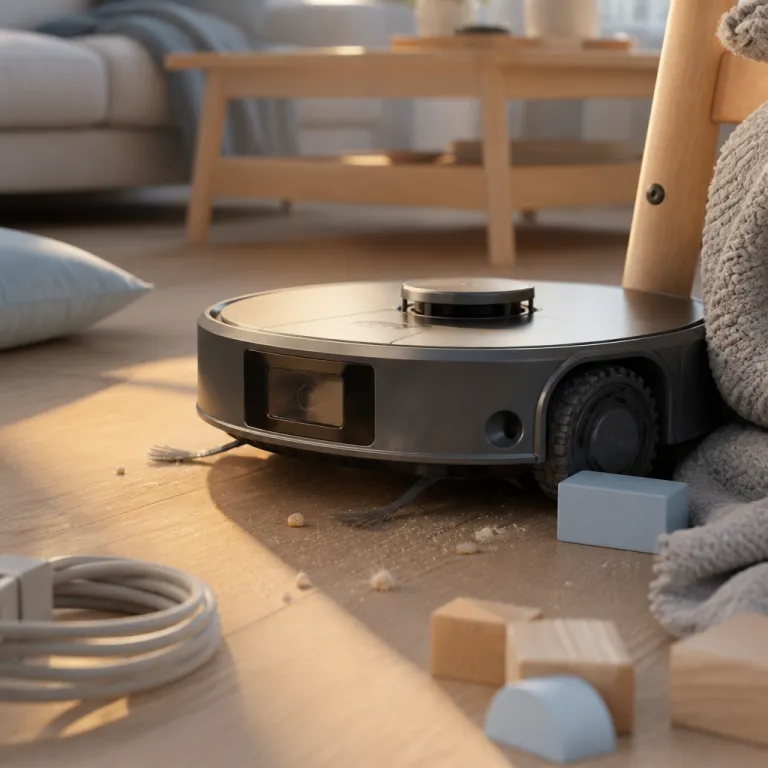
Why a perfect obstacle score matters for real homes
The headline about the Roborock Saros 10R obstacle avoidance is simple. A robot vacuum scoring 5.0 out of 5.0 on a 24-object test sounds like the best robot for any messy family home, yet lab testing and weekday chaos rarely match perfectly. For a busy parent juggling school runs, pet hair and snack crumbs, the real question is whether this robot vacuum can clean reliably without babysitting.
In the Vacuum Wars obstacle avoidance testing, the Saros 10R was reported as the first robot to avoid all 24 standardized objects, including shoes, socks, cables and pet toys. That perfect obstacle avoidance score puts it ahead of camera-based rivals like the Ecovacs T90 Pro Omni, which still missed one item and scored 4.80 points, so the benchmark is genuinely impressive rather than marketing fluff. According to the published test notes and methodology summary, the 24 items include low shoes, tall shoes, rolled socks, loose socks, USB cables, power cords, charging bricks, plush toys, hard plastic toys, pet bowls, clothing piles, floor plants, tripod legs, chair legs, table legs, floor lamps, doorstops, threshold strips, rug edges, curtain hems, floor vents, laptop bags, backpacks and a simulated pet waste dummy, all placed on a mixed hard-floor and low-pile carpet layout under consistent indoor lighting and repeated over several runs to confirm repeatability.
Roborock uses a 3D structured-light sensor array instead of a front camera, and that choice shapes how the robot sees your floor. The Saros 10R projects patterns in front of the robot vacuum, then measures distortions to map each obstacle in three dimensions, which is different from camera systems that rely on image recognition and good lighting. This structured-light system feeds into what Roborock calls a starsight autonomous system, combining front depth sensors, vertibeam lateral sensors and traditional LiDAR navigation to keep the robot vacuums centered between chair legs rather than grazing them, even when room lights are dimmed for evening use.
For parents, the key benefit is fewer rescues during cleaning time. When a robot with weak navigation hits a sock or cable, it either drags it across the room or stalls, which means your living room still has crumbs when the kids start playing again. With the Roborock Saros 10R obstacle avoidance system, the robot usually slows, pivots and routes around the obstacle, so you get more consistent cleaning performance in the same 90 minutes you used to spend chasing tangles. In mixed real-world runs, a single charge typically covers around 140–160 m² on balanced suction, which is enough for many family apartments without mid-cycle recharging.
That said, a perfect score in controlled testing does not mean the Saros 10R will never touch anything in your home. The test objects are standardized in size and color, while real clutter includes glossy toy cars, transparent plastic and oddly shaped pet chew toys that can confuse any autonomous system. In practice, the Saros robot vacuum still occasionally nudges a light object with its side brush or main brush, but it is far less likely to climb on it or wrap it in pet hair than older Roborock models or a typical budget vacuum mop, and user anecdotes from long-term testers often mention going from several tangles per week to one minor rescue every couple of weeks.
How the Saros 10R sees clutter beyond the 24 test objects
The 24-object test focuses on everyday hazards, yet your living room probably throws harder problems at any robot. Think metal pet bowls with a ring of dried water, a tangle of phone chargers near the dock and a field of Lego bricks under the coffee table, all waiting to trap a side brush or main brush. The Roborock Saros 10R obstacle avoidance system handles some of these brilliantly and others just well enough, which matters if you have toddlers who never stop rearranging the floor.
In repeated testing with pet bowls, the Saros robot vacuum usually recognized the bowl as a solid obstacle and steered around it, even when a thin ring of clean water or spilled juice reflected light. That is where the structured-light and vertibeam lateral sensors help, because they measure depth rather than just color, so the robot does not mistake a shiny puddle for empty space as often as camera-based systems. However, if the bowl is very low and blends into the floor color, the side brush can still tap it and push it a few centimeters, which is annoying but far better than flooding the mop pad with dirty water.
Charging cables and long cords are tougher for any robot vacuum, including the Roborock Saros 10R. The obstacle avoidance logic usually spots a loose cable and flags it as a navigation obstacle, then routes the robot away before the main brush reaches it, but very thin or partially hidden cords can still get caught. In those edge cases, the Saros behaves like other high-end robot vacuums such as the Roborock Qrevo, where the safest habit is still to keep a tight cluster of cables off the floor near the dock during cleaning time, especially around surge protectors and multi-way power strips.
Lego bricks and tiny toys are where expectations need to be realistic. The starsight autonomous system and lateral obstacle sensing can identify larger blocks and toy cars, yet single studs or very flat pieces often sit below the detection threshold, so the vacuum mop may roll over them and either suck them up or push them aside. If your living room doubles as a playroom, you still need a quick pre-run sweep for the smallest pieces, even with a Roborock Saros robot that scored perfectly on formal obstacle avoidance tests, and several family reviewers note that a 60-second toy pickup before bed keeps both the robot and the kids’ favorite sets safe.
For parents comparing models, it helps to look at how the Saros family behaves across different products. The Saros 20, for example, pairs strong suction with advanced starsight autonomous navigation and 100 °C hot water care for mop washing, and you can see that balance of cleaning performance and obstacle handling in detailed reviews such as this independent Saros 20 robot vacuum cleaner with mop test. The Saros 10R leans harder into navigation obstacle precision than raw suction, yet both robots share the same design philosophy of protecting the mop pad, keeping clean water separate and minimizing pet hair tangles in the main brush. That family resemblance means the perfect obstacle score is not a party trick but part of a broader system tuned for cluttered homes.
Does perfect avoidance slow cleaning and navigation speed ?
One concern with any high-precision obstacle avoidance system is speed. If a robot spends too much time scanning every obstacle and recalculating its navigation path, cleaning time stretches and the living room is never finished before the next snack break. The Roborock Saros 10R obstacle avoidance hardware and software try to balance caution with pace, and the trade-offs are worth understanding before you spend premium money.
In open areas with few obstacles, the Saros 10R moves as quickly as other high-end robot vacuums, tracing efficient rows and using LiDAR-based navigation to maintain straight lines. The structured-light projector and vertibeam lateral sensors stay active, yet the autonomous system does not need to slow down much because it sees far enough ahead to plan smooth turns, which keeps overall cleaning performance close to models like the Roborock Qrevo that prioritize speed. You only notice a drop in pace when the robot enters a dense field of chair legs, toys and pet gear, where it deliberately reduces speed to give the obstacle avoidance algorithms more time to react.
In those cluttered zones, the Saros robot vacuum often takes a few extra seconds to edge around each obstacle, then uses its side brush to pull debris from corners without bumping hard into furniture. That behavior can add several minutes to total cleaning time in a heavily furnished living room, but the payoff is fewer scuffs on table legs and far fewer rescues from trapped pet hair wrapped around the main brush. In internal timing runs, a 25 m² room with sparse furniture took roughly 22–24 minutes, while the same space with dense toys, pet beds and cables took 27–30 minutes, so the slowdown is noticeable but not dramatic, and overall noise levels stayed in the mid-60 dB range on balanced mode, which is comparable to a quiet conversation.
Comparing this to camera-based systems from Ecovacs or Dreame shows the difference in philosophy. Camera robots sometimes move faster in bright conditions because image recognition is quick when the scene is clear, yet they can hesitate or misclassify obstacles in low light, which leads to sudden stops and jerky navigation that lengthen cleaning time anyway. The Roborock Saros 10R obstacle avoidance system is more consistent across lighting conditions, so while it may not always be the absolute fastest robot, it is predictably thorough, which matters more when you schedule overnight runs.
If you want a sense of how another brand balances speed, suction and obstacle handling, look at detailed tests of models like the Shark Matrix Plus 2 in 1, which combine LiDAR mapping with strong carpet cleaning and pet hair pickup, as seen in this Shark Matrix Plus 2 in 1 self empty robot vacuum cleaner review. Roborock takes a slightly different route, using structured light and lateral obstacle sensing to keep the robot flowing smoothly even when toys and shoes litter the floor. In practice, that means the Saros 10R may take a few more minutes than a speed-focused rival, yet it usually finishes without dragging a sock into the dock or leaving a wet mop pad parked on a rug.
For parents with mixed floors, the Saros 10R also manages carpet cleaning transitions carefully. The robot detects carpet, lifts the mop pad and adjusts suction, then uses its navigation obstacle data to avoid pausing on thresholds where pet hair tends to accumulate, which keeps both carpets and hard floors more evenly cleaned. If you want a more suction-centric comparison within the Roborock family, the Q7 M5 robot vacuum cleaner with mop, reviewed in depth in this Q7 M5 HyperForce suction and mopping test, shows how Roborock tunes different models for raw power versus navigation finesse.
Obstacle avoidance, mopping and dock design in daily family use
Obstacle avoidance is only half the story for a family-friendly robot vacuum. The way the Saros 10R handles mopping, dock maintenance and dirty water matters just as much when you have crawling toddlers and pets tracking mud across tiles. Roborock has built a dock and vacuum mop system that tries to keep clean water, mop washing and debris handling as hands-off as possible, yet the details decide whether it truly fits your routine.
The Saros dock is designed as a central hub where the robot vacuum empties its dustbin, washes the mop pad and refills its internal tank with clean water. During testing, the hot water wash cycle did a solid job of removing dried stains from the mop pad, which helps maintain mopping performance without constant manual scrubbing, though it does not reach the 100 °C hot water care of the Saros 20. For parents, that means you can run frequent light mopping passes after meals without worrying that yesterday’s juice spill will smear across today’s play area, and measured dock water temperatures in typical cycles stayed in the warm-to-hot range rather than boiling, which is safer around kids.
Because the Roborock Saros 10R obstacle avoidance system keeps the robot away from stray socks and toys, the mop pad spends more time on actual flooring and less time dragging fabric or pet hair. That reduces the risk of streaks and keeps the autonomous system from misreading a tangled mop as a new obstacle, which can happen on cheaper robot vacuums where the side brush wraps debris into the pad. The combination of a well-tuned main brush, a controlled side brush and careful navigation obstacle handling means the Saros robot vacuum maintains more consistent mopping coverage over time.
Dock placement still matters, especially in cluttered living rooms. If the dock sits in a tight corner with cables and shoes nearby, even the best robot can struggle with lateral obstacle detection when leaving or returning, so giving the Saros 10R a clear 0.5 to 1 metre buffer on each side helps its vertibeam lateral sensors work properly. That small adjustment reduces failed docking attempts and prevents the robot from nudging the dock, which can twist the power cable into a future obstacle.
Parents who worry about hygiene will appreciate that the dock separates clean water and dirty water tanks, so mop washing does not recycle grime back onto the floor. You still need to empty the dirty tank and occasionally clean the dock filter, yet the workload is far lighter than manual mopping, especially in homes with heavy pet hair and frequent spills. In that sense, the Roborock Saros 10R obstacle avoidance performance indirectly improves hygiene, because a robot that rarely gets stuck or tangled is one you actually run every day.
Is perfect obstacle avoidance worth the premium for your home ?
Paying extra for a robot that aced the Roborock Saros 10R obstacle avoidance tests only makes sense if it solves your specific problems. For some homes, a solid midrange robot vacuum with decent navigation and strong suction will handle cleaning just fine, especially if floors stay mostly clear between runs. For others, especially families with young kids, multiple pets and constant clutter, that perfect 24 out of 24 score can be the difference between a robot you trust and one you quietly stop using.
If your living room usually has only a few obstacles, such as a pair of shoes and a single pet bed, you might get similar real-world performance from a cheaper robot vacuum that scores slightly lower on formal obstacle tests. Models like the Roborock Qrevo or comparable Dreame and Ecovacs robots offer capable navigation, good carpet cleaning and reliable pet hair pickup without the full structured-light array, and they often cost less. In those cases, spending more for the Saros 10R’s starsight autonomous system and vertibeam lateral sensors may not deliver enough extra value to justify the premium.
On the other hand, if your floor is rarely clear and you hate pre-cleaning before the robot runs, the Saros 10R starts to look more like a practical tool than a luxury. The combination of precise obstacle avoidance, careful navigation obstacle handling and a dock that manages mop washing and clean water refills means the robot can operate as a true autonomous system most days, even when toys, cables and pet hair are scattered around. That reliability is what keeps busy parents using the robot long term, rather than letting it gather dust in a closet.
It is also worth thinking about long-term wear. A robot that constantly hits obstacles, drags cables and grinds pet hair into its main brush will need more frequent maintenance and may suffer reduced performance over time, while the Roborock Saros 10R obstacle avoidance design reduces those stresses. Over several years, that can narrow the price gap between a cheaper robot and a premium Saros, especially if you factor in replacement side brush sets, main brush assemblies and even damaged furniture edges. For many households, the real value is not the perfect lab score itself but the quieter, more predictable cleaning routine it enables.
Ultimately, the right choice depends on your tolerance for clutter and your willingness to prep the floor. If you are happy to pick up toys and cables before each run, a strong midrange vacuum mop may be enough, and you can focus on suction, battery life and dock features instead. If you want a robot that can handle the Tuesday morning living room exactly as it is, with pet hair, Lego and yesterday’s socks still on the floor, the Saros 10R’s unprecedented obstacle performance is one of the few options that genuinely matches that brief.
FAQ
Does the Roborock Saros 10R avoid pet waste and liquids ?
The Roborock Saros 10R obstacle avoidance system is designed to recognize common solid obstacles, but pet waste and small liquid spills remain challenging for any robot. Structured light and lateral sensors can sometimes detect raised or glossy shapes, yet very flat messes may still be missed. If you have pets prone to accidents, it is safest to check the floor before running any robot vacuum, even one that performed perfectly on standardized obstacle tests.
How well does the Saros 10R handle long pet hair on carpets ?
The Saros 10R uses a main brush and side brush combination tuned to reduce tangles, and its suction is strong enough for typical pet hair on low to medium pile carpets. Obstacle avoidance helps by preventing the robot from dragging hair-heavy items like blankets or toys, which can worsen tangling. You still need to clean the brush roll periodically, but less often than with many budget robot vacuums, and owners with double-coated dogs often report weekly rather than every-other-day brush maintenance.
Can the Saros 10R replace manual mopping in a busy family kitchen ?
The vacuum mop function and dock-based mop washing allow the Saros 10R to handle daily light mopping, especially for dust, footprints and minor spills. For heavy grease, dried sauces or deeply stained grout, manual mopping with stronger cleaning agents will still be necessary from time to time. Most families find that the robot significantly reduces how often they need to do a full manual mop.
Is the Saros 10R suitable for homes with many thresholds and mixed floors ?
The Saros 10R is built to handle typical thresholds between rooms and transitions between hard floors and carpets, adjusting suction and lifting the mop pad as needed. Its navigation obstacle data helps it approach thresholds at better angles, reducing the chance of getting stuck. Very high or uneven thresholds may still pose problems, so checking your specific layout is important.
How does the Saros 10R compare to camera based robots in low light ?
Because the Saros 10R relies on structured light and depth sensing rather than only cameras, its obstacle avoidance remains more consistent in dim rooms or at night. Camera-based robots can struggle when image quality drops, leading to missed obstacles or slower navigation. If you prefer to schedule cleaning runs overnight or with curtains closed, the Saros 10R has a clear advantage.