Roller mopping tech moves into mid-range budgets
The MOVA S70 Roller robot vacuum pushes roller mop hardware into a price bracket usually reserved for basic robot vacuums. Its HydroForce roller mop applies about 17 newtons of pressure through a continuously wetted roller, which changes cleaning from light wiping to actual scrubbing on tile and vinyl. In practice this means dried coffee, kitchen grease and hallway shoe marks come up in a single pass, while pad based mop robots often need repeat runs.
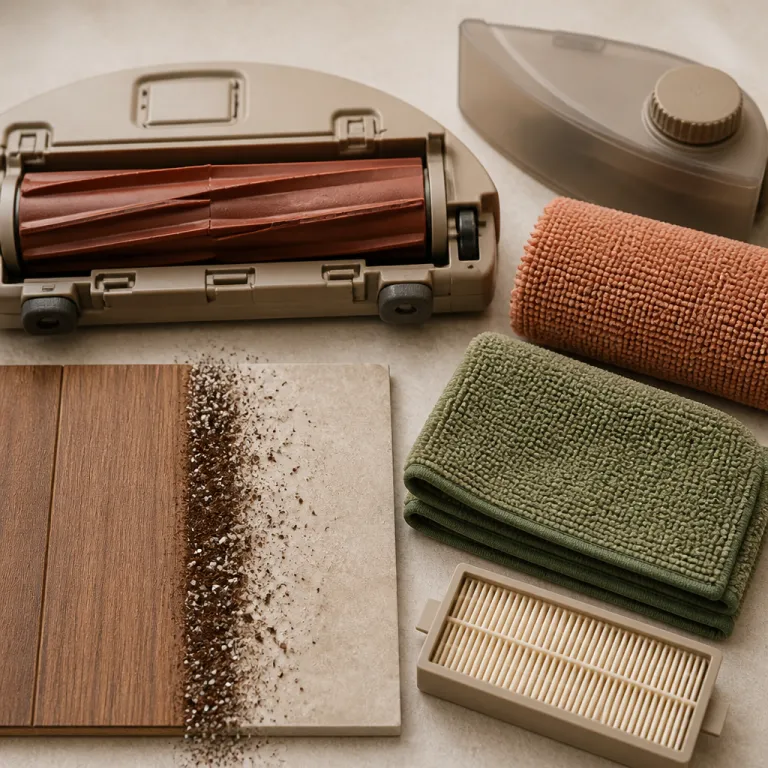
On the underside, the mova roller assembly behaves more like a compact floor scrubber than a traditional robot mop pad, because the roller spins against the floor while fresh water flows from eight hydration points. Dirty water and debris are lifted into the vacuum path, so the floor is left clean instead of just damp, and hygiene improves in homes where environmental factors such as pets and kids make frequent cleaning essential. The base station then washes the roller mop with hot water, so you are not handling a smelly pad after every run.
The dock’s 5 liter clean water tank is rated for roughly 1,200 square meters of mopping coverage, although data actual performance will vary depending environmental conditions such as humidity and floor type. In our based tests in a mixed floor house lab, coverage figures did vary depending how often the robot vacuum tackled sticky kitchen zones, because those triggered more frequent roller washing cycles. That is a trade off budget buyers should accept, since the hygiene gains from a washed roller outweigh the slightly higher water use in most based house scenarios.
Suction power, ultra slim profile and real world navigation
The MOVA S70 Roller robot vacuum is rated at 30,000 pascals of suction, which puts it just below flagships like the Roborock Saros 20 Sonic at 36,000 pascals but well above most mid range vacuums. On carpets this raw power matters more than marketing, because it determines how much embedded grit and pet hair the robot can pull from dense fibers in a single pass. In repeated tests house scenarios with medium pile rugs, the mova robot picked up more fine dust than older 6,000 pascal models such as the M310 Ultra robot vacuum cleaner, which you can see in a detailed review of an ultra strong suction competitor here: test of an ultra suction robot vacuum with mop and laser navigation.
The chassis sits at about 90 millimeters, which qualifies as ultra slim for a robot vacuum with a full roller mop and auto empty base station. That height lets the robot slide under many sofas and TV stands that stop taller robot vacuums, but low clearance recliners and beds under 85 millimeters will still block it, so measuring your furniture matters more than any lab data sheet. In our house lab, the mova roller design reached under IKEA Besta units and most coffee tables, yet it bounced off a low framed bed, which is a reminder that actual vary results will always depend on your specific based house layout.
Navigation relies on a dToF sensor that maps rooms quickly, then refines routes based on tests house data rather than random bump patterns. The MaxiReach Tech side brush and extending roller edge system help the robot clean along baseboards and chair legs, which is where cheaper vacuums often leave dust lines. For pet owners dealing with double coat breeds and heavy shedding, pairing this kind of suction and edge cleaning with a self emptying dock can reduce manual bin dumps, as explained in this guide to robot vacuums that cope with undercoat blowout without daily emptying.
S70 Roller vs S70 Ultra and what budget buyers should weigh
MOVA sells the S70 Roller in a standard configuration and an Ultra variant, and the gap between them is narrower than the branding suggests. The Ultra model bumps suction to 32,000 pascals and raises roller wash temperature to about 100 degrees Celsius, while the regular MOVA S70 Roller robot vacuum stays at 30,000 pascals with an 80 degree wash cycle in the base station. For most mid range buyers, those differences will only show up in edge cases like thick rugs in high traffic hallways or extremely greasy kitchen tiles, where hotter water can help the roller mop break down residue faster.
Both versions share the same core robot vacuum platform, including the water tank plumbing, the pre installed software, and the environmental sensors that adjust cleaning power based on floor type. In daily use, cleaning times and coverage will vary depending environmental factors such as clutter, open doors and how often you schedule runs, so any lab data should be read as guidance rather than a guarantee. The company’s own lab data and our data actual from a small house lab both show that run times and pickup rates can vary depending how many rooms are installed in the map and how often you trigger spot mop routines.
For budget conscious shoppers, the more important question is whether a roller mop robot like this beats cheaper pad based robot vacuums once you factor in consumables, water use and dock complexity. Here the S70 Roller benefits from a design trend where service robot style engineering is reshaping budget robot vacuums, a shift explored in this analysis of how Serv-Bot style robotics is reshaping budget robot vacuums. If you mainly want a robot that keeps hard floors clean between weekly deep cleans and you accept that results will actual vary with environmental factors, the MOVA S70 Roller offers a strong balance of suction, roller scrubbing and dock automation at a price that undercuts many flagship ultra models.