
Summary
Editor's rating
Value for money: premium price, mostly justified
Design: slim robot, chunky dock
Battery life and daily use: long runs, but plan around it
Build quality and long-term confidence
Cleaning performance: hard floors shine, carpets are decent
What you actually get with the Saros 10
How well it actually reduces your cleaning workload
Pros
- Very good hard-floor cleaning with strong suction and decent mopping
- Hot-water dock that washes and dries the mop, plus auto-empty and refill
- Good obstacle avoidance and minimal hair tangling on the main brush
Cons
- High price compared to mid-range robots
- Large dock takes up noticeable space
- Ongoing cost for dust bags and consumables

Specifications
View full product page →| Brand | roborock |
A robot that actually lets you ignore the vacuum (most of the time)
I’ve been using the Roborock Saros 10 for a few weeks now in a pretty normal setup: three-bedroom house, mix of hard floors and low-pile carpets, one dog that sheds, two kids who drop crumbs everywhere. Before this, I had an older Roborock and I’ve tried a basic iRobot in the past, so I’m not new to robot vacuums. This one is clearly in the “expensive toy that you hope becomes essential” category, not an entry-level gadget.
First impression: it’s a serious piece of kit, mostly because of the dock. The robot itself looks like every other disc-shaped vacuum, but the dock is big, tall, and looks more like a small appliance than a charger. If you live in a tiny flat or hate visible tech, you’ll need to plan where to put it. Once it’s in place, though, it really does change how often you think about cleaning floors.
Out of the box, setup took me around 30–40 minutes including app pairing, firmware updates, first mapping run, and messing with the settings. It’s not complicated, but there are a lot of options: suction levels, mopping intensity, how often to wash the mop, obstacle avoidance modes, schedules, etc. If you want “press one button and never think again”, this is not that. If you’re willing to tweak a bit for the first few days, the payoff is decent.
Overall, my honest first takeaway: it cleans very well on hard floors, does a decent job on low-pile carpets, and the auto mop washing/hot water dock is genuinely useful. It’s not perfect, it’s not magic, and you still have to do some manual stuff (water tanks, bags, occasional spot cleaning), but it does cut down daily floor work by a lot. Whether that’s worth the price tag will depend on how much you hate vacuuming and how much you’re okay paying for convenience.
Value for money: premium price, mostly justified
Let’s talk about price bluntly: this thing is not cheap. It sits in the high-end bracket of robot vacuums, right up there with other flagship models. I paid around the same ballpark as one of the Amazon reviewers (roughly £800), and that’s a serious amount to drop on floor cleaning. So the question is, do you actually get what you pay for, or are you just paying for buzzwords?
What you’re paying for here is mainly the dock and automation: hot water mop washing, heated drying, auto-empty dustbin, auto water refilling, detergent dispensing, and decent AI obstacle avoidance. Compared to cheaper robots that just vacuum and maybe drag a damp pad around, this is a big step up in convenience. You’re also paying for the stronger suction, the tangle-resistant brush, and the slimmer body that gets under more furniture. For me, those things combined did feel like a real improvement over my older Roborock and the basic iRobot I had before.
On the downside, running costs are a bit higher than some competitors. The dust bags and mop pads aren’t the cheapest, and you’ll go through them over time. It also annoys me slightly that it ships without even a small bottle of detergent, considering the price. At this level, throwing in a starter bottle would be a basic gesture. If you’re tight on budget, there are mid-range models that clean reasonably well for much less; you just won’t get the same level of automation and hot-water dock features.
So in terms of value, I’d call it good but not amazing. If you hate cleaning, have pets or kids, and know you’ll actually run this daily, it can justify its cost as a long-term convenience tool. If you live in a tiny flat, don’t have pets, or don’t care about mopping and hot-water washing, then you’re probably overpaying and a simpler robot will be enough.
Design: slim robot, chunky dock
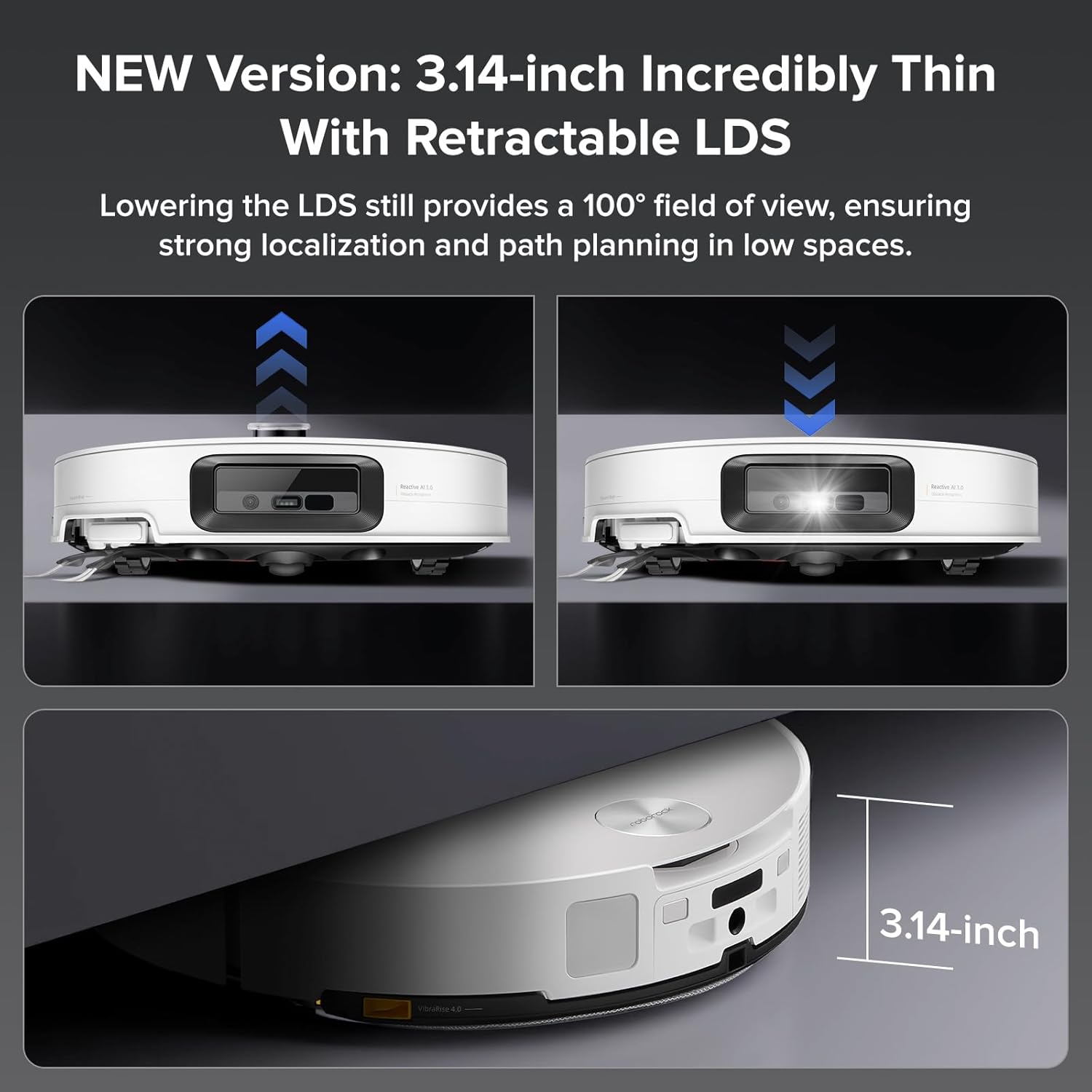
Design-wise, the robot itself is pretty standard Roborock style: round, white, clean look. The main difference is the height. At around 3.14 inches (about 8 cm), it’s noticeably slimmer than most older LiDAR robots I’ve owned. The retractable LiDAR turret and sensors help it slide under more furniture. In my place, it fit under the TV stand and under one low sideboard where my older Roborock used to bump and give up. That’s actually a real benefit, not just a spec sheet detail.
The dock is the opposite: it’s big and tall. You’re looking at something roughly the size of a small laundry basket in footprint and a bit shorter in height. It needs depth for the water tanks and the dust bag system. In my hallway, it actually dominates that wall visually. If you can tuck it in a utility room or a corner of a living room, it’s fine. But this is not a tiny charger you hide behind a plant. One upside: it looks more like a proper appliance than a cheap piece of plastic, so it doesn’t feel out of place next to other big items.
Little design touches I liked: the cable management on the back of the dock is decent, so you don’t have a mess of wires. The robot’s top panel is simple, with just a couple of physical buttons. Most of the time you’ll use the app anyway. The front has the camera and sensor array, but it doesn’t look creepy or overdone, just like a small window. The water tanks slide out easily from the dock, and you can carry them to the sink without dripping everywhere, which matters if you’re doing that multiple times a week.
On the downside, because the dock is big, you need a bit of clearance around it for the robot to dock and undock cleanly. In a very tight corridor, that could be annoying. Also, the white color looks clean when new but will show scuffs and dust more than a darker color. After a couple of weeks, the dock base already had some marks from shoes and the robot bumping slightly. Nothing dramatic, but it’s not staying showroom-fresh if you live like a normal person.
Battery life and daily use: long runs, but plan around it
Battery life on the Saros 10 is good enough that I stopped thinking about it after the first week. On my setup (around 90–100 m² of mixed hard floors and some rugs), running it in intensive vacuum + intensive mop with frequent mop washing, it usually finishes the job in one go or with a quick top-up charge. A full, heavy-duty clean of my downstairs can take 4–5 hours, but to be clear, a lot of that time is the robot going back and forth between dock and rooms to wash and dry the mop, not because the battery is weak.
On a more moderate setting (standard vacuum, normal mopping, mop wash less often), it easily covers the whole area with plenty of battery left. I also set it to clean upstairs on a different day; it handles that floor as well on a single charge with no issue. The robot is smart enough to return to the dock, fast-charge, and resume if it does run low. In practice, I rarely saw it actually stop due to battery unless I pushed every setting to maximum and asked it to do multiple levels back-to-back.
Noise levels are reasonable. On standard suction, I can still watch TV in the same room if the volume is a bit higher. On max suction, it’s obviously louder, but not crazy. The dock emptying the dust and washing the mop is noisier than the normal run, especially the vacuuming of the dust bag, but it only lasts a short burst. I scheduled mine to run at night a few times; it didn’t wake me up from the bedroom, but if you’re a light sleeper and the dock is right next to your door, you might notice the dustbin emptying.
One useful detail: the dock supports fast charging and off-peak charging. If your electricity is cheaper at night, you can set it to charge mainly then. It’s a small bonus, but if you’re already paying a premium for this robot, you may as well squeeze some savings where you can. Overall, I’d say the battery is more than enough for apartments and average houses. If you live in a huge place with multiple levels and you want everything done in one shot at max settings, you’ll need to accept that it’ll be working in the background for a good chunk of the day.
Build quality and long-term confidence
I obviously haven’t owned the Saros 10 for years, so I can’t pretend to know exactly how it will age, but I can talk about build quality and early signs. Out of the box, both the robot and the dock feel solid. Plastic is thick, doors and tanks click in with a firm feel, and nothing rattles or feels flimsy. It’s in line with other Roborock models I’ve used, which generally held up well over time. My previous Roborock survived years of daily use with only consumable parts replaced.
The moving parts on the Saros 10 are where I’d keep an eye long term: the retractable LiDAR, the auto-lifting brush and mop, and the side brush/mop that tuck in and out. More moving pieces usually means more potential failure points. So far, everything has worked smoothly: no grinding noises, no misalignment, no error messages. The mop washing mechanism in the dock also looks well-engineered, but it’s obviously exposed to dirty water and detergent all the time, so cleaning the dock tray and internal surfaces every now and then is just part of owning it.
Consumables are clearly part of the business model here: mop pads, dust bags, filters, and brushes. You can stretch them a bit by washing mop pads in the machine and occasionally emptying the dust bag manually if you’re really keen, but realistically you’ll buy replacements. The good thing is that Roborock is a big enough brand that getting parts later shouldn’t be a problem, unlike some no-name robots that disappear from the market.
Overall, based on how it’s put together and my past experience with the brand, I’m reasonably confident it will last several years if you do basic maintenance: clear hair from rollers, wipe sensors, clean the dock tray, and don’t ignore error messages. It’s not indestructible, and if any of the fancy mechanisms break after the warranty, repairs could be pricey. But it doesn’t feel cheap or fragile, and nothing during my testing hinted at obvious weak points yet.
Cleaning performance: hard floors shine, carpets are decent
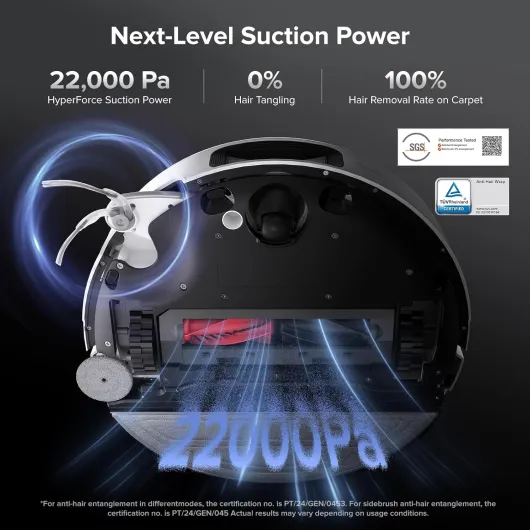
In terms of raw cleaning, the Saros 10 is strong on hard floors and acceptable on low-pile carpets. With the suction cranked up, it pulls up visible crumbs, pet hair, and fine dust without any drama. On my engineered wood and tile, after a full run the floor feels clean under bare feet, which wasn’t always the case with my older robot. The zero-tangling brush claim held up pretty well: after about two weeks of daily runs with a shedding dog, I checked the main brush and there was barely any hair wrapped around it. That’s a nice change from having to cut hair out every few days.
On carpets, it’s good but not mind-blowing. On low-pile rugs, it picks up most of the visible dirt and dog hair. On a thicker rug in the living room, it clearly gets the surface stuff, but when I followed up with a powerful stick vacuum, I still pulled out deeper dust and sand. So if you’re hoping this replaces deep carpet cleaning completely, it won’t. For day-to-day maintenance, though, it’s fine. It also auto-lifts the mop and brush when it detects carpet, so it doesn’t drag a wet mop across your rug, which is important.
The AI obstacle avoidance is one of the better parts. I tested it with cables, kids’ toys, shoes, and dog bones scattered around. Most of the time it spotted them, slowed down, went around, and even snapped a photo in the app. It’s not perfect: very flat items or very thin black cables on dark floors can still confuse it. But compared to older bots that just plow through everything, this is a noticeable improvement. It also means it gets stuck far less often, which matters if you’re running it while you’re out.
Mopping performance is solid for maintenance cleaning. The vibrating mop and hot-water washing do a good job on everyday stains and light dried spills. I set mine to intensive vacuuming first, then intensive mopping with mop wash every 10–15 m², similar to one of the Amazon reviewers. It does take time (several hours for a larger floor), but the end result on hard floors is a floor that looks and feels clean. For really stubborn dried-on kitchen grease or something sticky a kid left for days, you still sometimes need a manual scrub with a sponge. Overall, though, for keeping floors consistently decent without much effort, the performance is pretty solid.
What you actually get with the Saros 10
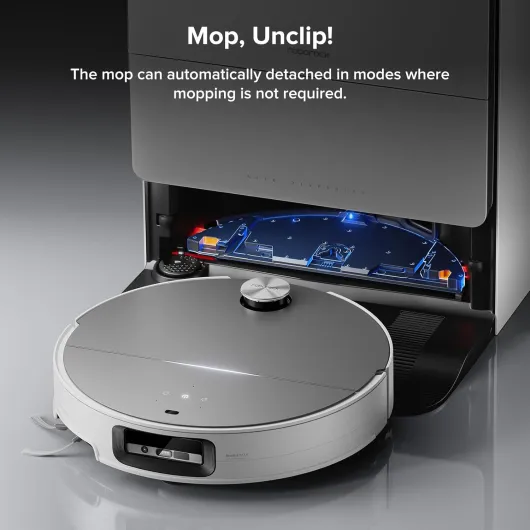
The Saros 10 is basically two things: a slim robot vacuum/mop and a big all-in-one dock. The robot has up to 22,000 Pa suction (on paper, that’s very strong for a robot), a zero-tangling main brush, side brush and side mop that retract, a LiDAR turret that can lower, and a camera/structured light system for obstacle avoidance. In simple terms: it maps your home, sees stuff in front of it, and tries not to eat cables, socks, or pet toys.
The dock is where most of the “fancy” stuff happens. It has tanks for clean and dirty water, a dust bag, a detergent reservoir, and it can wash the mop pads with 80°C hot water, then dry them with heated air at around 60°C. It also auto-empties the dustbin and refills the water in the robot. In practice, that means you mainly deal with the dock every couple of days: refill clean water, empty dirty water, and eventually replace the dust bag. I was doing that 2–3 times a week with daily runs.
The app is the brain of the whole thing. You get room mapping, no-go zones, cleaning sequences (e.g. kitchen first, then hallway), and a ton of settings: how often to wash the mop (every X m² or every Y minutes), suction per room, mopping intensity, obstacle avoidance level, etc. There’s also the whole pet-friendly angle: pet snapshots, video cruising, and video calls. I tried the video feature a few times; it works, but it’s more of a novelty for me than something I’d use daily.
Overall, from a feature list point of view, it’s loaded. Some of it is genuinely useful (auto mop washing, dirt detection, strong suction, obstacle avoidance). Some of it feels like extras most people will barely touch (pet selfies, Matter integration, voice trigger “Hello Rocky”). If you like tweaking tech and having control, you’ll appreciate it. If you just want “clean floor, zero thinking”, the learning curve may annoy you a bit at the start.
How well it actually reduces your cleaning workload
This is the real question: does the Saros 10 actually save you time, or is it just a fancy gadget to babysit? For me, it cut down daily floor cleaning by a lot. I went from vacuuming or sweeping almost every day (dog hair, crumbs, sand from shoes) to doing a quick manual touch-up maybe once or twice a week, mainly in corners or stairs where the robot can’t reach. The fact it vacuums and mops in one run, while also washing its mop in the dock, means I don’t bother with a separate stick mop nearly as often.
The hot-water mop washing and heated drying do make a difference compared to older docks that just spin the mop in cold water. The mop pads don’t sit there damp and smelly. After a run, they come out warm and mostly dry, so there’s less of that “wet dog / dirty mop” smell in the room. I still throw the pads in the washing machine once a week, but in between, they stay in decent condition. That’s one of those features that feels like overkill on paper but ends up being genuinely useful in practice.
Where it doesn’t completely replace you: deep carpet cleaning, edges behind very low furniture it can’t fit under, stairs, and random spills that need an immediate scrub. Also, you still have to manage the dock: refill clean water, empty dirty water, swap dust bags, and occasionally clean the dock tray. With my usage (daily cleaning downstairs, a few times a week upstairs), I was touching the dock every 2–3 days. It’s not a lot of work, but it’s not zero.
Overall effectiveness for me: it keeps the general level of cleanliness much higher with very little effort. The house doesn’t get to that “dust bunnies in the corners and sticky kitchen floor” stage as often. If you expect to never touch a vacuum or mop again, you’ll be disappointed. If you want to turn constant cleaning into light maintenance, it actually does the job pretty well.
Pros
- Very good hard-floor cleaning with strong suction and decent mopping
- Hot-water dock that washes and dries the mop, plus auto-empty and refill
- Good obstacle avoidance and minimal hair tangling on the main brush
Cons
- High price compared to mid-range robots
- Large dock takes up noticeable space
- Ongoing cost for dust bags and consumables
Conclusion
Editor's rating
After living with the Roborock Saros 10 for a bit, my honest take is: it’s a strong, high-end robot vacuum/mop that really does cut down your daily floor cleaning, especially if you have pets or kids. The hot-water dock, self-washing mop, strong suction, and better-than-average obstacle avoidance actually matter in day-to-day use. Hard floors end up noticeably cleaner, carpets stay presentable, and the house just feels less dusty overall without you constantly pushing a vacuum around.
It’s not perfect. The dock is big, the price is high, and it doesn’t completely replace deep carpet cleaning or manual spot scrubbing. You still have to manage water tanks, dust bags, and occasional maintenance. Some of the extra features (pet selfies, voice trigger, Matter integration) are nice-to-have rather than essential. But as a practical tool to handle the boring, repetitive part of cleaning floors, it does a solid job and feels like a real upgrade over basic robots.
If you live in a medium to large home, have hard floors plus some low-pile carpets, and you’re willing to pay for convenience, the Saros 10 is a good fit. Pet owners and busy families will probably get the most out of it. If your place is small, mostly carpeted, or you’re on a tight budget, a cheaper robot or a good cordless vacuum will make more sense and hurt your wallet less. Overall rating from me: a strong 4 out of 5.