
Summary
Editor's rating
Is the Qrevo S5V good value for money?
Design and build: practical more than pretty
Battery life, charging and real-world runtimes
Vacuuming and mopping performance in day-to-day use
What you actually get and how it fits into a real home
How effective is it at actually reducing your cleaning workload?
Pros
- Strong overall cleaning performance on hard floors and carpets with reliable LiDAR navigation
- All‑in‑one dock actually useful: auto‑empty, mop washing and warm‑air drying work well with low smell and low effort
- App is clear and powerful with good routines, no‑go zones, off‑peak charging and flexible mop‑dry scheduling
Cons
- Still struggles with light rugs, cables and small flat objects like slippers; some prep needed before runs
- Doesn’t fully clean tight corners or the area directly under the dock, so you still need occasional manual touch‑ups
- Requires 2.4 GHz Wi‑Fi and a bit of tinkering with maps and zones at the start, which may annoy less tech‑savvy users

Specifications
View full product page →| Brand | roborock |
A robot that actually replaced my regular vacuum (mostly)
I’ve been using the Roborock Qrevo S5V for a while now on a pretty normal setup: mixed hard floors, some rugs, a dog that sheds, and the usual mess of shoes, cables and chair legs. I didn’t buy it to admire the tech; I just wanted to vacuum less and stop dragging the mop bucket out every weekend. In that sense, it does what I hoped: day‑to‑day, I barely touch my old vacuum downstairs anymore.
Out of the box, setup was straightforward. The app guided me through Wi‑Fi pairing (note: it’s 2.4 GHz only, so if your router splits bands weirdly you might need five extra minutes of swearing). It mapped my ground floor in one go, and the map it produced was surprisingly usable without much editing. I did tweak a couple of walls and merged two areas, but that’s it. Within an hour I had room names, routines and a schedule running.
In terms of expectations, I’d say this: it’s not magic, and you still have to do a bit of prep (cables, tiny toys, light rugs). But if you’re okay with that, it really does cut your manual cleaning time a lot. My floors are visibly cleaner, especially under furniture and around chair legs where I was lazy before. It doesn’t grab every crumb on the first pass, but the regular runs compensate for that.
If you’re hoping to never touch a mop or vacuum again, you’ll be disappointed. You’ll still need to handle corners, stairs, and the odd spill. But if your goal is “I want my floors to look clean most of the time without thinking about it”, the Qrevo S5V gets pretty close. That’s the mindset you need going in, otherwise you’ll nitpick every missed grain of rice and drive yourself crazy.
Is the Qrevo S5V good value for money?
Price‑wise, this sits in the mid‑to‑upper range, especially when you catch it around the ~£400 mark mentioned in some reviews. You’re not in cheap‑robot territory, but you’re also not paying flagship prices for camera‑based AI and every bell and whistle. For that money, you’re getting LiDAR navigation, auto‑empty, auto mop washing and drying, strong suction, and a pretty capable app. On paper, that’s a lot of features for the price.
In practice, I’d say the value depends on how much you’ll actually use the automation. If you’re the type who will run it once a week and forget, you might as well buy a cheaper robot without a dock and just empty it yourself. The dock and all the auto features really pay off when you’re running it several times a week, or daily. That’s when not having to touch the dustbin, not having to rinse mop pads constantly, and not worrying about drying them starts to feel worth the extra money.
Compared to something like the Eufy E25 (which I’ve tried), the Qrevo S5V feels more thought‑through on software and hygiene. The pads dry properly, there’s no weird smell, and the app gives you more control without being a mess. You lose the fancy marketing of a roller mop, but you gain easier maintenance and better long‑term cleanliness. For me, that trade is worth paying a bit more. Also, consumables like mop pads and dust bags are reasonably priced and easy to find, so you’re not locked into some crazy expensive refill ecosystem.
So is it good value? If you already own a solid manual vacuum and you don’t mind using it, this is a comfort purchase, not a strict necessity. But as a comfort purchase, it’s a good value for money if you actually lean on it daily. It won’t pay for itself in some magical way, but it will save you time and effort. If your budget is tight, there are simpler Roborock models that clean almost as well without all the dock features. If you’re okay spending a bit more for convenience, the S5V hits a nice balance between cost and what you get.
Design and build: practical more than pretty
Design‑wise, the Qrevo S5V sits in the “clean white box” category. It looks modern enough, but it’s not some showpiece. The robot is white with a simple top cover and the LiDAR bump, the dock is also white with grey tanks behind a front door. If you like minimalist looks, you’ll be fine. If you have kids and a dog like me, just accept that the glossy bits will show fingerprints and the base will collect some dust around it.
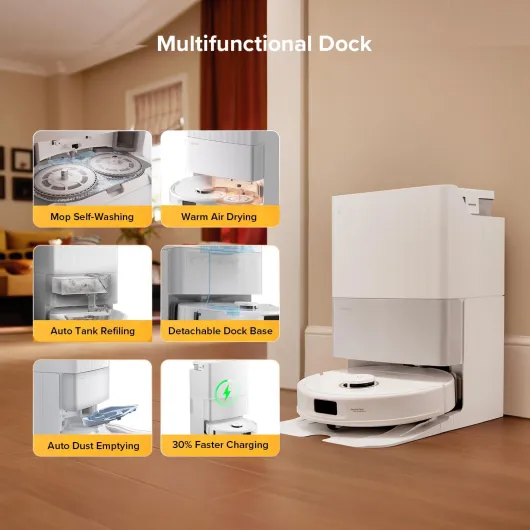
What I actually care about is how the design holds up when you use it every day. The top lid pops up easily to access the small internal dustbin and filter, though you don’t need to touch it often because of the auto‑empty feature. The clean and dirty water tanks on the dock are easy enough to grab with one hand, and they slide in and out without fiddling. The handles feel sturdy enough; I’m not worried about them snapping if a tank is full. The detachable dock base is handy when you want to clean under it or wipe away the gunk that builds up where the wheels sit.
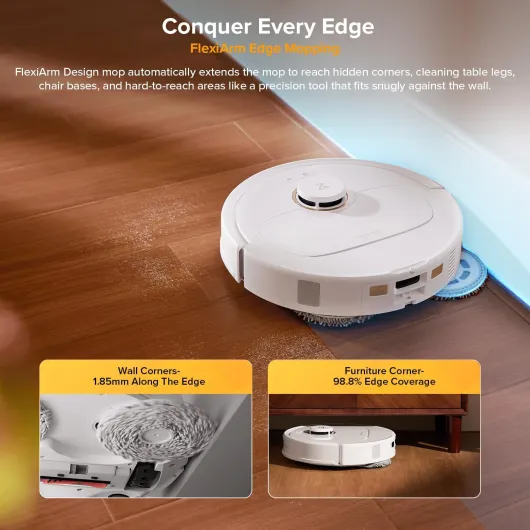
The FlexiArm mop feature is one of the more interesting design bits. One mop pad extends out slightly to reach closer to edges and around chair legs. In practice, it does get closer to skirting boards than the typical circular mop layout. It’s not perfect – you’ll still see a narrow strip in tight inside corners – but it’s better than the usual “leave a 2–3 cm dirty border” behaviour a lot of cheap robots have. Around chair legs, it does a decent circle and actually wipes right up to them most of the time.
One thing that’s not ideal: the dock doesn’t vacuum the area under the robot before the auto‑empty process. So after a while, crumbs can build up right under the parking spot. Every couple of weeks I just slide the dock forward, vacuum or sweep that patch, and push it back. Not a deal‑breaker, but it’s a small design oversight. Overall, I’d call the design solid and functional. It’s not flashy, but the bits you touch regularly (tanks, mop pads, dust bag door) feel thought‑through rather than an afterthought.
Battery life, charging and real-world runtimes
Battery life is one of those things you stop thinking about once it works, and that’s basically the case here. On my roughly 60–70 m² downstairs (mix of laminate, tile, and a couple of rugs), a full vacuum + mop cycle at normal power uses around 30–40% of the battery. That lines up quite well with other user reviews. It means I can comfortably run two full passes in a day without worrying about it having to recharge mid‑job.
If you have a larger place or run it on higher suction for heavy carpets, it will of course drain faster. The good news is it handles recharging and resuming cleaning on its own. I tested this by cranking up suction to max and forcing it to clean more rooms than usual. It went back to the dock at around 15%, charged back up, then headed out again and finished the map without me touching anything. The resume point was accurate; it didn’t re‑clean everything from scratch.
The app has a nice touch with off‑peak charging. I set mine to charge mainly at night when electricity is cheaper. During the day, it still tops up enough to handle scheduled runs, but it tries to do the bulk of the charging in the cheaper window. You don’t need to babysit it; you just set the time window once and forget it. Charging noise is basically zero; the only loud part is when it auto‑empties the dust, which is a short burst and not worse than other robot docks I’ve heard.
For multi‑floor homes, battery is good enough that you can carry the robot upstairs (no, it doesn’t climb stairs) and let it clean another level, but realistically this thing shines more if you place the dock on the main floor and let it run there regularly. Overall, I’ve never had it die mid‑clean in normal use. If you don’t live in a mansion, the battery is more than adequate, and if you do, it will just split the job into two sessions without fuss.
Vacuuming and mopping performance in day-to-day use
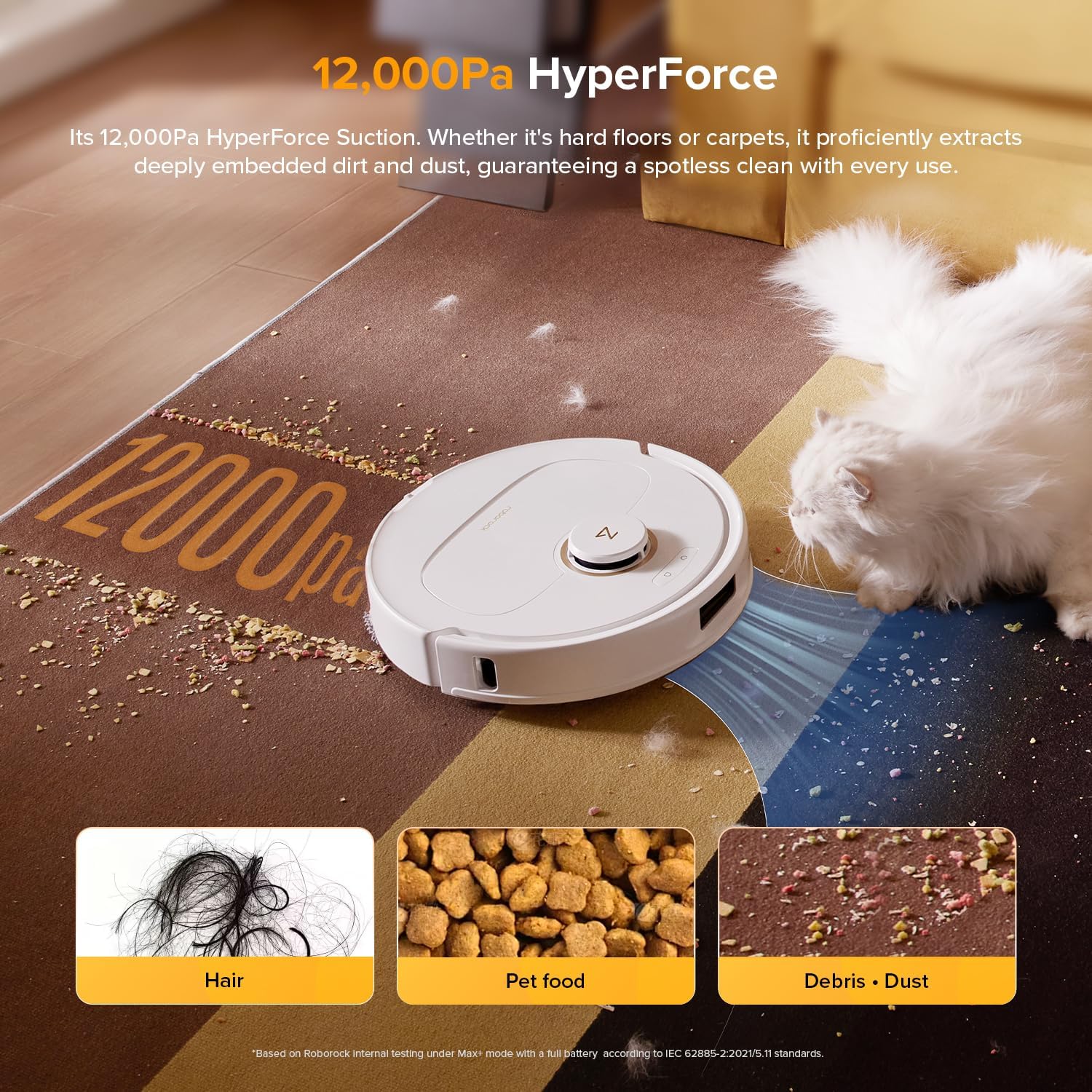
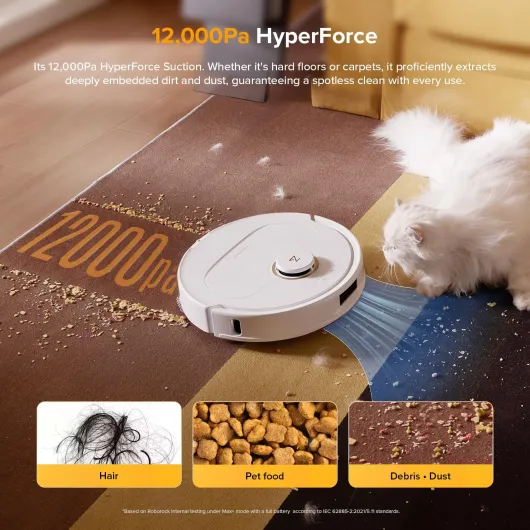
On the vacuum side, the Qrevo S5V is strong enough for normal homes. They advertise 12,000 Pa, which sounds huge, but what matters is what you see on the floor. On hard floors, it picks up the usual crumbs, dust, pet hair and grit in one pass most of the time. If you scatter a bunch of rice or larger bits, you’ll sometimes find one or two leftovers near walls or in corners. With a schedule of daily runs, that doesn’t really bother me because it usually catches whatever was missed the next day.
On carpets and rugs, it does better than I expected. It ramps up suction automatically and you can hear the motor spin harder. My medium‑pile rug in the living room comes out looking properly groomed, and the dog hair that used to stick in there is mostly gone. Light, thin rugs are the weak point: it can bunch them up or push them around. I fixed that by adding anti‑slip pads under the worst offenders. Once anchored, the robot climbs on and cleans them fine.
The mopping is where this thing stands out a bit compared to basic “drag a wet cloth” robots. The dual spinning mops actually scrub at 200 RPM, and you can choose how often it returns to the dock to wash them. On my tile kitchen and hallway, it keeps the floor looking freshly mopped as long as we don’t have a major spill. It’s not going to remove baked‑on sauce that’s been there for a week in one go, but for normal day‑to‑day footprints, paw prints and light kitchen splashes, it handles it well. I use the Roborock cleaning solution occasionally; it leaves a neutral, clean smell, nothing overpowering.
The 10 mm mop lift is important if you have mixed floors. When it goes over low‑pile carpet, the mops lift up so it doesn’t soak them. That works as advertised for my rugs and the one low‑pile carpeted room. I haven’t seen any wet tracks on fabric since setting it correctly in the app. Overall, I’d say the cleaning performance is pretty solid: not flawless, but good enough that my manual vacuum and mop now come out maybe once every couple of weeks instead of several times a week.
What you actually get and how it fits into a real home
In the box, you get the robot, the all‑in‑one dock, a detachable dock base, two spinning mop pads already mounted, the power cable and the usual paperwork. No spare bags or filters included, so don’t expect a big accessory pack. The dock is on the larger side but not ridiculous; think small side table height and depth. I parked mine against a hallway wall and it doesn’t feel like it dominates the room, but you do have to commit a bit of floor space to it.
The dock handles four things: auto‑emptying the dustbin into a bag, refilling the robot’s clean water tank, washing the mop pads, and drying them with warm air. In practice, that means you mostly deal with two water tanks (clean and dirty) and the dust bag. For my ~60–70 m² main floor, I’m emptying the dirty water and refilling clean water about once every 1–2 weeks with daily runs. The dust bag lasts several weeks easily, even with a shedding dog.
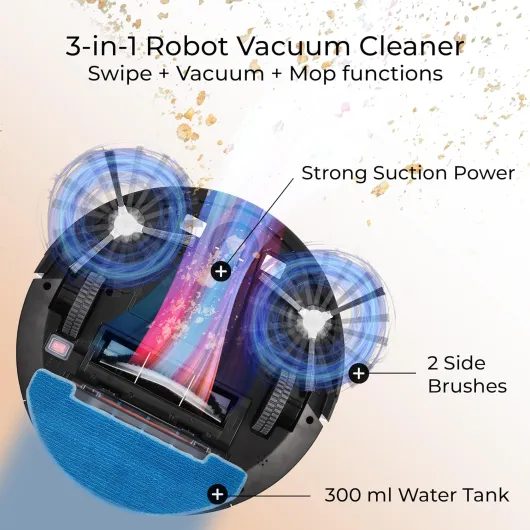
The robot itself is pretty standard size for this category, with the LiDAR turret on top. It’s not ultra‑slim, but it still gets under my sofa and TV stand, which were places I rarely bothered to vacuum properly. The side brush is that rubberized arc design they talk about, and so far it hasn’t turned into a hair nest, which is rare in my house. You can tell they’ve thought a bit about pet hair rather than just slapping a generic brush on.
One thing to be aware of: this is not a portable gadget you move between houses every weekend. It’s a system. You place the dock, you map your floors (up to four levels), and then you kind of build your cleaning routines around it. If you live in a tiny studio or move furniture constantly, it might feel like overkill. In a stable setup with fixed rooms, it makes more sense and feels like part of the house rather than another gadget lying around.
How effective is it at actually reducing your cleaning workload?
This is the real question: does the Qrevo S5V actually save you time, or is it just a pricey toy you babysit? In my case, it genuinely cut my manual vacuuming of the ground floor down to almost zero. I used to vacuum every other day because of pet hair and crumbs in the kitchen. Now I mostly just spot‑clean spills and do a more thorough manual vacuum maybe every two weeks, plus corners and edges the robot can’t physically reach.
The mapping and navigation help a lot here. The LiDAR map was around 90% accurate from the first run. I had to tweak a couple of walls and define some no‑go zones: one around a cable nest behind the TV, and another where we tend to dump shoes. Once those were set, it stopped getting confused or stuck. It still hates small flat things like slippers and loose cables, so if your floor is a constant mess of those, you’ll either pick them up or accept that the robot will sometimes nudge or drag them.
Where it really earns its keep is in the routines. I have it do: vacuum + mop of the kitchen and hallway every morning, a quick vacuum of the living room in the afternoon (dog hair hotspot), and a full vacuum + mop of all mapped rooms once a week. Because it’s doing “little and often”, the place just looks cleaner all the time, and we don’t get those heavy dust bunnies under furniture anymore. The FlexiArm mop really helps around chair legs, so under the dining table looks much better than when I did it manually once in a while.
Is it perfect? No. You’ll still occasionally find a small clump of hair or a crumb the robot pushed rather than sucked up, especially near edges. And you still have to clean the robot itself: empty dirty water, change dust bags, wipe sensors, clean the brush. But compared to doing everything by hand, the workload drop is noticeable. If your standards are “hotel lobby spotless”, you’ll still be doing manual touch‑ups. If your standards are “house looks clean and presentable day‑to‑day without me spending hours”, it hits that pretty well.
Pros
- Strong overall cleaning performance on hard floors and carpets with reliable LiDAR navigation
- All‑in‑one dock actually useful: auto‑empty, mop washing and warm‑air drying work well with low smell and low effort
- App is clear and powerful with good routines, no‑go zones, off‑peak charging and flexible mop‑dry scheduling
Cons
- Still struggles with light rugs, cables and small flat objects like slippers; some prep needed before runs
- Doesn’t fully clean tight corners or the area directly under the dock, so you still need occasional manual touch‑ups
- Requires 2.4 GHz Wi‑Fi and a bit of tinkering with maps and zones at the start, which may annoy less tech‑savvy users
Conclusion
Editor's rating
Overall, the Roborock Qrevo S5V is a solid robot vac‑mop for people who actually plan to use it often. The vacuuming is strong enough for mixed floors and pet hair, the mopping does a decent job of keeping hard floors looking clean, and the dock handles most of the boring stuff: emptying dust, washing pads and drying them properly so they don’t smell. The app is one of the better ones I’ve used: clear map, easy room selection, no‑go zones, and useful extras like off‑peak charging and flexible drying schedules.
It’s not perfect. It still struggles with light rugs, small flat objects and cable jungles. It sometimes misses small debris near edges, and you’ll occasionally need to rescue it or tweak your no‑go zones. You also need to accept that it’s a system you maintain: you still have to refill water, empty dirty water, change bags and clean sensors. But if you’re okay with that light maintenance, it genuinely cuts down how often you drag out a normal vacuum or mop.
I’d recommend it for: people with medium to large homes, mixed floors, pets, and a fairly tidy environment (not piles of stuff on the floor). It’s especially good if you like the idea of “little and often” cleaning and are willing to set up routines properly. You might want to skip it if your budget is tight, your floors are cluttered all the time, or you only plan to run a robot occasionally. For everyone else, it’s a practical, no‑nonsense option that gets the job done without demanding constant attention.