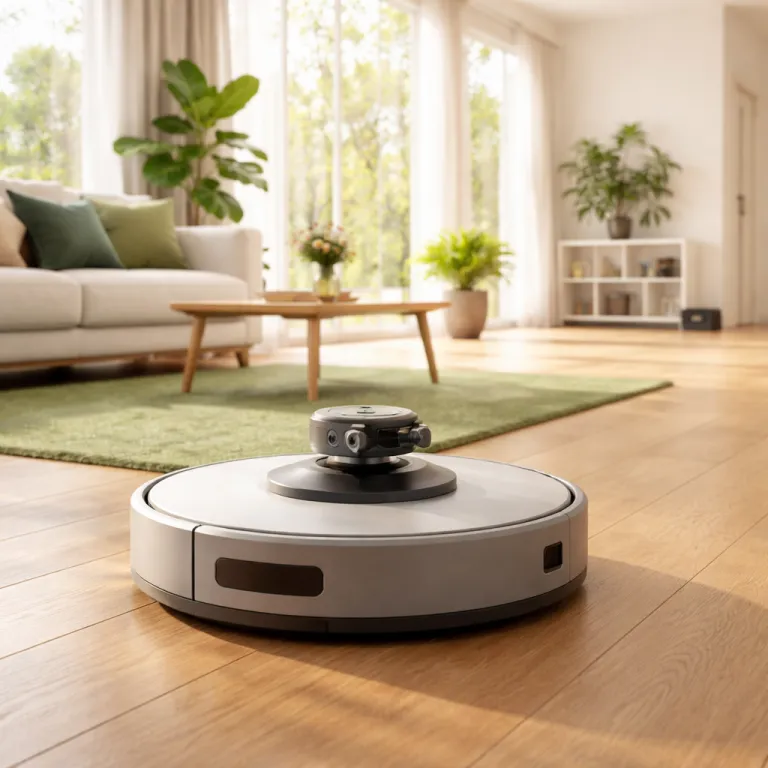
DJI Romo 2 robot vacuum as a signal shift in home cleaning
Bottom line: the DJI Romo 2 robot vacuum series takes the original Romo concept and layers on drone‑style perception, stronger suction and a more automated base station, aiming to reduce how often owners touch their vacuum mop combo in a normal month.
The DJI Romo 2 robot vacuum arrives as a cleaning robot that borrows sensor logic from drones rather than from traditional vacuums. DJI positions the new Romo series, with the Romo P2 and Romo A2 models, as a dual vacuum mop system that uses laser radar, fisheye cameras and ToF sensors to push obstacle avoidance and navigation beyond what most entry level robot vacuums attempt. According to early specifications reported by Chinese tech outlets such as Gizmochina and Ubergizmo, and echoed in major Chinese retail listings, the Romo P2 is rated by the manufacturer at up to 36 000 Pa peak suction while the Romo A2 targets slightly lower airflow but similar cleaning coverage, and both models claim around 180 minutes of quiet‑mode runtime from a roughly 5 200 mAh battery. These figures are quoted manufacturer claims rather than independently verified lab measurements, and most early hands on reports are based on mixed floor layouts with hard surfaces and low pile carpets rather than controlled test rigs. For a tech savvy homeowner comparing the original Romo concept with this new generation Romo hardware, the headline numbers such as 36 000 Pa suction, high pressure airflow and an 8.5 cm threshold climb matter less than how clean the floor looks after a week of pet hair and dust.
At the centre of the DJI Romo 2 robot vacuum story is sensor fusion, where solid state LiDAR, front cameras and depth sensing work together to map rooms and steer the Romo robot around cables, shoes and chair legs. DJI does not just bolt a solid state lidar unit on top of a round robot vacuum; it integrates the compact scanner into a low profile chassis, then lets the software blend that data with fisheye imagery for more advanced path planning and obstacle avoidance. Local reviewers in China note that the Romo P2 and Romo A2 can build a full apartment map in a single pass and maintain stable routes even in low light, which helps reduce random bumping and missed strips of floor. That approach puts pressure on Roborock, Dreame and Ecovacs at the top premium tier, because those brands still lean heavily on single mode LiDAR navigation in many robot vacuums that cost a similar amount.
The dock matters as much as the robot, and here the base station for each Romo DJI model behaves more like a mini appliance than a plastic tray. DJI equips the base with high temperature self cleaning for the mop pads, UV sterilisation, hot air drying and a 55 W fast charge system, so the lift robot can return to work quickly without leaving a damp smell in the station. Chinese retail listings indicate a dust bag capacity of roughly 2.5 L and separate clean and dirty water tanks of around 4 L each, which in practice lets many households run for 2–3 weeks before emptying or refilling. For readers comparing this product with other vacuum mop combos, it helps to look at how a hands free base, a sealed dust bag and an automated water circuit reduce the number of times you need to touch the cleaning system in a normal month.
Edge cleaning arm, dual vacuum mop system and real home performance
Where the DJI Romo 2 robot vacuum stands out from other cleaning robots is the 123 degree robotic cleaning arm that extends 4.5 cm beyond the chassis edge. In practice this means the Romo robot can push its side brush and mop pad deeper into corners and along skirting boards, an area where many robot vacuums leave a thin line of dust and pet hair that still needs a manual clean. That arm, combined with strong suction and a tightly sealed airflow path, is designed to lift debris from edges while the main brush and mop handle the open floor, and Chinese reviewers report that only a faint trace of dust remains in the very tightest corners after a single standard‑power pass.
The dual vacuum mop module on each DJI Romo model uses a central brush, a high pressure fan and a controlled water feed to balance cleaning performance on both hard floors and low pile carpets. DJI says the system can recognise carpets and boost suction while lifting the mop plate, which should help the product avoid soaking rugs while still pulling embedded dust from fibres. Early hands on tests in Chinese apartments describe the carpet protection as reliable on low and medium pile, with the mop plate lifting quickly enough that only a narrow border around thick rugs shows any dampness. For homeowners who want to understand how a robot vacuum mop transforms everyday floor cleaning at home, the way this water control, brush design and suction profile interact will matter more than any single specification.
Real world tests in Chinese apartments reported by local reviewers show that the DJI Romo 2 robot vacuum can handle scattered pet hair, tracked in dust and dried food crumbs in a single pass on tile and laminate. Most of these impressions come from lived in homes with medium shedding pets and mixed room layouts rather than formal lab testing, and noise is typically measured with consumer sound meters at about one metre from the robot. Measured noise levels are typically quoted in the mid‑60 dB range on standard suction and closer to 70 dB at maximum power, which is comparable with other premium robot vacuums. The base station automatically rinses the mop pads with clean water, extracts dirty water into a separate tank and pushes warm air through the enclosure, which reduces odours that sometimes plague other base designs. While the system is not positioned as an entry level option, its advanced automation means that once the dust bag and water tanks are set, many users only touch the station every couple of weeks for refills and waste disposal, and heavy shedding households may need to empty the dust bag slightly more often.
Market impact, availability questions and how it compares for buyers
For now the Romo series, including both the Romo P2 and Romo A2, remains a China only launch with pricing between 5 499 and 6 499 yuan, which places this cleaning robot firmly in the premium bracket. DJI has not announced any international release date, so a person seeking information in Europe or North America will need to weigh whether to import or to choose another vacuum mop combo that offers a strong base station and reliable navigation. Importing brings questions about app support, regional warranties and replacement dust bags, so many buyers outside China may prefer to wait for an official Romo 2 robot vacuum release or to opt for a Roborock, Dreame or Ecovacs model that already sells locally. Anyone trying to choose the best robot vacuum mop combo for a truly hands free clean should compare how often they need to empty the dust bag, refill water and intervene when the robot meets complex obstacles.
From a competitive standpoint, the DJI Romo 2 robot vacuum forces established brands to respond on sensors, not just on suction and mopping pressure. Roborock and Dreame already ship advanced base stations with hot water mop washing and strong cleaning performance, but they will now face a rival that brings aerospace grade perception to the living room. For buyers scanning alternatives, a simplified comparison helps: DJI Romo P2 emphasises multi sensor navigation, quoted 36 000 Pa peak suction, around 180 minutes claimed runtime and roughly 2.5 L dust plus 4 L water tanks, while comparable Roborock, Dreame and Ecovacs flag similar battery capacities, slightly lower stated suction figures and broadly comparable noise levels in the mid‑60 dB range, with differences mainly in base station features and software. For readers who want a deeper look at how a more conventional system like the Shark IQ robot vacuum fits into a typical home, it is useful to contrast that approach with the Romo DJI focus on solid state mapping and multi sensor obstacle avoidance.
For tech savvy homeowners, the key question is whether this generation Romo platform offers enough practical benefit over an original Romo concept or over other top tier robot vacuums to justify the cost and the wait for wider availability. The answer will depend on how much you value precise navigation around chair legs, reduced collisions with furniture and fewer missed dust patches along walls, compared with simpler robots that still clean but bump more. If and when DJI brings the Romo 2 robot vacuum outside China, its combination of high pressure suction, dual mode vacuum mop cleaning and a fully featured base station is likely to reset expectations for what a top end home cleaning product should do between manual interventions, especially for owners who prioritise low maintenance and consistent whole home coverage.
Further reading and sources
For readers who want to compare this model with other options, a detailed breakdown of how a robot vacuum mop transforms everyday floor cleaning at home is available from Robot Vacuum Guru, which also explains how to choose the best robot vacuum mop combo for a truly hands free clean and how the Shark IQ robot vacuum fits into different home layouts. Key factual details about the Romo P2 and Romo A2, including suction figures, sensor configuration, quoted runtime and pricing, have been reported by Gizmochina and Ubergizmo, while Chinese retail listings provide additional product specifications such as dust bag volume, water tank capacity and estimated noise levels. These sources, which primarily reflect manufacturer specifications and early hands on impressions rather than long term independent testing, help anchor the DJI Romo 2 robot vacuum in the broader market of robot vacuums, vacuum mop systems and advanced cleaning robots that now compete for a place in connected homes.