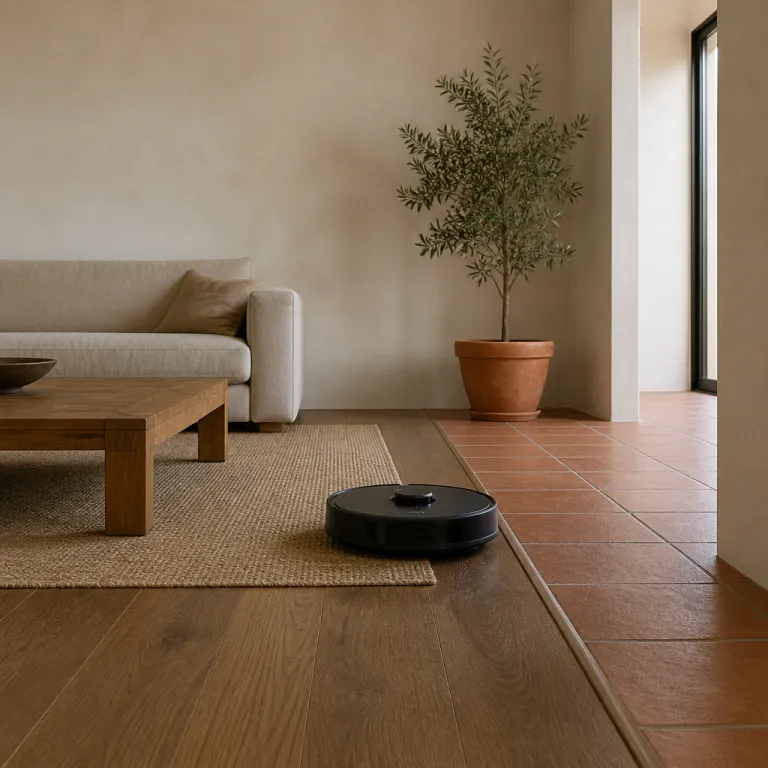
How a LiDAR robot vacuum actually sees your home
A LiDAR robot vacuum does not see your home like a camera. It fires pulses of laser light around the room, measures how long each reflection takes to return, then uses those distance points to build a precise map of every wall and obstacle. That map lets the robot plan efficient cleaning paths instead of wandering randomly.
When a LiDAR robot spins its laser turret, it creates a 360-degree scan that updates several times per second, so the robot can track its position even when furniture or pet hair move around. This technique, often called LiDAR navigation with SLAM (simultaneous localization and mapping), lets the robot estimate its location on the floor within a few centimetres while it cleans multiple rooms in one run. Because the system measures distance from light pulses rather than colours or textures, it works in bright daylight, dim hallways, and fully dark bedrooms without losing its map, although very shiny or transparent objects such as glass table legs can still be harder to detect.
In practice, a LiDAR robot behaves more like a tiny autonomous car than a random bump-and-turn vacuum mop that just reacts when it hits a chair leg. The robot uses its LiDAR sensor module only to sense distance, so it does not capture recognisable images of people or objects the way a camera-based system would. That distance data feeds into a smart path planner that chooses straight, overlapping lines, adjusts suction when it moves from hard floor to carpet, and returns to the dock before the battery-powered pack runs flat, though it may still struggle with very low obstacles such as cables or socks that sit below the laser plane.
Mapping vs random navigation: why paths matter more than specs
Two robot vacuums with the same suction rating can leave very different amounts of dust behind. A random navigation robot might cross the same patch of floor five times while missing a corner under the sofa, whereas a LiDAR robot vacuum follows a deliberate grid pattern that covers every accessible strip once or twice. Over a week of cleaning, that difference in coverage matters more than an extra 500 pascals of suction power on the box.
With LiDAR navigation, the robot builds a persistent map of your rooms, labels each area, and lets you schedule targeted cleaning for the kitchen or hallway instead of the whole home. Camera-based robots try to do something similar using visual landmarks, but they can struggle when light levels change or when glossy surfaces confuse their sensors, which is why many users see them wander or spin in place. In controlled test layouts reported by outlets such as Consumer Reports and Wirecutter, mapped robots with structured paths have repeatedly picked up a higher percentage of test debris per pass than similarly powerful random models, especially on carpet and around edges.
Random navigation still has a place if you only need a dry vacuum for a single small room and you do not care about a perfect map. In that scenario, a basic battery-powered robot can bounce around for an hour and eventually pick up most visible dirt, though it will waste time and energy. Once you add multiple rooms, mixed floor types, and regular pet hair shedding, the efficiency of a mapped route from a vacuum’s LiDAR system becomes obvious every time you empty the dust bag, because more of what you see on the floor ends up in the bin after each run.
LiDAR vs camera vs gyroscope: speed, accuracy, and low light
Gyroscope-based robots rely on internal motion sensors to estimate where they have moved, but they do not build a detailed map of your floor. They usually follow simple patterns, such as spirals or wall-hugging, which look organised yet still miss patches and cannot remember individual rooms. Camera-based robots use an upward-facing camera to track ceiling features and walls, but they need consistent light and can be confused by dark décor or reflective surfaces.
A LiDAR robot vacuum measures distance directly with laser light, so it does not care whether the room is bright, dim, or completely dark. In independent industry testing and third-party lab reviews, systems that combine LiDAR, depth cameras, and SLAM algorithms have shown markedly higher obstacle avoidance and fewer stuck events than older random navigation robots, which translates into fewer collisions with chair legs and fewer tangles with cables. That level of precision is one reason several leading brands have shifted their flagship robot vacuums from purely camera-based navigation to LiDAR-centric designs, keeping cameras mainly for close-range obstacle avoidance rather than primary mapping, where sensor fusion has been shown to reduce missed low-lying hazards compared with LiDAR alone.
Sensor fusion takes this further by adding time-of-flight depth sensors and fisheye lenses to the LiDAR stack, as seen in some advanced models that borrow drone-style perception for floor cleaning. If you want a deeper dive into how advanced AI obstacle avoidance really works, specialist analyses of meaningful AI avoidance benchmarks explain why recognising hundreds of objects is less important than reliably steering around a few key hazards. For most homes, though, a solid LiDAR navigation system without extra cameras already delivers fast, repeatable coverage that feels dramatically smarter than any random robot, while premium hybrids mainly benefit households with very cluttered rooms or many small, frequently moved obstacles.
Mapping power: room labels, no go zones, and multi floor control
Once a LiDAR robot has scanned your home, the app usually shows a floor plan style map with clear room boundaries. You can rename those rooms, merge or split areas, and tell the robot vacuum to clean only the kitchen after dinner or the hallway after school runs. This level of control turns the robot from a simple cleaning gadget into a smart appliance that fits around your routine.
Most modern LiDAR mapping systems support multi-floor mapping, so you can carry the robot to an upstairs landing, press start, and let it recognise which stored map to use. Some pro robot models even detect when they are on a different floor by comparing LiDAR scans to previous runs, then automatically switch maps without user input. For homes with complex layouts, this means you can maintain separate schedules, suction levels, and mop water settings for each floor without constant tinkering.
Advanced mapping also enables virtual no-go lines and no-mop zones, which are essential if you use a wet-dry vacuum mop on mixed flooring. You can draw a line around a deep pile rug to keep the wet pad off it, or block a child’s play corner where small toys might defeat obstacle avoidance. Over time, the product app may suggest new zones based on repeated cleaning patterns, helping you fine-tune where the robot focuses its effort and where it simply passes with a light clean.
Cleaning performance: suction, mopping, and real world debris
Navigation does not pick up dust by itself, but it lets suction work where it matters. A LiDAR robot vacuum that follows tight, overlapping lines will pull more dirt from carpet edges and along skirting boards than a stronger but random dry vacuum that keeps revisiting the centre of the room. In testing by named review outlets that publish coverage percentages and pickup scores, even mid-range models with around 3,000 to 4,000 pascals of suction have matched ultra-powerful flagships when their paths are more disciplined.
Many LiDAR-equipped robot vacuums now include a vacuum mop module, pairing a standard dust bag and brush roll with a water tank and pad for light wet cleaning. Some, such as models that use a Narwal-style scrubbing system, lift the mop on carpet and press down harder on tile, guided by the map of your floor. When combined with auto-empty docks that suck debris into a larger bag, these systems can handle daily pet hair, crumbs, and tracked-in grit with minimal user intervention.
Real-world performance still depends on details like brush design, bin size, and how well the robot handles tangled pet hair around furniture legs. A smart LiDAR navigation system can steer the robot into tight spaces under beds and sofas, but poor obstacle avoidance or weak edge brushes will still leave lines of dust. When comparing any product, look beyond headline suction and colour options to how it actually cleans your rooms over a week, how often you need to refill water or replace filters, and what the warranty covers if the battery or dock fails early.
Buying guide: when LiDAR mapping is worth paying for
If you live in a small studio with one main floor surface and minimal furniture, a basic robot with gyroscope navigation can be enough. It will roam for an hour, pick up visible dust and crumbs, then return to its dock without needing a detailed map or advanced obstacle avoidance. In that scenario, paying extra for a LiDAR robot vacuum mainly buys convenience features rather than dramatically better cleanliness.
As soon as you add multiple rooms, mixed flooring, and regular pet hair, LiDAR navigation moves from nice-to-have to essential. The ability to send a robot vacuum to specific rooms, adjust suction by floor type, and avoid wet mopping on rugs saves both time and frustration. For homes with stairs or several levels, multi-floor mapping means you can carry the same battery-powered unit between floors without resetting anything, while the app keeps track of each map and schedule.
When comparing models, weigh features like auto-empty docks, wet-dry vacuum mop capability, and LiDAR-based mapping against price and long-term costs. Check whether free shipping, spare dust bag bundles, and clear terms and conditions on the warranty are included, because consumables and repairs add up over the product’s life. Above all, choose the robot that fits your cleaning habits and tech comfort, not just the one with the most ultra-pro marketing language on the box or the brightest colour of dock light.
Key figures on LiDAR robot vacuum performance and adoption
- Independent lab tests and review outlets consistently report that LiDAR-guided robots avoid more obstacles and get stuck less often than older random navigation models, especially in furnished living rooms with chairs, cables, and rugs.
- Search data from major keyword tools shows strong monthly interest in LiDAR robot vacuums and laser mapping, reflecting how many homeowners now research navigation technology before buying.
- Market tracking reports have counted dozens of new LiDAR-equipped robot vacuums released in recent product cycles, with growth concentrated in mid-range price tiers where mapping accuracy is now a standard expectation.
- Third-party testing frequently measures higher coverage rates for LiDAR robots in a single pass, while many random navigation models still leave more missed patches under the same conditions.
- Consumer surveys from major review outlets show that buyers who upgrade from random or basic gyroscope robots to LiDAR mapping models report higher satisfaction scores, mainly due to fewer missed spots and more reliable room-based scheduling.
FAQ: LiDAR robot vacuum mapping and navigation
Does a LiDAR robot vacuum work in the dark
Yes, a LiDAR robot vacuum works reliably in complete darkness because it uses its own laser light to measure distance rather than relying on ambient illumination. The LiDAR navigation system sends out infrared pulses and times their return, so it does not depend on visible colour or contrast. That makes it more consistent than camera-based robots, which can struggle at night or in dim corridors.
Is LiDAR better than a camera for privacy
LiDAR sensors measure distance only and do not capture recognisable images of people, pets, or objects. Camera-based navigation, by contrast, records visual frames that could theoretically reveal interior details if mishandled. For privacy-conscious users, a LiDAR-first robot with minimal or no mapping cameras offers a safer balance between smart cleaning and data protection.
Do I need sensor fusion or is LiDAR alone enough
For most homes, a well-implemented LiDAR navigation system without extra cameras is enough to deliver accurate maps and efficient coverage. Sensor fusion setups that combine LiDAR with 3D cameras and time-of-flight sensors can improve obstacle avoidance around low-lying hazards like cables or socks. These pro robot designs are most useful in cluttered spaces or homes with many small obstacles that frequently move.
How often should a LiDAR robot update its map
Modern LiDAR robots update their maps continuously during each run, adjusting room boundaries and obstacle positions as furniture moves. You usually only need to trigger a full remap if you make major layout changes, such as moving large sofas or adding new walls. Minor changes, like shifting chairs or adding a small table, are handled automatically by the ongoing scans.
What maintenance does a LiDAR mapping system require
The LiDAR sensor itself is mostly maintenance-free, but you should keep the laser window clean and free of dust or fingerprints. Wiping it gently with a soft cloth every few weeks helps maintain accurate distance readings and a clear map of your rooms. Beyond that, standard robot vacuum care such as emptying the dust bag, cleaning brushes, and checking wheels will have a bigger impact on day-to-day performance.
References
- Consumer Reports – independent robot vacuum ratings and navigation performance tests.
- Wirecutter – long-term reviews of LiDAR and camera-based robot vacuums.
- Manufacturer product announcements – technical details on LiDAR, camera, and sensor fusion systems.