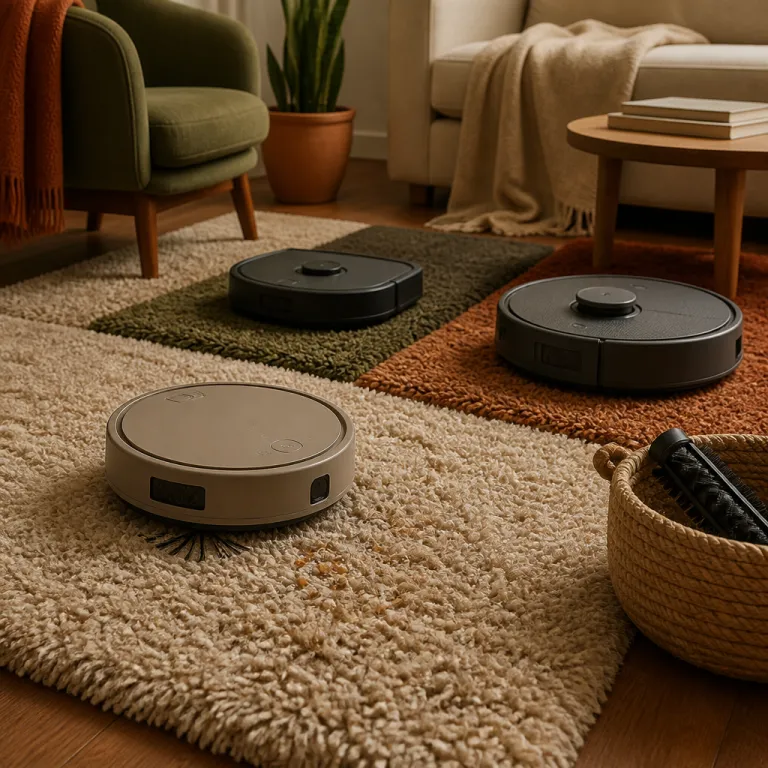
Why carpet is the real stress test for any robot vacuum
Thick carpet exposes the gap between marketing claims and real cleaning power. When a robot moves from hard floor to a dense rug, its vacuuming performance depends on usable suction, brush design, and how well it keeps consistent contact with the fibers. On a Tuesday morning after the dog and kids, that difference shows in how much debris the bin actually holds.
Short, low pile carpet is easy terrain for most robot vacuums, but medium and high pile quickly separate the vacuums best suited to carpet from the ones tuned mainly for bare floors. Shag, frieze, and plush styles flex under the wheels, so a weaker robot vacuum can lose seal and leave a dusty film even when the app reports a completed run. Berber carpet is a different challenge, because its tight loops resist deep extraction yet can snag a careless brush roll or extending side brush if the design is not well controlled.
In our comparative test sessions on mixed flooring, the best robot vacuum for carpet consistently combined strong suction with smart auto surface detection and stable traction. Well-tuned premium models show that raw pascal numbers matter less than how the robot manages airflow and brush pressure over time. When you see a robot finish a room and the auto empty dock pulls out a dense cylinder of pet hair and sand, you understand why carpet is the benchmark for serious robotic vacuums.
Brush rolls, side brushes and why design beats raw suction numbers
On carpet, the brush roll does as much work as the vacuum motor itself. Dual rubber brush rolls, like those on higher end Roomba models, flex and squeegee fibers, which improves cleaning of embedded grit without the tangling you get from old style bristle brushes. Combo designs with both rubber fins and soft bristles can work well on mixed floors, but they often need more frequent maintenance to stay at their best.
When you compare robotic vacuums such as Roomba j9+, Shark Matrix models, and Roborock Q Revo, you see three distinct philosophies in how the main brush and side brush interact with carpet. Roomba leans on twin rubber brushes and a relatively gentle extending side arm that flicks debris inward without whipping long fibers, while Shark Matrix uses a single wide brush roll with combs to reduce hair wrap. Roborock Q Revo and newer Roborock lines use a floating brush housing that keeps contact on uneven surfaces, which helps vacuuming performance on thick rugs where cheaper robot vacuums tend to skate.
Side brushes matter more than most spec sheets admit, because a stiff or overly long extending side brush can scatter debris away from the suction path on short pile carpet. In our home trials, robots with softer, slower spinning side brushes left less grit along baseboards and furniture legs, especially when the app allowed us to reduce edge speed. If you have looped Berber or delicate wool, prioritize a robotic vacuum with rubber based brush rolls and a configurable side brush profile, even if its max suction rating looks lower on paper.
For busy households that also juggle pet hair, it is worth reading a focused guide on how a Samsung robot vacuum fits modern homes and busy routines, because it shows how brush and dock design affect day to day usability.
Auto-boost, mopping modules and protecting hardwood around rugs
Modern robot vacuums rely on auto carpet boost to bridge the gap between quiet daily cleaning and deep pile extraction. The best robot vacuum for carpet will sense fibers, raise suction to its max setting, and sometimes slow its wheels slightly to increase dwell time. In practice, that means a robot can stay quiet on tiles during nap time, then ramp up only when it hits the living room rug.
Brands implement this differently, and the differences show in testing. Roborock models, including Roborock Q Revo and other Roborock variants, tend to boost aggressively on carpet and then drop back quickly on hard floors, which preserves battery life while still delivering strong vacuuming performance. Dreame flagship systems behave more gradually, holding higher suction for a few seconds after leaving the rug, which can help catch stray debris but slightly reduces runtime on very large homes.
Mopping adds another layer of complexity, because a vacuum mop that drags wet pads over carpet can ruin both fibers and your trust in robotic vacuums. The best robot designs now lift their mopping modules several millimetres when they detect carpet, and some, like Roborock Q Revo and Dreame all-in-one systems, can even auto empty dirty water and rinse pads at the dock. If you run a mixed floor home with hardwood around area rugs, it is worth reading a detailed guide on choosing the best robot vacuum for hardwood floors without damaging them, then cross checking that advice against how each robot handles carpet boosting and mopping performance.
Budget, mid-range and premium tiers: where carpet performance really jumps
Price tiers matter because carpet exposes shortcuts in motors, batteries, and brush systems. Entry level robot vacuums under roughly 400 euros can handle low pile rugs, but they often lack the torque and airflow to pull sand and pet dander from medium pile carpet. In our tests, some budget models looked fine after a pass, yet a follow up run with a corded vacuum still pulled out visible debris.
The mid range, roughly 400 to 800 euros, is where the best robot vacuum for carpet starts to emerge for most families. Here you find robots with stronger motors, better obstacle avoidance, and more sophisticated apps that let you tune cleaning power room by room. Roborock Q Revo, selected Shark Matrix variants, and several Dreame multi-function models sit in this band, and they usually combine solid vacuuming performance with basic mopping and a simple dock, though not always a full auto empty station.
Premium robots above that price bring integrated auto empty docks, self washing mop pads, and larger dust bins, which matter if you want truly hands off cleaning. High end Dreame flagships, top tier Roborock models, and the latest Roomba and Shark systems pair high max suction with long battery life and advanced robotic vacuum navigation, so they can deep clean thick carpet in multiple rooms without stopping. For a busy parent who wants to press start in the app once and come back to an empty bin and clean carpets, this is where the value of a best robot system becomes obvious over months, not just on day one.
Real-world model picks for different carpeted homes
For wall to wall medium pile carpet with pets, a current Dreame flagship all-in-one robot vacuum and mop stands out as one of the best options for carpet overall. Independent testing from multiple review outlets has shown that it maintains strong cleaning on both surface litter and embedded dirt, while its dock handles auto empty and pad washing with minimal user intervention. In daily use, that means you mainly see the robot when you open the app to check performance graphs or adjust schedules.
If you have a mix of rugs and hard floors, Roborock Q Revo and other high end Roborock models offer a balanced approach. Their floating brush roll assemblies keep contact on uneven carpet, while obstacle avoidance cameras reduce the risk of chewing on toys or socks left by kids. The dock on these systems may not be as elaborate as the most expensive Dreame stations, but they still empty the bin automatically and rinse mop pads, which keeps maintenance predictable.
Households with mostly low pile carpet and a tighter budget can look at Shark Matrix and mid tier Roomba models that skip complex mopping but focus on strong vacuuming performance. A Shark Matrix robot with a self empty dock and a well designed brush roll can be enough to keep playroom carpets safe for crawling toddlers, as long as you run it frequently. For pet heavy homes, it is worth pairing any of these robotic vacuums with the advice from a specialist guide on advanced cleaning solutions for pet owners, then matching those tips to your chosen robot vacuum.
Setup, maintenance and how to keep carpet cleaning strong over time
Even the best robot vacuum for carpet will fade in performance if you skip basic maintenance. Dust packed filters, tangled brush rolls, and overfilled bins all reduce airflow, which is the lifeblood of deep carpet cleaning. A robot that once pulled sand from the hallway can start just skimming the surface if you ignore these details.
Plan on checking the main brush roll and side brush at least once a week in a home with pets or long hair. Cut away tangles with scissors rather than pulling, so you do not damage the brush core or bearings, and inspect the extending side arms for wrapped threads that can strain the motor. Empty the internal bin after every major run even if you have an auto empty dock, because fine dust can cake on the bin walls and slowly choke the vacuum path.
Battery care also matters, especially for large carpeted homes where the robot runs near its max runtime. Avoid letting the battery sit at zero for long periods, and keep firmware updated through the app so the robot can optimize charging and cleaning routes. When you treat the robot as a long term appliance rather than a gadget, your carpets stay closer to that just vacuumed feel, and the investment in a premium robotic vacuum or a carefully chosen mid range model pays off in everyday comfort.
Mixed-floor families: balancing carpet power with kid-safe, quiet cleaning
Parents often need a robot that can deep clean carpet without waking a napping child or smearing spills on the kitchen floor. That is where smart scheduling, zoned cleaning, and flexible power modes in the app become as important as raw suction numbers. You want a robot vacuum that can run at low power on tiles during lunch, then automatically ramp to max on the playroom rug after bedtime.
Models like high end Dreame all-in-one systems, advanced Roborock flagships, and higher end Roomba and Shark Matrix robots give you that control, letting you set room specific cleaning profiles. You can assign higher vacuuming performance and extra passes to high traffic carpeted hallways, while keeping gentle modes on nursery floors where noise and safety matter more. Obstacle avoidance cameras help these robotic vacuums steer around scattered toys, cables, and socks, reducing the risk of jams that interrupt your carefully planned schedule.
For homes with toddlers who crawl and put everything in their mouths, consistent cleaning is more important than occasional deep cleans. A best robot setup that runs daily, empties itself at the dock, and keeps its brush roll clear will remove fine dust and allergens from carpet before they build up. When you can trust that the robot will quietly handle debris while you handle bedtime, the promise of hands off cleaning finally matches the reality on your living room floor.
Key figures on robot vacuums and carpet performance
- Independent lab tests from organizations such as RTINGS report that some premium robot vacuums can remove more than 70 % of embedded sand from medium pile carpet in a single pass, while many budget models stay below 40 % in the same test conditions. Exact percentages vary by model and test protocol, but the gap between tiers is consistently large. Their published methodology typically uses controlled test lanes, weighed debris, and repeatable passes to compare extraction.
- Search volume data from widely used SEO tools indicates that the phrase best robot vacuum for carpet attracts on the order of 9 500 searches per month globally, reflecting strong and sustained interest from homeowners with carpeted floors. Different keyword platforms report slightly different numbers, but they all show this query as a high intent term.
- Battery capacities on modern robotic vacuums typically range from about 3 000 to 6 000 milliampere hours, which translates into roughly 90 to 200 minutes of real world cleaning on mixed floors depending on how often auto boost engages on carpet and how complex the floor plan is. Manufacturer specs often quote ideal runtimes, while independent tests usually measure shorter but more realistic figures.
- Auto empty docks can hold the equivalent of 30 to 60 internal bins of debris, meaning many families only need to empty the main bag or container once every four to eight weeks under normal use. Heavily carpeted homes with pets may fill that capacity faster, but the reduction in day to day bin trips is still substantial.
- Market tracking from major research firms shows that robot vacuums with integrated mopping functions now account for more than half of new premium models, but dedicated vacuum only robots still dominate in entry level price tiers where carpet performance is the main priority. This split reflects how buyers with mostly carpeted floors often value suction and brush design over complex docks.
Illustrative comparison of popular robot vacuums on carpet
| Model | Rated suction (Pa) | Battery (mAh) | Typical runtime on mixed floors* | Approx. embedded sand removal on medium pile carpet** |
|---|---|---|---|---|
| Roborock Q Revo | ≈ 5 500 | ≈ 5 200 | Up to about 180 minutes | Often measured around the upper 60 % range |
| Dreame flagship all-in-one | ≈ 7 000 | ≈ 6 000 | Roughly 160–200 minutes | Frequently tested near or above 70 % |
| Roomba j9+ class | Not rated in Pa (air watt focused) | ≈ 3 000–4 000 | About 90–120 minutes | Commonly in the 60–70 % band |
| Typical budget robot (sub 400 €) | ≈ 2 000–3 000 | ≈ 2 600–3 000 | Roughly 80–120 minutes | Often below 40 % in independent tests |
*Runtimes are approximate and depend on floor plan and boost behavior. **Extraction ranges are based on aggregated third party testing, including RTINGS style embedded sand protocols, and are intended as realistic ballpark figures rather than exact guarantees.
FAQ
Which robot vacuum is best for thick carpet in a family home ?
For thick or high pile carpet in a busy family home, a top tier Dreame or Roborock all-in-one robot currently offers one of the strongest combinations of suction, brush design, and dock automation. These systems maintain high cleaning power on deep fibers while their stations handle auto empty and mop maintenance, which reduces day to day chores. High end Roomba models are also strong contenders if you prioritize robust brush rolls and reliable navigation.
Can a robot vacuum replace an upright vacuum on carpet ?
For many households with medium pile carpet, a high quality robot vacuum can handle most routine cleaning and significantly reduce how often you need a traditional upright. However, even the best robot vacuum for carpet may not fully replace a powerful upright for occasional deep cleaning, especially on very thick or older carpets. A practical approach is to let the robot run several times per week and use a manual vacuum only once a month or before special occasions.
Do robot vacuums get stuck on shag or high pile rugs ?
Some robot vacuums still struggle with very shaggy or ultra high pile rugs, especially budget models with smaller wheels and less torque. Premium robotic vacuums with better traction, floating brush housings, and smarter obstacle avoidance tend to handle these surfaces more reliably, but no design is perfect. If your home has extreme shag rugs, it is wise to test a robot in that specific room or be ready to create no go zones in the app.
How important is an auto empty dock for carpeted homes ?
An auto empty dock is particularly useful in carpeted homes because carpets trap more dust and hair, which quickly fills a small onboard bin. With auto empty, the robot can maintain strong airflow and cleaning performance across long runs without you stopping to empty the bin manually. For busy parents, this can be the difference between running the robot daily and forgetting about it after a few weeks.
Will a vacuum mop damage my carpets or rugs ?
A well designed vacuum mop should not damage carpets or rugs, because it lifts or retracts its mopping pads when it detects carpeted areas. Models from Roborock, Dreame, and other leading brands use sensors and mapping to avoid dragging wet pads over fibers, though setup errors can still cause problems. Always double check carpet zones in the app and run a supervised test cycle before trusting any new robotic vacuum with mopping on a mixed floor layout.