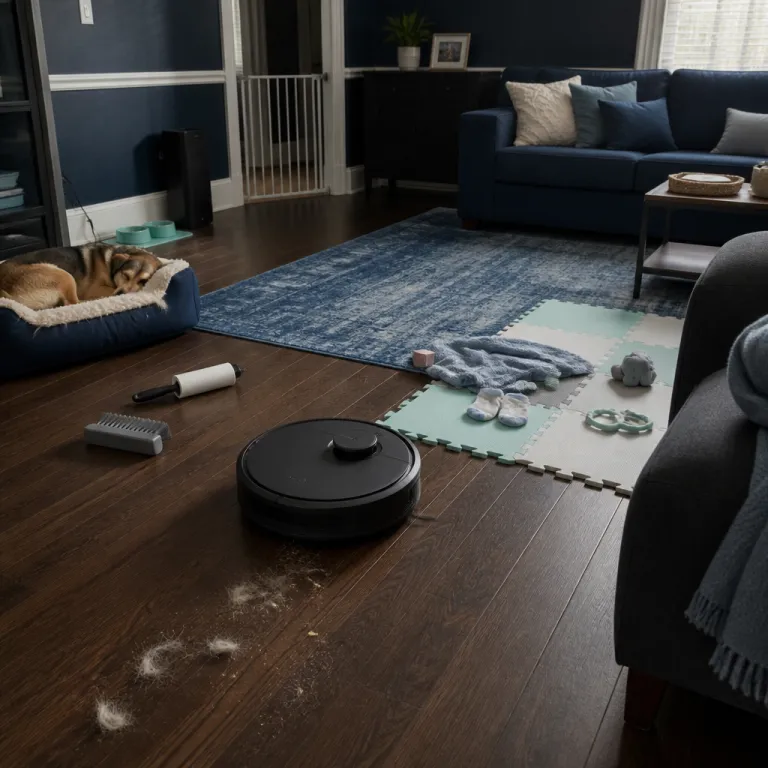
Why robot vacuum baby pet home setups need a different playbook
A robot vacuum in a home shared by a crawling baby and shedding pets is not just a gadget choice, it is a hygiene strategy. When small hands and mouths explore the same floors that collect fur and crumbs, every missed clump of hair becomes something a baby will find, so the best robot vacuums must balance strong suction power with genuinely safe behaviour around children. In this context, a robot vacuum and mop combo with reliable obstacle avoidance is less about convenience and more about protecting your child’s daily play space.
Parents quickly learn that pet hair accumulates fastest in crawling lanes, especially between the sofa and playmat where pets and babies both like to rest, so any cleaning routine in a baby and pet household must prioritise those paths with targeted cleaning runs. A capable vacuum mop such as a Narwal Freo or a high end Roomba Combo j7+ class machine can map these high traffic zones, then run short, quiet passes that focus on pet hair and crumbs before naps while leaving deeper cleaning for later. This approach lets pet owners keep floors safe for floor level breathing without running noisy vacuum cleaners when a baby finally falls asleep.
Not every robot is built for this kind of precision, and the gap between marketing and reality is wide for many vacuums. Models with basic bump and turn navigation often miss edges where pet hair gathers, and their obstacle detection can fail when facing soft toys or small socks that litter a typical family home. For a baby and pet friendly robot vacuum setup, you want advanced mapping, stable apps, and brush rolls that resist tangles from long hair and fur, not just a high suction number on the box.
Scheduling around naps and zoning the chaos
For a busy pet owner, the schedule is everything, because the robot must clean when the baby is awake yet not terrified, and stay quiet when the baby sleeps. Most advanced robot vacuums now offer multi level scheduling with adjustable suction power, so you can run a low power pet hair routine in the nursery hallway before nap time and a stronger whole home pass after bedtime. The key is to treat your robot vacuum like another appliance on the family timetable, not a random gadget that runs whenever you remember.
Zone cleaning is where a robot vacuum in a baby and pet home really earns its keep, since you can draw virtual rooms around the play area, pet feeding corner, and litter box zone. A Narwal Freo or similar premium robot with precise obstacle detection can be told to clean only the crawling corridor and under the dining table at midday, then avoid the toy strewn living room until you have picked up the worst obstacles. For homes with multiple pets, setting no go zones around water bowls and chew toy piles prevents wet messes from reaching the brush roll and keeps the robot from dragging toys across floors.
Some brands handle this better than others, and the differences matter in daily life. iRobot Roomba models with smart mapping, such as a mid range Roomba robot with Imprint Smart Mapping, let you label rooms like “playroom” or “dog corner” and trigger quick pet focused runs with a tap. Shark and other competitors offer similar features, but their obstacle avoidance and app stability can vary, so always test whether the robot respects your virtual walls before trusting it near a sleeping baby.
For readers comparing pet focused models, a detailed hands on review of a complete robot vacuum and mop combo designed for pets, such as the analysis of the Mova V50 Ultra with self cleaning and strong suction, can clarify how these features behave in real homes; see this in depth pet friendly robot vacuum and mop test for a concrete example.
Pet hair, HEPA filters, and floor level air for crawling babies
When a baby spends hours on the floor, the air within twenty centimetres of the surface matters as much as visible dirt, because pet hair fragments and dust stay suspended right where small lungs breathe. A robot vacuum in a baby and pet household should therefore prioritise models with sealed HEPA or high efficiency filters, not just raw suction power, since filtration traps the fine particles that pet cleaning systems stir up. In practice, this means checking whether a robot vacuum or vacuum mop combo lists a filter rating and replacement schedule, and whether replacement filters are easy to buy.
Pet owners often underestimate how quickly pet hair builds up in crawling zones compared with adult walking paths, because fur tends to drift under low furniture and around playmats where airflow is weaker. Robot vacuums with strong edge cleaning and well designed brush rolls, such as some Shark and iRobot Roomba lines, pull hair from skirting boards and table legs instead of just crossing the middle of rooms. Over a week, that difference decides whether your baby’s onesie turns grey from floor dust or stays close to its original colour.
For allergy sensitive families, pairing a robot vacuum routine with occasional manual vacuum cleaner sessions on upholstery and curtains can reduce overall allergen load, but the robot still does the daily heavy lifting. A compact model like the Eufy G50, analysed in this detailed suction performance review, shows how even mid range suction figures can be effective when combined with efficient airflow and a decent brush roll. The goal is not chasing the highest ultra powerful Pa rating, it is achieving consistent cleaning of pet hair and dust where your child actually crawls.
Safety, obstacle avoidance, and child proof design
Safety in a home that mixes robot vacuums, babies, and pets goes beyond not falling down stairs, because you are placing a moving appliance into the same space as a crawling child and curious animals. Look for robots with automatic pause when lifted, child lock options in the app, and no small detachable parts on top that a baby could grab, since some vacuums hide tiny tools or brushes under flip up lids. A good design keeps the exterior smooth, the brush roll enclosed, and the dustbin latch firm enough that a toddler cannot open it easily.
Obstacle avoidance is the second pillar of safety, especially on toy strewn floors where blocks, soft animals, and teething rings lie scattered, and where pets drop chews or hair clumps. Advanced obstacle detection systems using cameras or structured light can identify cables, socks, and even pet waste, reducing the risk of a mess being smeared across floors during cleaning. In practice, this means a good robot for families will typically slow before contact, skirt around small items, and rarely drag toys into the brush rolls or under furniture.
Brands like Narwal with the Narwal Freo, and iRobot with higher end Roomba robot models, have invested heavily in this kind of avoidance, while Shark and others offer more basic but still useful sensors. When evaluating a robot vacuum for a baby and pet home, test it in the worst part of your home first, such as the living room after a play session, and watch how it handles obstacles and pets. If it repeatedly nudges the baby’s play gym or startles pets, adjust no go zones or consider a different robot vacuum model that behaves more predictably.
Real world routine: from morning crumbs to evening fur tumbleweeds
A sustainable cleaning routine with a robot vacuum in a baby and pet household usually settles into three daily passes, each tuned to your family’s rhythm rather than to the robot’s default schedule. Morning is for a quick, quiet run through the kitchen and main crawling lane, using reduced suction power and lower brush roll speed so noise stays down while the baby plays nearby. This pass targets breakfast crumbs, overnight pet hair, and any litter tracked from pet areas onto hard floors.
Early afternoon, just before nap time, many pet owners run a focused zone clean around the nursery entrance and hallway, because these are the last surfaces a crawling baby touches before sleep. Here, a robot vacuum and mop combo can use a light mop mode on sealed floors to pick up sticky spots from juice or milk, while keeping carpets dry through carpet avoidance settings. After bedtime, a full power whole home run tackles deeper dirt, with the robot vacuum system emptying into its dock if it has a self emptying base, ready for the next day.
Over weeks, this pattern turns the robot into background infrastructure rather than a noisy event that disrupts naps or scares pets. A detailed review of a high suction, obstacle aware model such as the M210 Pro Omni, available in this hands free cleaning routine test, shows how features like self cleaning mop pads and slim obstacle avoidance help maintain this rhythm. The aim is a baby and pet friendly robot vacuum setup where you rarely think about the machine, yet always notice when it misses a scheduled run because the floors suddenly feel less safe for crawling.
Choosing the right robot vacuum and mop combo for your family
When you finally pick a robot vacuum for a home with both babies and pets, start with your floor mix and pet count rather than with brand loyalty, because a single cat on mostly hard floors needs different hardware than two shedding dogs on thick carpets. For heavy shedding pets, prioritise strong suction power, dual brush rolls that resist tangles, and a large dustbin or self emptying dock so the vacuum does not choke mid run. Families with mostly hard floors and a single small pet can lean toward quieter models with a capable mop combo, since dried spills and fine dust matter more than deep carpet agitation.
Narwal Freo and similar Freo Ultra class robots excel at automated mopping and self cleaning, making them attractive for homes where sticky footprints and pet accidents are common, while iRobot Roomba lines remain strong on carpet agitation and reliable mapping. Shark offers competitive suction and decent obstacle avoidance at lower prices, though its app polish can lag behind the best robot rivals, which matters if you rely heavily on zone cleaning and schedules. Whatever you choose, confirm that replacement brush rolls, filters, and other vacuum cleaner consumables are easy to source, because a robot that cannot be maintained will not stay safe or effective for a crawling baby.
For many pet owners, the right answer is not the most ultra premium robot, but the one whose behaviour you understand and can trust around both pets and children. Test how the robot handles a deliberate obstacle course of toys, cables, and pet bowls before committing to a long term routine, and adjust maps until the robot respects every no go zone. A well tuned robot vacuum and mop setup for babies and pets turns chaotic floors into reliably clean, safe surfaces, letting your baby crawl and your pets shed without turning every day into a manual cleaning marathon.
FAQ
How loud are robot vacuums in quiet mode around sleeping babies ?
Many robot vacuums in quiet or eco mode run at roughly 55 to 65 decibels according to typical manufacturer specifications, which is similar to a normal conversation and usually acceptable outside a closed nursery door. The main noise spike comes from self emptying docks, so schedule bin emptying for times when the baby is awake. If your baby and pet friendly robot vacuum relies on a dock, place it in a hallway or utility room away from sleeping areas.
Can a robot vacuum safely run while my baby is crawling nearby ?
A well designed robot vacuum with good obstacle avoidance and auto pause can usually operate safely around a supervised crawling baby, but it should never replace active supervision. Use child lock features to prevent accidental starts, and set no go zones around playmats if your baby is nervous about the moving robot. Many pet owners find that running the vacuum in adjacent rooms first helps babies and pets gradually accept the machine.
Do I still need a traditional vacuum cleaner if I own a robot ?
Yes, most families in homes with babies and pets still use a traditional vacuum cleaner occasionally for stairs, upholstery, and deep carpet cleaning. The robot handles daily pet hair and crumbs on open floors, while the manual vacuum tackles edges, sofas, and hard to reach corners. This combination keeps overall dust and allergen levels lower than relying on either tool alone.
How often should I replace filters and brush rolls in a pet home ?
In homes with one or two pets, filters usually need replacement every two to three months, while brush rolls often last six to twelve months depending on hair length and floor type; these are typical manufacturer guidelines rather than strict rules. Heavy shedding pets or thick carpets may shorten these intervals, so inspect parts monthly for wear or tangles. Keeping filters and brush rolls in good condition is essential for maintaining suction power and air quality in a baby and pet friendly robot vacuum routine.
Which features matter most for allergy sensitive babies and parents ?
For allergy sensitive families, sealed HEPA filtration, consistent suction power, and reliable edge cleaning matter more than advanced voice control or fancy mapping graphics. Choose a robot vacuum with a proven filter system, easy access to replacement parts, and strong performance on pet hair along walls and under furniture. Combined with regular washing of playmats and textiles, this setup significantly reduces floor level allergens where babies crawl and play.