
Summary
Editor's rating
Value for money: strong for hard floors, less so for heavy carpet homes
Low-profile body, big loud dock
Battery life is fine, not legendary but enough
Build quality and upkeep: more about maintenance than toughness
Vacuum performance is strong, mop is just a bonus
What you actually get out of the box
Pros
- Strong suction on hard floors, picks up pet hair and fine dust very well
- Auto-empty dock with 3L bag keeps hands-on maintenance low for weeks
- LiDAR mapping and app controls allow room-based cleaning, schedules, and no-go zones
Cons
- Mopping function is basic and doesn’t handle stubborn stains or dried spills
- Auto-empty cycle is loud and dust bags add ongoing cost
- Less effective on thick carpets compared to hard floors

Specifications
View full product page →| Brand | Tapo |
A robot vac that actually earns its keep
I’ve been using the Tapo RV20 Max Plus for a few weeks in a fairly messy house: dog that sheds a lot, kids dropping crumbs, mix of hard floors and a few rugs. I didn’t buy it to admire the tech; I bought it because I’m tired of vacuuming every day. So I’ll skip the marketing talk and stick to how it behaves in real life, not on the spec sheet.
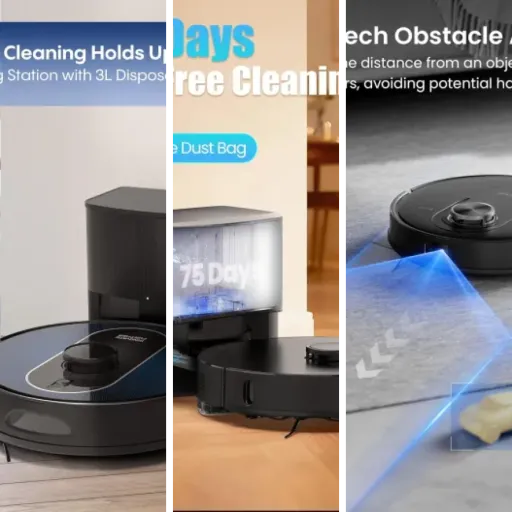
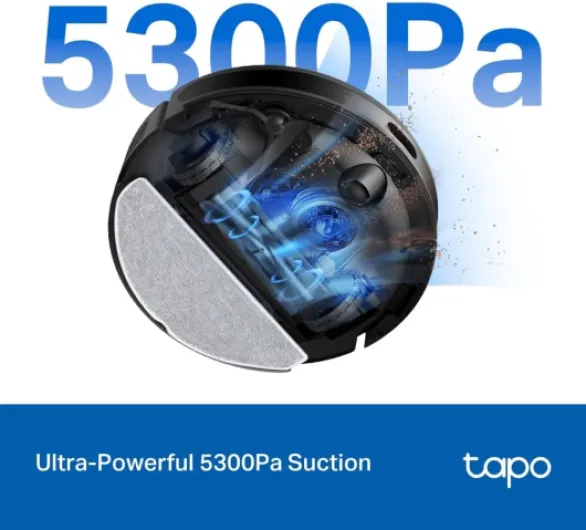
In practice, this thing is mainly a strong vacuum with some light mopping on the side. The 5300Pa suction figure sounds like brochure stuff, but on hard floors it does pull up dog hair and dust better than my older budget robot vac. The auto-empty dock is the real quality-of-life feature here: the robot finishes, docks, and the base sucks out the bin into a 3L bag. You don’t have to think about emptying it every run, which is honestly why I actually keep using it.
The app and mapping side are decent. It uses LiDAR (laser) to map the house and after the first long run, it knows the layout pretty well. I split my space into rooms, set schedules, and now it just does the downstairs every morning while I’m making coffee. It’s not perfect – it sometimes bumps around chair legs and once got stuck under a low TV unit – but I didn’t have to babysit it constantly.
Bottom line for the intro: it’s not some magic house-cleaning robot, but it does take a boring daily chore off my plate. If you expect deep carpet cleaning and proper mopping, you’ll be disappointed. If you want a solid hard-floor vac that mostly looks after itself, then it’s already in the right zone.
Value for money: strong for hard floors, less so for heavy carpet homes
In terms of value, the RV20 Max Plus sits in a sweet spot. It’s not a bargain-basement robot, but it’s also not in the very high-end price bracket where you start paying a lot for fancy features. For the money, you get strong suction, LiDAR mapping, an auto-empty dock, mopping, and app/voice control. If you compare that to some big-name competitors with similar specs, this one usually comes out cheaper while still doing the same main job: daily automated vacuuming.
Where the value really shows is if you have mostly hard floors and pets. In that setup, you’re using its strengths: strong suction, mapping, and the auto-empty dock. You’ll notice less hair on the floor, less dust in corners, and you won’t be dragging out a normal vacuum as often. In my case, I went from vacuuming downstairs almost every day to doing a manual clean once a week just for sofas and edges the robot can’t reach. That alone makes the price feel justified to me.
On the downside, there are ongoing costs and limits. Replacement dust bags for the dock aren’t free, and if you’re running it daily in a hairy household, you’ll go through them. Also, if most of your home is thick carpet, you’re not getting full value. It can handle rugs and low-pile carpet, but it’s clearly more at home on wood, tile, or laminate. The mop is also more of a light extra than a real mopping solution, so don’t factor it too heavily into the price decision.
So in plain terms: for a home with pets and mostly hard floors, the RV20 Max Plus is good value for money. You get a solid feature set without paying top-tier prices. If you’re on a tight budget and don’t care about mapping or auto-empty, cheaper basic robots exist. If you want perfect carpet cleaning and real scrubbing mops, you’ll need to pay more and maybe look at another category entirely.
Low-profile body, big loud dock
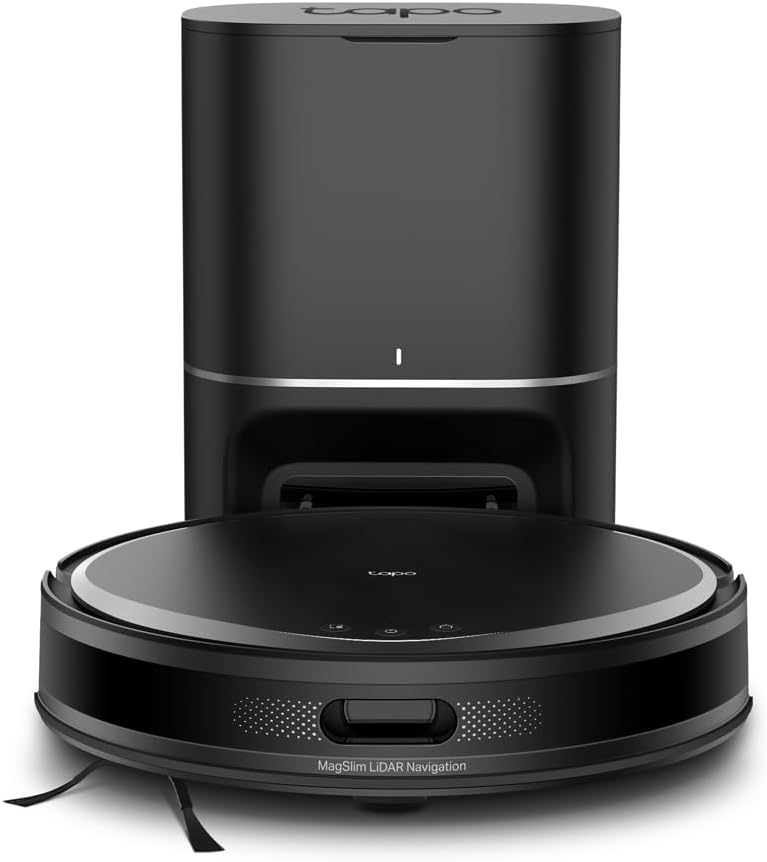
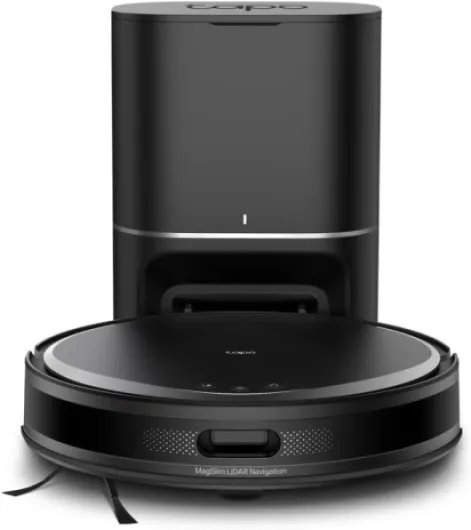
Design-wise, the RV20 Max Plus is pretty standard for a robot vac, but with a couple of practical touches. The robot itself is 33 cm in diameter and only about 8.3 cm high, which is genuinely useful. It fits under most of my sofas and low furniture where dust usually builds up because I never move them. Compared to my older, slightly taller robot, this one gets into more awkward spots and doesn’t get stuck as often under the couch.
The finish is simple black plastic, nothing fancy, but it feels solid enough. You’re not buying this for looks, and in real use it spends most of its time under furniture or docked anyway. There are basic buttons on top (start/pause, home) if you don’t want to reach for your phone. The LiDAR turret is low-profile, so it doesn’t add much height, which is a plus compared to some chunkier laser robots that can’t get under low beds.
The auto-empty dock is where the design is a bit more intrusive. It’s not tiny; you need to dedicate a bit of wall space to it and keep some clearance on the sides. It houses the 3L dust bag, and every time the robot docks after a run, the dock kicks in and sucks the dirt out. That part is loud, like a quick blast from a normal vacuum, but it only lasts a few seconds. If you live in a small flat or have thin walls, you might not want it to run at night because of that.
In daily use, I’d call the design practical rather than pretty. The low profile is genuinely helpful, the plastic doesn’t feel cheap, and the dock is bulky but does its job. I’d have liked some cable management built into the dock and maybe a slightly smaller footprint, but that’s nitpicking. It’s a robot vacuum, not a piece of furniture, and it looks and feels fine for what it is.
Battery life is fine, not legendary but enough
Battery-wise, the RV20 Max Plus is in the “good enough” category. On standard suction with mopping off, it comfortably handles my roughly 40–45 m² downstairs in one go and comes back with around half the battery left. If I bump the suction up to max and run the mop with higher water output, the battery drains faster, but it still finishes the same area without needing a recharge mid-clean. For a normal-sized flat or average ground floor, you’re not going to run out of juice.
The nice part is how it behaves when the battery does get low. If you have a bigger place and it can’t finish in one shot, it will automatically return to the dock, recharge, and then resume where it left off. I tested this by forcing it to clean everything twice in one go on high suction. It went back to charge on its own and then continued without me touching anything. It’s not fast to recharge – you’re looking at a couple of hours for a big top-up – but for scheduled daily cleaning, that doesn’t matter much.
Noise levels are acceptable, but it’s not quiet. On standard suction, I can still watch TV in the same room, but I’ll turn the volume up a notch. On max suction and when the dock empties the bin, it’s definitely noticeable. The spec says around 55 dB, but in real life that varies by mode and surface. I don’t run it at night, and I wouldn’t schedule auto-empty cycles while kids are sleeping right next to it.
Overall, the battery and noise situation is fine for daytime use. You get enough runtime for most homes, smart recharge-and-resume, and noise that’s there but not unbearable. If you have a very large house and want it to do everything in one pass on max power, you’ll hit the limits, but for typical users it’s more than adequate.
Build quality and upkeep: more about maintenance than toughness
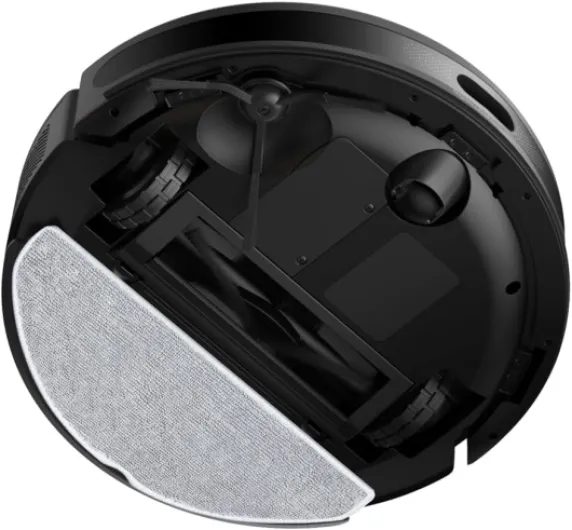
I haven’t had this robot for years, so I can’t pretend to know how it will age long-term, but I can talk about how it feels and what maintenance it needs. The overall build doesn’t feel flimsy. The bumper has a bit of give, the wheels are sturdy, and the underside (brush, side brush, sensors) looks similar to other mid-range robots I’ve seen. Nothing has cracked or come loose after hitting chair legs and skirting boards daily for a few weeks.
Where durability really shows is in how often you need to clean it. With pets, you’ll need to check the main brush and side brush weekly. Hair wraps around them and if you leave it, performance drops. The internal dust filter in the robot also needs a quick tap-out or brush-down every week or two, otherwise suction starts to drop a bit. The 3L dust bag in the base is the opposite: it just sits there and slowly fills. Tapo claims up to 2 months; with a shedding dog and daily runs, I’d estimate 4–6 weeks before I’d want to swap it. Not terrible, but it does mean buying replacement bags.
One small issue: if your pets drag in small twigs or bigger bits of debris, they sometimes get stuck in the robot’s tiny dustbin before they ever reach the base bag. Then you have to open the robot and clear them out. It’s not a big job, but it’s something to know if your garden path is full of little sticks. Also, like any robot vac, it won’t like charging cables or long curtain cords. If it eats one, you’ll be untangling it by hand, and that’s on the owner more than the product.
Given the 3‑year manufacturer warranty, I’m reasonably confident it’s built to last at least a few years if you do basic care. Just don’t expect it to be maintenance-free. You’ll still be cleaning brushes, filters, and occasionally the wheels. If you’re the type who never services their normal vacuum, you might find this annoying. If you’re okay spending 10–15 minutes every couple of weeks giving it a once-over, it should hold up fine.
Vacuum performance is strong, mop is just a bonus
On the vacuum side, the RV20 Max Plus is pretty solid. The 5300Pa suction number is high on paper, but what matters is what ends up in the bin. On hard floors (laminate, tiles, vinyl), it picks up dust, crumbs, and pet hair very well, even on the standard power mode. I only use the higher suction levels for rug areas or when the floor looks particularly bad. After one full clean of my downstairs, the dust bin was full of fine dust and hair that I honestly didn’t see on the floor before. So in practice, the suction is not just a marketing line; it actually pulls stuff out.
Navigation is mostly smart. The LiDAR mapping means it doesn’t just pinball around randomly. It goes in neat lines, room by room, and doesn’t keep redoing the same area over and over. It handles going over small thresholds and onto thin rugs without much drama. The obstacle avoidance is decent: it slows down before hitting chair legs and planters, but it’s not magic. It will still occasionally push a light object or get slightly tangled in loose cables if you don’t tidy up. Compared to older camera-based or bump-only robots I’ve tried, this one wastes less time and covers the space more evenly.
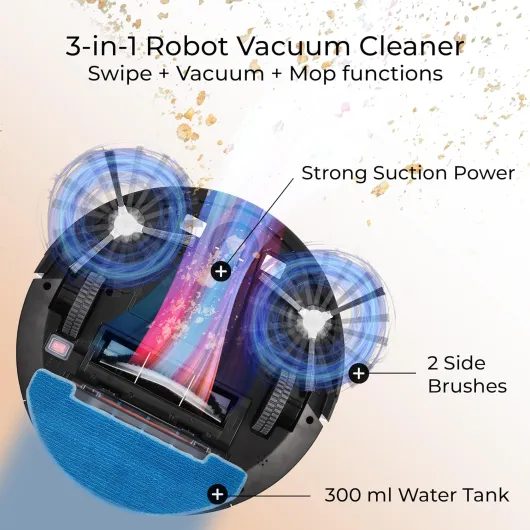
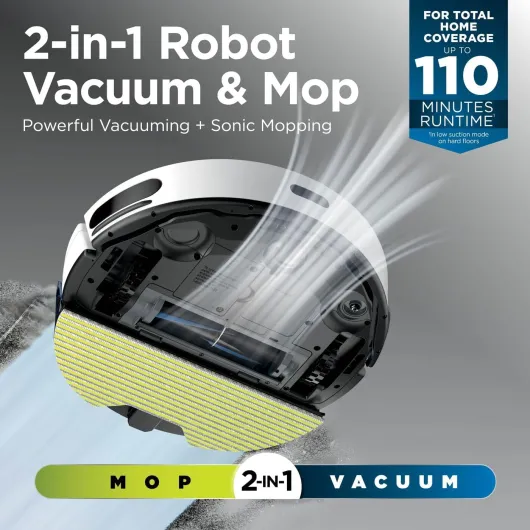
The mopping is where expectations need to be realistic. It’s a damp cloth dragged under the robot, not a scrubber. It’s good for: picking up fine dust, fresh footprints, and light marks on hard floors. It’s not good for: dried food spills, sticky spots, or heavy dirt. You’re also limited to using water only, no cleaning solutions, so don’t expect a strong fresh smell unless you lightly spray the floor yourself first (which kind of defeats the point). I use the mop mode as a maintenance wipe, not as a replacement for a proper manual mop.
Overall performance: as a vacuum, especially for hard floors and pet hair, it gets the job done very well for the price. As a mop, it’s decent but nothing more. If you buy it mainly for vacuuming and treat mopping as a nice extra, you’ll probably be happy. If you want real mopping power, you’ll be underwhelmed and should look at more expensive scrubber-style robots or just stick with a manual mop.
What you actually get out of the box
Out of the box, the Tapo RV20 Max Plus setup is pretty straightforward. You’ve got the robot itself, the auto-empty dock, a dust bag pre-installed in the dock, the mop pad and water tank, and a basic remote. Most of the control is really meant to be done through the Tapo app, but the remote is handy for quick starts and stops if your phone isn’t around. The robot comes mostly assembled; you just remove a few bits of packaging, click on the side brush, plug in the dock, and you’re basically ready.
Connecting it to Wi‑Fi and the app took me about 10–15 minutes. The app walks you through pairing, and once that’s done, the robot does a first run to map the house. That mapping run is slower and feels a bit dumb, but it’s just trying to build the layout. Mine took roughly 45–60 minutes to cover about 40–45 m² of downstairs space. After that, the map shows up in the app, and you can name rooms, merge or split areas, and set no-go zones.
The product is clearly aimed at people who want to set schedules and forget about it. You can program it to clean certain rooms at certain times, set vacuum power and water level per room, and choose whether it should avoid carpets when mopping. Voice control with Alexa/Google works, but I’ll be honest: I mostly just use the app. Saying “start cleaning” is fun once or twice and then you just go back to tapping the phone.
Overall, the presentation and setup are pretty user-friendly. It’s not plug-and-play like a dumb vacuum, but for a smart device it’s manageable even if you’re not into gadgets. You’ll need to spend a bit of time on the first day fiddling with the map and settings, but after that it runs on autopilot fairly well, as long as you do a basic tidy-up of cables and small objects before it goes out.
Pros
- Strong suction on hard floors, picks up pet hair and fine dust very well
- Auto-empty dock with 3L bag keeps hands-on maintenance low for weeks
- LiDAR mapping and app controls allow room-based cleaning, schedules, and no-go zones
Cons
- Mopping function is basic and doesn’t handle stubborn stains or dried spills
- Auto-empty cycle is loud and dust bags add ongoing cost
- Less effective on thick carpets compared to hard floors
Conclusion
Editor's rating
The Tapo RV20 Max Plus is a solid, no-nonsense robot vacuum for people who mainly want their hard floors kept under control without thinking about it. Suction is strong, mapping is efficient, and the auto-empty dock means you’re not constantly emptying a tiny bin. In a normal house with pets and kids, it genuinely cuts down how often you need to grab the regular vacuum. The mop is a nice add-on for light dust and footprints, but it won’t replace a proper mop if your floors get really filthy.
It’s not perfect. The auto-empty cycle is loud, the mopping is basic, and you still need to do regular maintenance on the brushes and filters. If your home is mostly thick carpet or you expect it to remove stubborn stains, you’ll be disappointed. But if your floors are mostly wood, tile, or laminate and your main enemy is dust and pet hair, it gets the job done well for the price.
I’d recommend this to: people with pets, mostly hard floors, and a bit of patience to set up the mapping and schedules. It’s also a good fit if you already use Tapo gear and want everything in one app. I’d skip it if you live in a very carpet-heavy home, hate any kind of maintenance, or mainly care about deep mopping. For everyone else, it’s a pretty solid everyday helper that actually earns its spot on the floor.