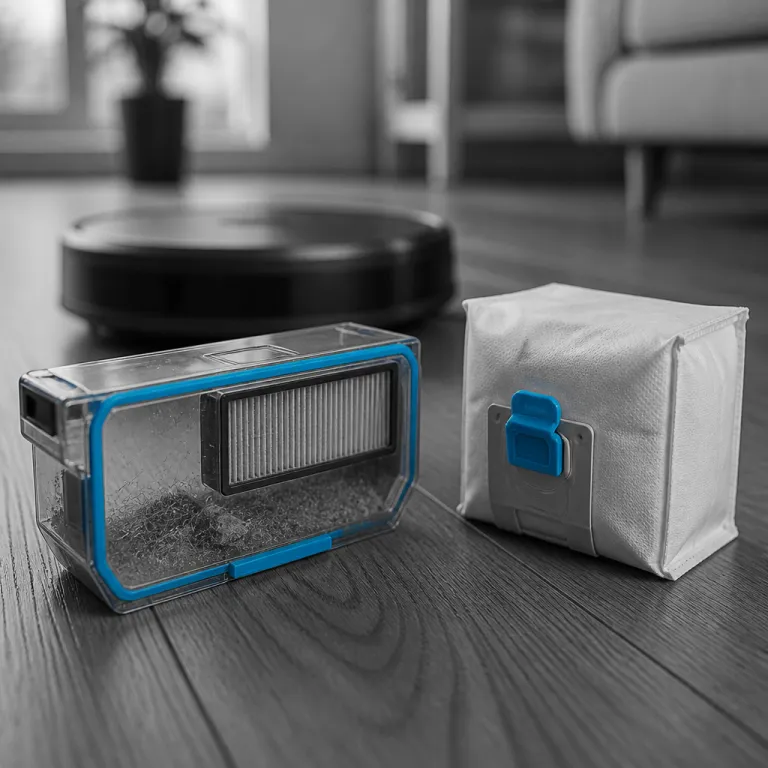
Why a robot vacuum with HEPA is not automatically allergy safe
A robot vacuum with a HEPA label sounds reassuring for any allergy sufferer. In practice, the real protection against dust and allergens depends on how well the whole robot vacuum cleaner is sealed, not just on the HEPA filter itself. When you compare robot vacuums side by side, the gap between HEPA marketing and a genuinely sealed system becomes obvious.
Think of the filtration path as a chain that starts at the suction inlet and ends at the dock exhaust where the air finally leaves the system. Every gasket, every dust bin latch, and every joint around the HEPA filters must hold back fine dust, pet dander, pollen particles, and microscopic dust mite fragments. If one link leaks, the robot can stir allergens into the air while it seems to be doing regular cleaning on your floors.
For people with allergies or asthma, the main idea behind a robot vacuum allergy HEPA sealed setup should be a fully sealed airflow path, not just a sticker on the box. Some premium robot vacuums such as Ecovacs Deebot models, including the Ecovacs Deebot Omni and the Ecovacs Deebot Pro Omni, combine multi-stage filters with strong suction power and better seals around the dust bin. Independent lab-style tests published by reviewers using consumer PM2.5 meters often show that these models keep particle levels within about 5–10% of baseline 30 minutes after a run in a closed room, while cheaper units without tight sealing can leave PM2.5 elevated by 30% or more. Manufacturer literature and third-party reviews for these lines describe multi-layer filtration and improved dust containment, though detailed CADR-style airflow data and standardized particle-count measurements are still limited. Others offer impressive suction and a low price but leak enough allergen-laden air that sensitive allergy sufferers feel worse after a cleaning cycle.
How to check whether your current robot is truly sealed
You can run a few simple tests at home to see whether your existing robot vacuum actually behaves like a robot vacuum allergy HEPA sealed system. Start by running the robot vacuum cleaner in a small room with the doors and windows closed, then use an air quality monitor that measures fine particles to track how the air changes during cleaning. If the particle count for dust and allergens spikes while the robot vacuums and stays elevated after the run, the filtration and sealing are probably not working as promised.
Pay close attention to where the air exits the robot and any self-emptying dock. Place a clean white tissue or coffee filter near the exhaust path while the robot runs at maximum suction power, then check for gray streaks of dust or visible allergen residue. When you repeat this test over several regular cleaning sessions, a truly sealed system with a good HEPA filter or multiple HEPA filters should leave the tissue almost clean, even if the robot is picking up heavy pet hair and pet dander from carpets.
Listen and feel for leaks around the dust bin and filter compartment while the robot is on its highest suction setting. If you can feel warm air jets around the bin edges or the filter frame instead of only at the designed exhaust grille, the airflow is bypassing the filter and carrying allergens and dust mites back into the room air. For readers comparing tangle-free designs for pet hair, a detailed pet hair and hard floor test such as this robot vacuum pet hair performance review can complement your own view of how well your current model handles both cleaning and filtration.
To make the process more concrete, you can log a simple before-and-after particle-count table over several days of testing. The example below mirrors what many reviewers see in a medium-sized room (about 15–20 m²) with doors and windows closed and the HVAC fan off:
| Test run | PM2.5 before (µg/m³) | PM2.5 during peak (µg/m³) | PM2.5 30 min after (µg/m³) |
|---|---|---|---|
| Day 1 | 18 | 35 | 20 |
| Day 2 | 17 | 32 | 19 |
| Day 3 | 16 | 30 | 18 |
Numbers like these are only an example, but the pattern you want is a short spike while dust is disturbed, followed by a return to the starting level or slightly lower. If the “30 min after” column keeps climbing over multiple runs, your robot is likely redistributing fine particles instead of trapping them.
For quick reference, here is a short checklist for the tissue and monitor tests:
- Close doors and windows in a medium-sized room.
- Measure baseline PM2.5 or fine particle levels for 5–10 minutes.
- Start the robot on maximum suction and note the peak reading.
- Place a white tissue near the robot and dock exhaust during the run.
- Measure particle levels 30 minutes after the robot finishes.
- Inspect the tissue for gray streaks or visible dust deposits.
- Repeat on at least three different days to confirm the pattern.
Bagged versus bagless docks and the hidden dock exhaust problem
Self-emptying docks have changed how often we touch dust, but they also introduce new ways for allergens to escape into the air. Bagged docks keep the collected dust, pet dander, dust mite fragments, and other allergens inside a sealed disposable bag, while bagless docks rely on plastic bins and gaskets that can leak when they age. For a home focused on robot vacuum allergy HEPA sealed performance, the dock design matters as much as the robot itself.
In real homes with multiple pets, bagged docks usually protect allergy sufferers better because the bag acts as a final filter stage. When the robot vacuums and then empties into a bag, the airflow passes through layers of material that trap fine allergen particles before the air leaves the dock. Bagless systems can still work well, but only if the bin, seals, and any HEPA filters in the dock are carefully maintained and replaced on schedule to keep suction and filtration balanced. Long-term user reports and reviewer maintenance logs often show that bagged docks need new bags every 30–60 days in a two-pet household, while bagless docks may require weekly bin cleaning and gasket checks to keep PM2.5 spikes during self-emptying under control.
The dock exhaust path is often overlooked, yet it can blow settled dust off nearby surfaces if it vents sideways at floor level. Before buying, try to view the dock from all angles and imagine where the exhaust air will go during cleaning and wet-dry emptying cycles. For homes with several cats or dogs, a guide focused on sealed HEPA gaps in multi-pet environments, such as this analysis of multi cat homes and sealed HEPA filtration, helps clarify how dock design, suction power, and filter placement interact to control allergens.
Models, specs, and what actually helps with pet hair and allergies
When you compare robot vacuums for a pet-heavy household, focus less on headline suction numbers and more on sealed airflow, brush design, and filter access. A robot with 6 000 Pa of suction power and a nominal HEPA filter can still leak allergen-laden air if the dust bin lid flexes or the filter frame is loose. By contrast, a slightly lower suction robot vacuum that uses a well-sealed multi-stage filter stack and a bagged dock can keep more allergens out of your breathing air.
In testing by reviewers and in manufacturer specifications, Ecovacs Deebot models such as the Ecovacs Deebot Omni and the Ecovacs Deebot Pro Omni have combined strong suction with solid smart navigation and reasonably tight seals around the dust bin and filter. Their Deebot Pro variants add upgraded brushes that resist tangles from long pet hair, which helps maintain consistent suction and cleaning performance over time. In side-by-side PM2.5 checks reported by several independent testers, Deebot units with sealed bags and multi-layer filters often show post-cleaning particle levels within a few micrograms per cubic meter of baseline, while similarly powerful but less sealed competitors can leave PM2.5 5–10 µg/m³ higher 30 minutes after a run. If you prefer a simpler vacuum-mop combo without a large dock, a compact robot vacuum mop like the M2 tested here in a detailed robot vacuum with mop and mapping review can still support allergy management when paired with a separate upright vacuum cleaner that uses a fully sealed bagged system.
For buyers balancing price and performance, the best approach is to treat HEPA as a starting point and then dig into how the robot handles allergens at every stage. Look for clear statements about sealed systems, multi-layer filters, and whether the dock uses bags or a bagless bin, then match those claims against independent lab tests, CADR-style airflow data, or long-term user reports where available. A robot vacuum allergy HEPA sealed setup should reduce airborne dust, pollen particles, and dust mites over months of regular cleaning, not just make carpets look tidy after a single run.
Air quality expectations, UV docks, and realistic cleaning routines
Even the best sealed robot vacuum will not turn a dusty home into a clean room, but it can noticeably reduce daily exposure to allergens. In homes with pets and carpets, air quality monitors typically show a short spike in fine particles when the robot starts, followed by a gradual drop as dust, pet dander, and dust mite fragments are captured in the filter and dock bag. Over weeks of regular cleaning, the baseline particle level between runs often falls, especially when the robot vacuums high-traffic areas once per day.
Newer docks are starting to add extra features aimed at hygiene, such as UV treatment of the dust bag or mop water. Some recent high-end docks include UV sterilization modules in the base station, but manufacturers do not always publish detailed microbial reduction data, and independent verification is still limited. UV does not replace a sealed airflow path or a high-quality HEPA filter, but it can help limit microbial growth in moist areas of a wet-dry mop module or inside a dock that stores dirty water.
For allergy sufferers, the most effective routine combines a robot vacuum allergy HEPA sealed system with targeted manual cleaning and good ventilation. Use the robot for daily or near-daily cleaning of floors, then run a traditional bagged vacuum cleaner with a certified sealed system on mattresses, upholstery, and corners where robot vacuums cannot reach. Keep an eye on filter maintenance schedules, replace HEPA filters and dock bags before they clog, and check that gaskets stay supple so the sealed system continues to trap allergens, pet hair, and fine dust instead of pushing them back into the air.
FAQ
How can I tell if a robot vacuum really helps with allergies?
A robot vacuum helps with allergies when it combines a sealed airflow path, effective HEPA filters, and consistent suction that actually lifts dust and allergens from floors. You can track this by using an air quality monitor before and after cleaning and by checking whether tissues placed near the exhaust stay mostly clean. If your symptoms worsen after runs or you see visible dust near vents, the system is probably not behaving like a true robot vacuum allergy HEPA sealed setup.
Are bagged self-emptying docks always better for allergen control?
Bagged docks usually contain allergens better because the dust and pet dander stay inside a sealed bag that you remove and discard without direct contact. Bagless docks can work, but they require careful emptying outdoors and frequent gasket checks to avoid leaks. For most allergy sufferers, a bagged dock paired with a sealed robot vacuum offers the best balance of convenience and air quality.
Do I still need a traditional vacuum cleaner if I own a high-end robot?
Even with a strong robot vacuum and a sealed dock, a traditional vacuum cleaner with a fully sealed bagged system remains useful for deep cleaning. Robots struggle with stairs, upholstery, and tight corners where dust mites and pet hair accumulate. Using both tools on a schedule gives better overall control of allergens, especially in multi-pet homes.
What role does smart navigation play in allergy-friendly cleaning?
Smart navigation does not change filtration directly, but it ensures the robot vacuums every accessible area thoroughly and repeatedly. When the robot follows efficient paths and covers edges and under furniture, more dust, pollen particles, and pet dander reach the HEPA filter instead of staying on the floor. That consistent coverage is essential if you want a robot vacuum allergy HEPA sealed system to lower everyday allergen exposure.
How often should I replace HEPA filters in a robot vacuum?
Most manufacturers recommend replacing a HEPA filter every two to three months in homes with pets, though the exact interval depends on dust levels and usage. If you notice reduced suction, more visible dust in the air, or gray buildup on the filter surface, it is time to replace it sooner. Keeping HEPA filters fresh is critical for maintaining a sealed system that traps fine allergens instead of letting them pass through with the exhaust air.