
Summary
Editor's rating
Is it worth the price? That’s where it hurts
Big, bulky base and a fairly standard robot
Battery and autonomy: enough for most homes, not its main problem
Build quality and long‑term worries
Cleaning power: strong suction, mixed real‑world behaviour
What you actually get with the RS20 Max
Vacuum + mop combo: good concept, patchy execution
Pros
- Strong suction on hard floors and decent daily cleaning of dust and pet hair
- 3‑in‑1 base with auto emptying, hot water mop washing and hot air drying
- Automatic mop detachment to protect carpets when it works correctly
Cons
- Navigation and obstacle avoidance are inconsistent and feel less polished than competitors
- Struggles with low‑pile rugs and can mis‑handle carpets and mats
- Reports of base water pump issues and difficult access to spare parts for long‑term use

Specifications
View full product page →| Brand | EZVIZ |
A flagship robot that behaves like a beta version
I’ve been using the EZVIZ RS20 Max for a few weeks, replacing a more basic robot vacuum I had before (an older Eufy). On paper, this thing looks stacked: 13,000 Pa suction, auto emptying, hot water mop washing, automatic mop detachment, built‑in camera, LDS navigation, the whole lot. It looks like someone took all the current buzzwords in the robot vacuum world and stuffed them into one product.
In reality, it feels a bit like a prototype that made it to market too early. It does clean, it does save time, and when everything works, it’s pretty nice to come home to floors that are mostly handled without lifting a finger. But you can feel the rough edges: software that’s not fully polished, navigation that’s sometimes confused, and a few design choices that make you roll your eyes when you’re trying to relax and the robot keeps beeping that it’s “stuck” in the middle of an empty room.
If you’re coming from no robot vacuum at all, you’ll probably still feel a difference in day‑to‑day cleaning. Pet hair, crumbs, dust bunnies: it picks them up well enough most of the time. But if you’ve already used Roborock, Ecovacs or even some of the better mid‑range models, you’ll notice that this EZVIZ is trying to play in the big league without quite having the same reliability. It’s like buying a high‑spec phone from a smaller brand: the hardware looks great, the experience is a bit hit‑and‑miss.
So this review is from that angle: someone who actually lives with the thing, not just unboxed it once. I’ll go through what works, what’s annoying, and whether it makes sense at its price. Spoiler: it’s not trash, but at around the £600 mark it has to do better than “not trash”.
Is it worth the price? That’s where it hurts
Let’s talk money. This thing sits around the £600 mark, depending on deals. That puts it up against some serious competition: Roborock models with rock‑solid navigation, Ecovacs with proven mop stations, and even some Dreame robots that are pretty polished. At that price, you expect not just lots of features, but also a product that behaves consistently well and doesn’t feel half‑finished.
In terms of what you get for the money, there are some strong points: auto emptying, hot‑water mop washing, hot air drying, and especially the automatic mop detachment, which is quite rare and genuinely practical when it behaves. Add to that the camera for remote viewing and a strong suction motor, and on paper the bundle looks pretty solid. If you bought it on a discount and you’re okay with tweaking settings and living with a few quirks, you might feel you got decent value.
But compared to more established brands, the trade‑offs are clear. You’re sacrificing mature navigation, reliable obstacle avoidance, and an easy supply of spare parts for a feature list that looks impressive but isn’t always stable in practice. When I read reviews of people returning the first unit because the base didn’t pump water, or complaining about constant false “stuck” warnings and mapping that never really makes sense, I can’t honestly say this is the best use of £600 if you just want a solid robot that works out of the box.
So in terms of value, I’d rate it as: interesting if you find it on a big promo and you’re a bit of a tinkerer, but not great at full price. If you’re new to robots and don’t want headaches, I’d lean towards a simpler, proven model from a specialist brand, even if it means losing the fancy hot water mop wash or camera. The RS20 Max tries to offer a lot, but the overall experience doesn’t fully justify its position in the higher price bracket.
Big, bulky base and a fairly standard robot
Design‑wise, the RS20 Max is pretty straightforward for the robot itself and a bit overkill for the base station. The robot is your usual disc shape, nothing fancy. It looks fine, not ugly, not stylish, just a generic modern robot vacuum. The LDS “tower” on top is standard, so if you have low furniture, keep in mind it might not fit under some pieces that a flat, camera‑only robot could reach. That’s not unique to this model, but it’s something you notice if you’re used to older, shorter robots.
The base, on the other hand, is big and heavy. The spec sheet says the item weight is 24 kg, and you feel it when you try to move it around to clean behind it or to shift it to another room. This is not the kind of dock you casually relocate every week. It needs a fixed spot with some clearance around it, and once you’ve chosen that spot, you’ll probably just leave it there and work your room layout around it. If your home is small or cluttered, that’s something to think about before buying.
One thing I did find practical: the layout of the clean and dirty water tanks is simple enough, and access to the dust bag is straightforward. You don’t have to fight with weird latches or hidden panels. The flip side is that it looks quite utilitarian. This is more like having a small white appliance stuck in your hallway rather than a sleek gadget. If you care about how your living room looks, this base station isn’t exactly discreet.
Compared to brands like Roborock, the overall design feels a bit less refined. The plastics are okay but nothing special, the finish is fine but not premium. It’s the kind of design where you can tell more effort went into stacking features into the product than into making it compact or visually clean. For me, it’s acceptable because I care more about function than looks, but if you want something that blends nicely into a modern interior, this one is more on the “big robot garage” side of things.
Battery and autonomy: enough for most homes, not its main problem
The specs say “battery life: 300 quarters”, which is a weird way to put it and frankly not very helpful. In real‑world use, the battery life is fine but not outstanding. On standard suction, it can handle a medium‑sized flat or a floor of a house in one go without drama. If you crank the suction up or have a lot of carpets, it obviously drains faster, but that’s the same with every robot. The good thing is that it does support auto‑recharge and resume, so if it runs low, it goes back to the dock, charges, and then continues where it left off.
During my tests, I didn’t feel limited by the battery in a normal daily routine. The robot usually finished a 60–80 m² area with some charge left on standard mode. On more intensive cleaning with higher suction and mopping, it sometimes needed a top‑up, but since I run it when I’m out or in another room, I honestly don’t care if it takes longer as long as it finishes at some point in the day. So in that sense, the battery is not the bottleneck of this product.
What’s more annoying is the communication between the robot and the dock. There are some reports (and I’ve seen it once or twice) of communication errors where the robot can’t properly sync with the base, which can mess with the recharge‑and‑resume flow. Instead of smoothly going back and restarting, it sometimes just sits there and complains. That’s less about the battery itself and more about the system being a bit flaky.
If you’re worried about battery longevity, it’s hard to say with just a few weeks of use. Lithium‑ion batteries usually start to show their age after a year or two, depending on how often you run the robot. There’s nothing here that suggests it’s better or worse than average on that front. In short: the autonomy is good enough for most homes, and it’s not the reason to either buy or skip this robot. The bigger questions are around navigation and reliability, not battery capacity.
Build quality and long‑term worries
From a build point of view, the RS20 Max feels solid enough when you handle it, but not particularly premium. The plastics are okay, the hinges on the water tanks don’t feel flimsy, and the robot itself doesn’t creak or feel hollow. The base is heavy and seems sturdy, which is reassuring since it houses the hot water system and drying fan. I didn’t see any obvious weak points in the first weeks, no random parts coming loose or anything like that.
Where I start to worry about durability is more on the technical and ecosystem side. Several buyers mention having to return the first unit because the base wouldn’t take water or the pump wouldn’t prime properly. One person had to run endless wash cycles before the pump finally started working, and the base rattled for a few days. That kind of thing doesn’t scream long‑term reliability. When a product needs that much coaxing straight out of the box, you wonder how it will hold up after a year of daily use.
Another concern is spare parts. One user pointed out that even on the manufacturer’s website, you can see the accessories and replacement parts, but there’s no proper way to order them. That’s a big red flag for a robot vacuum, because you will need new side brushes, filters, mop pads and dust bags over time. If those are hard to source or confusing (like accidentally buying the pack for another EZVIZ model where the side brushes don’t fit), that kills the long‑term value of the machine. With brands like Roborock or Ecovacs, you can usually find third‑party compatibles easily; with EZVIZ, it’s not as obvious.
Given the mixed Amazon score (3.5/5) and the comments about faulty units and communication errors with the dock, I wouldn’t call this a “buy it and forget it for 5 years” type of robot. It’ll probably last if you get a good unit and treat it well, but the combination of complex mechanics (auto mop detachment, hot water wash, drying) and a young ecosystem makes me a bit cautious about long‑term durability. It feels more like a product for someone who’s okay dealing with the occasional bug or part hunt, not for someone who wants zero hassle for years.
Cleaning power: strong suction, mixed real‑world behaviour
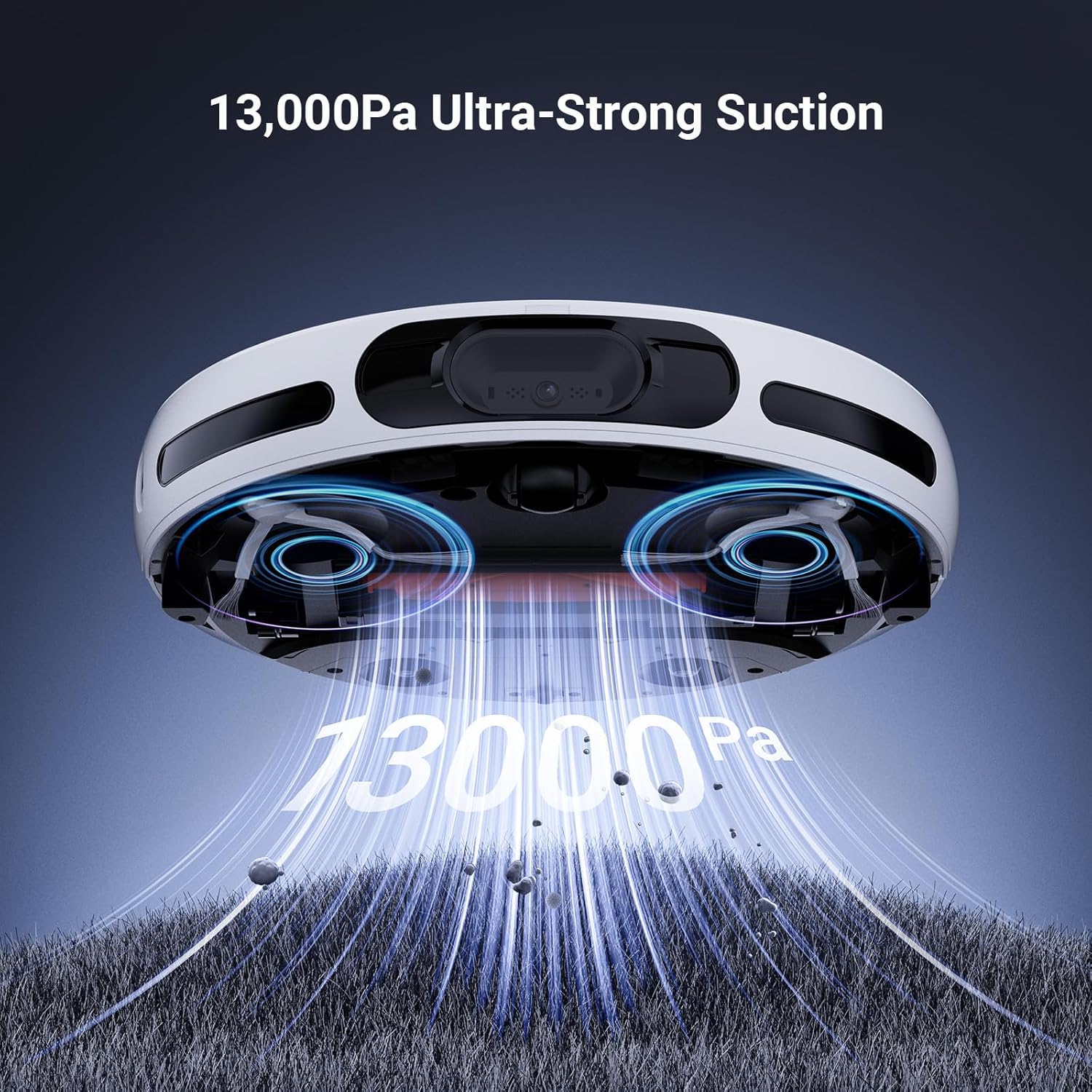
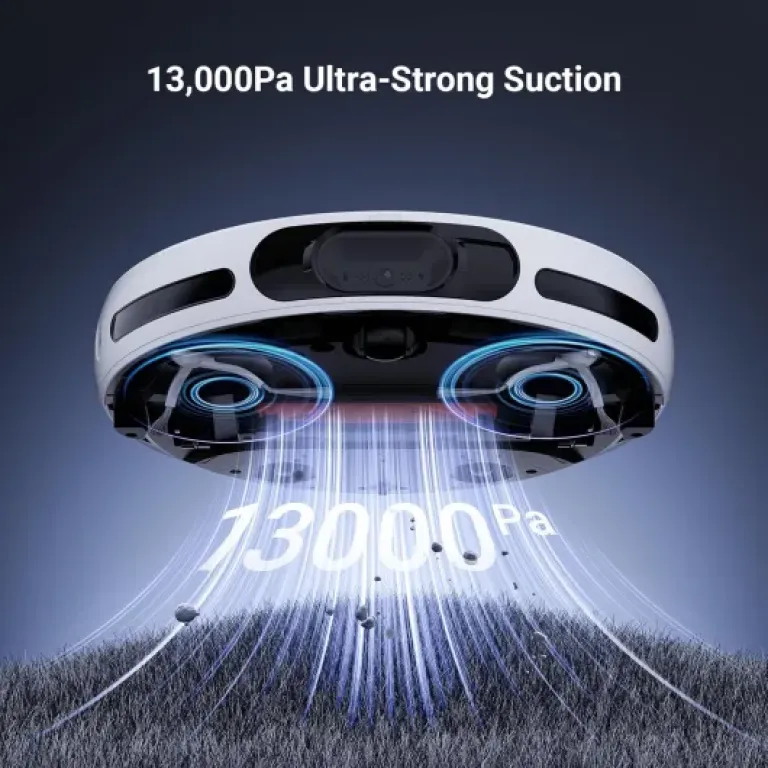
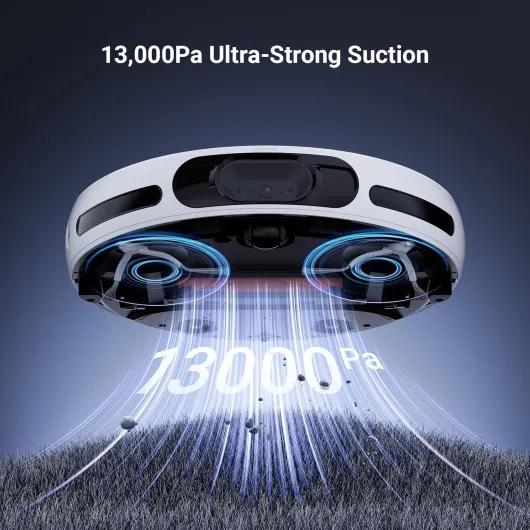
On raw suction, the RS20 Max is no joke. The 13,000 Pa spec is obviously measured in lab‑type conditions, but in practice it does pull up a good amount of dust, crumbs, and pet hair. Hard floors are its comfort zone: tiles, laminate, vinyl, all get cleaned pretty well, and the side brushes help pull dirt out from edges and corners. For everyday maintenance cleaning, it gets the job done. You come home, floors look cleaner, and the dustbin in the base fills up at a reasonable pace, so you know it’s actually picking things up.
Where it starts to struggle is with carpets and rugs. Several users, and I noticed the same, reported issues on low‑pile rugs that aren’t even high. Instead of just rolling over them, the robot sometimes skirts around the edges or even lifts the rug and ends up half‑beached on it, which is pretty silly for a machine at this price. I’ve seen it hesitate at thresholds or jump a bit when going in certain directions over a thin carpet. The carpet detection works for suction boost, but the physical handling of rugs is hit‑and‑miss. It’s not unusable, but it’s not the kind of smooth, confident behaviour you get from better‑tuned robots.
The obstacle avoidance is another sore point. On paper, it’s loaded: LDS, side lasers, AI camera. In real life, it still runs over small items, gets caught on cables, and sometimes insists it’s “stuck” while it’s visibly free and just confused. One Amazon reviewer even said their older, cheaper Eufy with a basic laser system did a better job at avoiding obstacles. I’d agree that for something marketed as smart, it behaves pretty dumb sometimes. It often sees an obstacle, slows down, then still gets too close and snags it with the side brush. So you still need a basic pre‑clean tidy if you don’t want it to chew on socks and toys.
Overall, the performance is decent for day‑to‑day dust and pet hair, especially on hard floors. But if you pay attention to how it moves, you’ll notice the rough edges: weird decisions around carpets, false “stuck” alerts, and a mapping logic that doesn’t always feel consistent from one run to the next. For the price bracket it’s in, I’d call the performance “good but not impressive”, especially when you compare it to more established robot brands.
What you actually get with the RS20 Max
The RS20 Max is sold as a 3‑in‑1 robot: vacuum, mop, and a big base station that handles auto emptying, mop washing with 60°C hot water, and hot air drying. Out of the box, you get the robot itself, the chunky dock, mop pads, and the water tank system. No big surprises there. Setup is fairly standard: plug in the base, fill the clean water tank, pair the robot with the EZVIZ app, and let it do its first mapping run. That first mapping is where you already see a bit of the personality of this thing: it takes its time, and it’s not always great at understanding under‑furniture spaces.
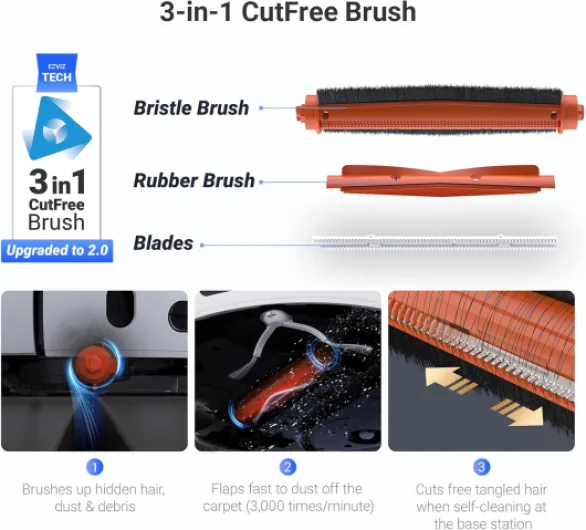
The feature list is long: built‑in 1080p camera for remote viewing and “security”, LDS laser navigation, carpet detection, automatic mop detachment when it approaches carpet, and a patented CutFree brush system that’s supposed to avoid hair tangling. It also supports voice control and app zones, and has up to three power levels. On paper, it looks like it’s competing with high‑end Roborock or Ecovacs models, especially with that hot‑water mop washing and auto mop removal, which is pretty rare and honestly one of the more interesting parts of the machine.
In daily use though, you quickly realise that some of those big features are either underused or not that well tuned. For example, the obstacle avoidance claims (LDS + side lasers + AI camera) sound fancy, but in practice it still runs into stuff or gets too close and catches objects with the side brushes. The camera works, but this is more like a bonus feature than something you’ll rely on every day. The carpet detection and automatic mop detachment is clever when it works, but the robot sometimes mis‑maps carpets and mats, which then makes the whole point of that feature a bit flaky.
If I had to sum up the presentation: the RS20 Max is a feature‑rich robot that tries to be “premium”, but the experience feels more like a solid mid‑range model with some advanced tricks bolted on. It’s not a simple, no‑nonsense vacuum; it’s more like a gadget for people who like tinkering and don’t mind going into the app to tweak options like “black surface detection” just to make it behave properly on dark rugs.
Vacuum + mop combo: good concept, patchy execution
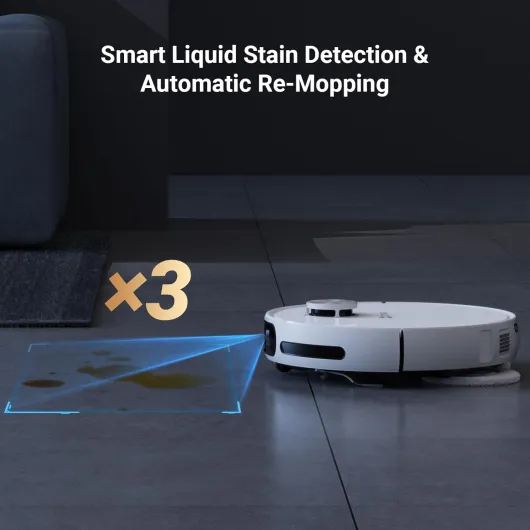
The whole point of this robot is to handle both vacuuming and mopping with minimal effort from you. On that front, there are some genuinely smart ideas. The best one for me is the automatic mop detachment. Unlike most robots that drag the mop around like a tail and then soak your carpets if you forget to remove it, this one is supposed to go back to the base, drop the mop pads, and then continue vacuuming carpets dry. When it works, it’s very practical: you don’t have to flip the robot over or remember to change modes manually.
The problem is that this clever system depends heavily on how well the robot recognises carpets and zones. And that part is not always reliable. One user mentioned it confusing a door mat in the corridor with the living room carpet, so the mapping gets messy and the robot doesn’t always know when to detach the mops. I’ve seen similar behaviour: it sometimes associates separate carpets as one area, and it has a tendency to get too close to carpet edges with damp mops, leaving slightly wet marks where you don’t want them. Not a disaster, but not the clean separation between mop zones and carpet zones that the marketing suggests.
As for the mop cleaning system, the idea of 60°C hot water washing and hot air drying sounds very good. In daily use, the pads do get rinsed and dried, but they don’t come out spotless. Some users complain that the mops remain stained even after a wash cycle. That’s kind of normal if your floors are actually dirty, but it also shows that the base’s scrubbing is not super strong. It’s more about refreshing the pads enough for regular maintenance than deep cleaning them like a washing machine. Still, the hot air drying is useful to avoid that nasty damp smell and potential mould on wet pads.
One more thing: the app has a weird “black surface” option that can cause the robot to avoid dark rugs, thinking they’re drop‑offs. One reviewer only got proper coverage of their black mats and rugs after turning that off. So to get the most out of the cleaning modes, you have to dig into settings and tweak them. Overall, the vacuum + mop combo is effective enough for routine cleaning, but far from flawless. If you expect a fully automated, perfectly smart system that never puts a wet mop near a carpet and always understands your layout, this isn’t there yet.
Pros
- Strong suction on hard floors and decent daily cleaning of dust and pet hair
- 3‑in‑1 base with auto emptying, hot water mop washing and hot air drying
- Automatic mop detachment to protect carpets when it works correctly
Cons
- Navigation and obstacle avoidance are inconsistent and feel less polished than competitors
- Struggles with low‑pile rugs and can mis‑handle carpets and mats
- Reports of base water pump issues and difficult access to spare parts for long‑term use
Conclusion
Editor's rating
The EZVIZ RS20 Max is one of those products where the spec sheet looks better than the day‑to‑day reality. It has strong suction, a big 3‑in‑1 base, hot water mop washing, hot air drying, a camera, and clever ideas like automatic mop detachment. When everything lines up, it does save you time and keeps hard floors reasonably clean without much effort. For pet owners or busy households, that alone can be enough to justify a robot vacuum.
But the rough edges are hard to ignore, especially at this price. Navigation and obstacle avoidance feel less mature than what you get from brands that focus only on robot vacuums. It struggles more than it should with simple rugs, throws false “stuck” errors, and the mapping logic can be confusing. Add in reports of base units that don’t pump water properly at first, and the lack of clear access to spare parts, and you end up with a robot that feels a bit risky for long‑term use.
If you’re the kind of person who likes tinkering, doesn’t mind diving into app settings, and you find the RS20 Max on a good discount, it can still be a decent buy, especially if the auto mop detachment is a key feature for you. If you just want a reliable, low‑stress robot that quietly does its job, I’d say look at Roborock, Ecovacs, or similar brands first. This EZVIZ is ambitious, but it still behaves a bit like a version 1.0 product.