
Summary
Editor's rating
Value for money: where it lands vs the big brands
Design: compact robot, chunky dock
Battery and runtime: long enough for a full house
Build quality and maintenance after a few weeks
Cleaning performance: strong vacuum, average mop
What you actually get out of the box
Pros
- Strong vacuum performance on hard floors and carpets, especially with pet hair
- Bagless 4L self-emptying dock reduces manual emptying and saves on bag costs
- Accurate LiDAR navigation with multi-map support, no-go zones, and reliable room coverage
Cons
- Mopping is basic and only suitable for light maintenance, not deep cleaning
- Dock is large and needs a decent amount of clear wall space
- Brand ecosystem and long-term spare parts support less proven than major competitors

Specifications
View full product page →| Brand | Vexilar |
A robot vac that actually pulls its weight
I’ve been using the Vexilar Cleanova W15 for a few weeks in a pretty normal UK house: two floors, a mix of hard floors and carpets, a kid, and a hairy dog that sheds like it’s his job. I didn’t treat it gently. I ran it almost every day on the ground floor, every couple of days upstairs, and I let it deal with the usual mix of crumbs, pet hair, and random dirt near the back door.
In practice, this isn’t some fancy toy that does one demo run then gathers dust. It actually picked up a lot of crap I thought my normal vacuum had already handled. First run on the living room carpet, the dock bin filled way more than I expected. That was both satisfying and slightly disgusting. So yes, the suction is strong enough to matter, especially if you’ve got pets or you don’t vacuum every day.
It’s not perfect though. The mop is more for maintenance than deep cleaning, and the app takes a bit of fiddling at the start. Also, the dock is big and not exactly pretty, so you need a decent bit of wall space where it can live without getting in the way. And like all robot vacs, it still hates cables, socks, and Lego, so you do need a basic tidy before you send it out.
Overall, my first impression after a few days was: this thing genuinely saves time, especially with the self-emptying dock and the mapping. After a couple of weeks, my view is more balanced: it’s pretty solid for the price, strong on vacuuming, just okay on mopping, and absolutely not magic. If you expect it to replace all cleaning, you’ll be disappointed. If you want it to handle 70–80% of the floor work so you vacuum less often, it gets the job done.
Value for money: where it lands vs the big brands
Price-wise, this sits in that interesting middle ground: more expensive than basic bump-and-go robots, cheaper than the big flagship models from the well-known brands. With the kind of discounts people mentioned (around £190–£230), you’re getting LiDAR navigation, self-emptying, and mopping for what some brands charge for a simple non-docking robot. That’s why it feels like good value: the feature set is closer to higher-end models, but the price isn’t.
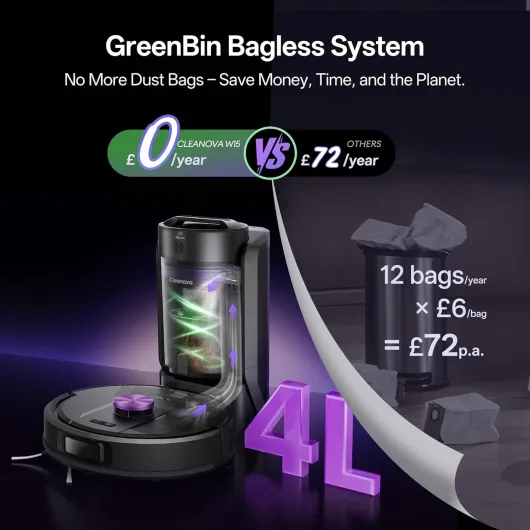
The bagless dock is where you save money long term. No bags means no recurring cost there, and if you actually keep it for a couple of years, that adds up. It does mean you deal with dust when you empty the dock bin, but honestly, it’s no worse than emptying a normal vacuum canister. If you’re sensitive to dust, you might prefer a bagged system, but then you’re paying for bags constantly. For most people, I’d say the Vexilar approach is cheaper and still practical.
Where it doesn’t fully match the pricey robots is polish and brand ecosystem. The app is functional but not fancy, there’s no automatic clean water/dirty water station for the mop, and the build doesn’t have that top-tier feel. Also, long-term support and spare parts availability are not as proven as the biggest brands. These are trade-offs you accept to save a chunk of money. If you want the full “press one button and never think about anything” experience, you’re looking at much higher prices.
For a normal household that just wants floors kept under control with minimal effort, the value is genuinely good. You get strong vacuum performance, smart navigation, long battery life, and a dock that means you’re not emptying a tiny bin every run. If your budget is under the flagship robots but you don’t want a dumb cheap one, this sits in a sweet spot. There are better robots out there, but they cost a lot more. Here, you’re getting solid performance and useful features without paying for brand prestige.
Design: compact robot, chunky dock
The robot itself is fairly compact: around 30.6 cm wide and under 10 cm tall, so it slides under most sofas and beds in my house. That’s actually a big deal, because those areas usually get ignored unless I move furniture. The shape is the standard round puck, dull black finish, nothing flashy. It’s not going to impress anyone visually, but it doesn’t look cheap either. Think practical rather than stylish.
The dock is another story. The 4L multi-cyclone station is big. If you’re in a flat with limited wall space, you’ll notice it. You also need the recommended clearance (about 1 m on each side and 2 m in front) for smooth docking. In my case, I had to rearrange a shoe rack by the hallway to give it enough space. Once placed, it’s fine, but don’t expect to hide it behind a plant. On the plus side, the height and bulk are what allow it to be bagless and still hold up to “90 days” of dirt if you’re not in a huge house.
From a usability angle, I like that there are simple physical buttons on the robot for start/pause and home. You don’t have to grab your phone every time. The LiDAR turret on top is fairly low profile, and so far it hasn’t bashed into table edges or chairs. The bumper is sensitive enough that when it does touch something, it’s a light tap, not a slam. Noise-wise, the design is decent: in quiet mode, it’s background noise; in turbo, it’s noticeable but not crazy loud. The dock emptying cycle is the loudest part, but it’s short.
One downside: cable management around the dock could be better. There’s no smart channel to hide excess cable, so you end up coiling it on the floor or behind furniture. Also, the mopping pad hangs off the back, which looks a bit cheap when you pick the robot up; it’s just Velcro and a clip. Functionally it’s fine, but don’t expect a premium, polished feel like the really high-end brands. Overall, the design is practical and thought-through, but clearly aimed at function over looks.
Battery and runtime: long enough for a full house
The battery is one of the strong points. The advertised 180 minutes isn’t total fantasy. In quiet or standard mode on mixed floors, I was getting around 140–160 minutes before it dropped close to 15% and decided to go home. On my ground floor (about 60–65 m² with furniture), it finishes a full clean in roughly 45–55 minutes depending on suction mode and whether mopping is on. Upstairs, about 45 m², it takes around 35–40 minutes. So even in a moderate-sized house, a single charge is usually enough.
When it does need to recharge mid-clean, the behaviour is decent: it returns to the dock, charges up to around 80%, then goes back to the exact spot it stopped. I tested this by manually pausing a large area clean and forcing it to dock. When I resumed, it didn’t start the whole floor again; it continued the remaining rooms. That sounds basic, but some cheaper robots mess this up and waste a lot of time redoing cleaned zones.
Charging from almost empty to full takes a few hours (roughly 4–5 in my case). That’s fine if you schedule it to run once a day or every other day. If you expect to run it multiple full-house cycles in one day, you’ll need to plan around those charge windows, but for most people that’s overkill. The battery indicator in the app is clear enough, and you can see how much percentage it used for a specific run, which helps you judge what it can handle on one go.
Noise levels tie into battery use as well. Quiet mode is genuinely low-noise and still cleans hard floors decently, so I often use that in the evening. It uses less battery too, so runtime is longer. Turbo mode is best for carpets or very dirty areas, but it drains the battery faster and is noticeably louder. I usually run standard or quiet for daily cleaning and only use turbo for specific rooms. Overall, battery life is more than adequate for typical homes up to around 120–150 m² of actual floor area, especially if you’re fine with it recharging once during a very big clean.

Build quality and maintenance after a few weeks
After a few weeks of pretty regular use, the W15 still feels tight and nothing rattles or sounds loose. The plastics are on the practical side: not premium, but not flimsy either. The top gets fingerprints and dust like any black appliance, but that’s cosmetic. The bumper and wheels handle thresholds and small transitions fine. It goes over my 1.5–2 cm door bars without drama, though it sometimes hesitates on a thick rug edge.
The bagless dock is the main part where durability and maintenance matter. It uses a multi-cyclone system, so you’re not buying bags every few months. Emptying it is simple: open the front, pull out the dirt container, dump it in the bin, clip it back in. There’s a bit of dust when you empty it, but it’s no worse than any normal bagless vacuum. The filter in the dock needs a quick brush or vacuum every few weeks if you run the robot often. So far, suction from the dock to empty the robot hasn’t dropped, which is a good sign.
On the robot itself, hair wraps around the main brush as expected if you’ve got pets or long hair in the house. Every week or so, I flip it over, pop out the brush, and cut the hair off with scissors. Takes five minutes. The side brush will eventually wear; that’s just how these things work. You’ll want to check how easy it is to get official spares in your country. Being a less-known brand than the big names, long-term spare availability is a bit of a question mark, but at the moment they seem to be selling parts.
Overall, I’d call the durability pretty solid for the price bracket. Nothing feels like it’s about to break, the wheels and sensors still behave consistently, and the LiDAR dome hasn’t scratched or fogged. The 2‑year warranty is reassuring, but of course, that only helps if support actually responds. I haven’t had to use support yet, so I can’t confirm how good they are in practice. Just don’t expect tank-like construction; this is still a home appliance with moving parts that will need some care and the odd replacement brush or filter over a couple of years.
Cleaning performance: strong vacuum, average mop
On the cleaning side, the W15 is solid where it matters most: vacuuming. I ran it on three surfaces: low-pile carpet, medium-pile carpet, and vinyl/laminate floors. On hard floors, even in standard mode, it picked up crumbs, dust, and pet hair in one pass. Edges and corners are handled better than I expected; the side brush does a decent job flicking dirt into the suction path. I rarely felt the need to grab a stick vacuum after it, except for very tight corners behind furniture.
On carpets, the 10000Pa marketing number is hard to verify, but in practice, it pulls up visible dirt and hair that my old cordless missed. I did a simple test: vacuumed a 2x2 m area with my Dyson, then ran the W15 over it. The dock still collected a noticeable amount of fine dust and hair. It doesn’t beat a proper manual deep clean with a powered head, but for everyday maintenance, it’s more than enough. If you have pets, this is where the robot earns its keep: it just quietly keeps the fur under control so you’re not embarrassed when someone visits.
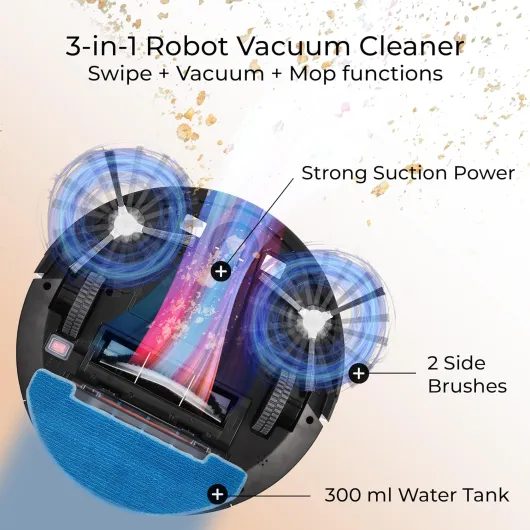
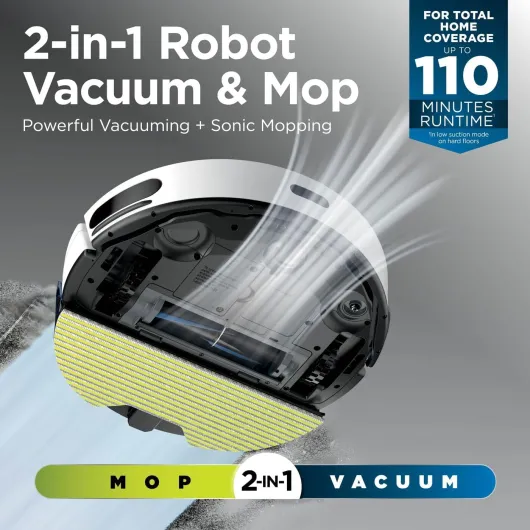
The mopping function is more “wipe the floor” than “scrub the floor”. You fill the 200 ml tank, select one of the three water levels, and it drags a damp pad around. For daily light dirt and footprints, it keeps the floor looking decent. It will not remove dried-on kitchen spills or old stains. I noticed it leaves some faint streaks on darker floors if you set the water too high, but nothing dramatic. Personally, I treat the mop as a bonus, not as a replacement for a real mop and bucket session once in a while.
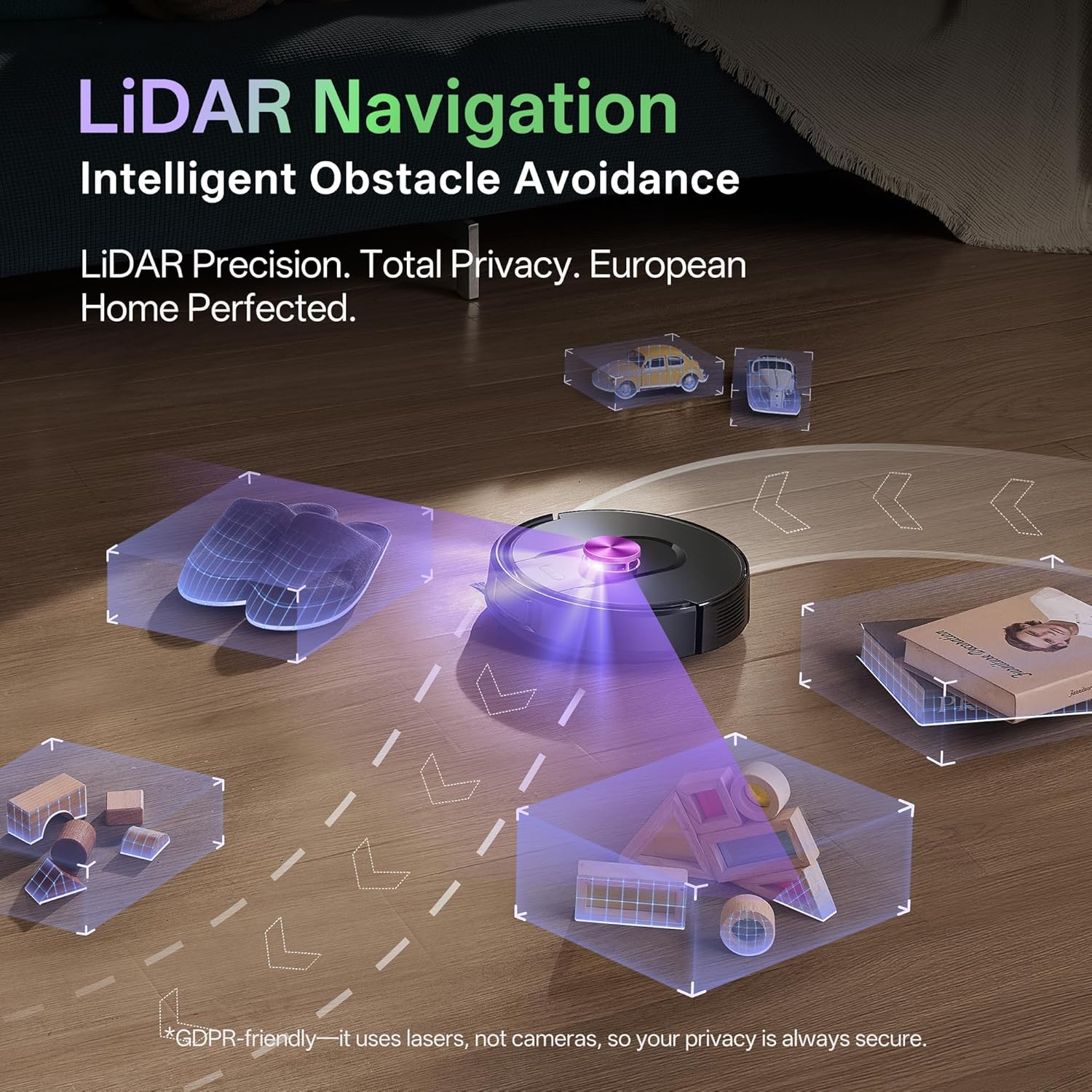
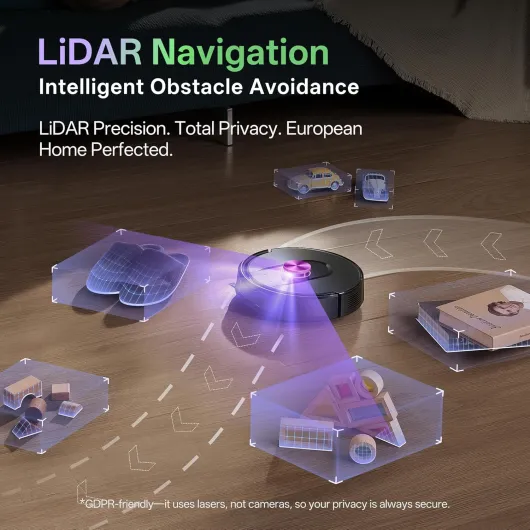
Navigation is where it clearly beats cheaper models. The LiDAR mapping is accurate, and the robot follows a logical back-and-forth pattern instead of bouncing around randomly. It rarely gets stuck; the only times it struggled were with loose cables and a very light rug that slid around. You can avoid most of that with no-go zones in the app. Coverage is good: I’d say it hits 95%+ of reachable floor area in my downstairs. It doesn’t double-clean much, which saves time, and when it needs to recharge mid-job, it actually resumes where it left off, which not all robots manage well.
What you actually get out of the box
Out of the box, the Vexilar W15 feels like a mid-range robot with a slightly more serious dock. You get the robot itself, the multi-cyclone self-empty dock, a remote, batteries for the remote, and the usual power cable and basic paperwork. No bags, because the dock is bagless, which is one of the main selling points here. Setup is straightforward: plug in the dock, park the robot, scan the QR code for the app, and do the Wi‑Fi pairing on 2.4 GHz.
The first thing that stands out is how much Vexilar leans on the features: 10000Pa suction, LiDAR navigation, 4L bagless bin, up to 5 maps, 15 no-go zones, and 180‑minute runtime. In practice, the big wins for me were the LiDAR mapping and the bagless dock. The marketing around 10000Pa is a bit of a numbers game, but the cleaning result is clearly above the cheap random-bump robots I’ve tried before. The mapping is quick: my downstairs (about 45–50 m² of actual floor area) was mapped in under 20 minutes on the first run.
The app is fairly basic visually, but it does the essentials: zone cleaning, room naming, no-go lines, suction and water level settings, and scheduling. I wouldn’t call it polished, but once you’ve done the initial setup and mapping, you don’t spend much time in there except to tweak schedules or send it to a specific room. The remote is a nice touch for people who don’t want to bother with phones or smart assistants; my partner just uses the remote and ignores the app completely.
In day-to-day use, the package feels coherent: you press a button, it cleans, it empties itself, you occasionally refill the water tank and empty the big bin in the dock. If you’ve never had a self-emptying robot before, that part alone changes how often you think about vacuuming. You still need to clean the brushes and sensors every week or two, but compared to dragging out a full-size vacuum every other day, this is much less hassle.
Pros
- Strong vacuum performance on hard floors and carpets, especially with pet hair
- Bagless 4L self-emptying dock reduces manual emptying and saves on bag costs
- Accurate LiDAR navigation with multi-map support, no-go zones, and reliable room coverage
Cons
- Mopping is basic and only suitable for light maintenance, not deep cleaning
- Dock is large and needs a decent amount of clear wall space
- Brand ecosystem and long-term spare parts support less proven than major competitors
Conclusion
Editor's rating
After living with the Vexilar Cleanova W15 for a bit, my take is simple: as a daily floor helper, it does a good job and earns its place. The vacuum performance is strong, especially on hard floors and for pet hair, and the LiDAR navigation means it actually covers the rooms logically instead of wandering around. The bagless self-emptying dock is the main perk; not having to empty the robot every day makes it much easier to treat it as part of the routine and forget about it for weeks at a time.
It’s not flawless. The mop is fine for light maintenance but won’t replace a proper mop, the dock is bulky, and the app is practical rather than polished. Long-term support and spare parts are a bit of an unknown compared to the big-name brands. But for the price, it hits a nice balance: you get real smart navigation, strong suction, long battery life, and a dock that cuts down on manual emptying, without paying top-tier money.
If you have pets, kids, or just hate dragging out a vacuum every couple of days, this is a good value option that genuinely cuts your workload. If you want perfect mopping, deep carpet cleaning like an upright, or a super slick app with every fancy feature, you’ll need to spend more elsewhere. For most busy households that just want cleaner floors with minimal effort, it’s a solid, down-to-earth choice.