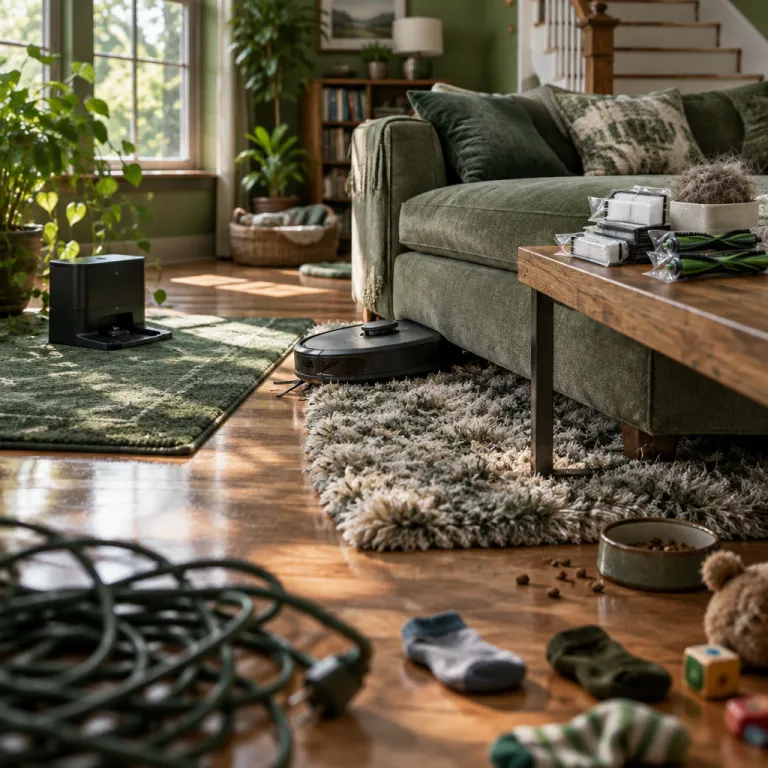
Buying for suction specs, not real cleaning performance
Many first time robot vacuum buyers fixate on suction numbers alone. A robot with 6 000 Pa suction can still leave dust and pet hair behind if its brush design, sensors mapping system, and navigation logic are weak. When you focus only on suction, you miss how the robot, the brushes, and the software work together to actually clean your floors.
The core robot vacuum buying mistakes avoid list starts with confusing lab figures with real cleaning performance. In testing, a mid range robot vacuum with a dual rubber brush and side brush often picks up more debris than cheaper vacuums that advertise higher suction but scatter dirt. Look at how the vacuum cleaners handle edge cleaning, how much dust they pull from carpet in one pass, and whether they can maintain deep cleaning on both carpet and hard floors without getting tangled.
Consider specific models instead of chasing abstract specs that do not translate to a clean floor. The Dreame L60 Ultra PE, for example, has strong suction but wins mainly because its sensors mapping, brush layout, and dock integration work together to keep floors consistently clean over time. That is why the best robot for you is the one that fits your home layout, floor types, and pet situation, not the one with the loudest marketing about Pa numbers.
Think about how you actually live with dust, crumbs, and pet hair rather than how a spec sheet looks on a retailer page. If you have mostly carpet, you want a robot vacuum that can agitate fibers and pull embedded dirt, not just skim the surface. On hard floors, a robot vacuum with controlled airflow and good sealing will pick up fine dust without blowing it into corners, which matters more than a few hundred extra Pascals of suction.
Price can mislead you as much as suction figures when you compare robot vacuums. The Dreame L60 Ultra PE reached the top of several independent rankings while undercutting some premium models, which shows that the most expensive robot is not always the best robot for your home. When you evaluate robot vacuum buying mistakes avoid patterns, remember that paying more for suction alone rarely delivers better cleaning performance over the long term.
Paying for mopping you will rarely use
Combo vacuum mop models look tempting because they promise hands free cleaning of every floor in one go. In practice, many households with mostly carpet use the mopping function once, realize it is fussy, then leave the water tank empty forever. That makes the extra cost of mopping hardware, wash dry docks, and clean water systems a poor choice for buyers who mainly need reliable vacuum cleaning.
One of the most common robot vacuum buying mistakes avoidable with a little planning is buying a vacuum mop for a home that is 80 percent carpet. If your living room, bedrooms, and hallway are carpet while only a small kitchen and bathroom have hard floors, a dedicated robot vacuum without mopping is often worth buying more than a complex hybrid. You pay less, you avoid dealing with dirty water tanks, and you get a robot that focuses on strong cleaning performance instead of splitting its design between mop and vacuum duties.
Even in homes with large hard floors, mopping features vary wildly in how well they actually clean. Entry level robots that drag a damp pad with no active scrubbing mostly wipe light dust, not sticky spills or dried coffee, so they do not replace a real mop. Higher end models with oscillating pads, wash dry docks, and separate clean water and dirty water tanks can be excellent, but they demand more space for the dock and more regular maintenance.
Before paying for smart features like automatic water refilling or pad washing, map your own floors and habits honestly. If you already mop once a week and do not mind it, a simpler robot vacuum that focuses on pet hair and dust might be the better choice. If you hate mopping and have large hard floors, then a more advanced vacuum mop with a robust water tank and reliable wash dry cycle can be worth buying, but only if you commit to using it often.
Think of mopping as a separate purchase decision, not a default add on whenever you see a shiny dock. Many robot vacuums with mopping look impressive in ads but underwhelm in daily cleaning when owners forget to refill clean water or empty dirty water. To avoid this category of robot vacuum buying mistakes avoid the urge to chase every feature and instead match the mopping system to your actual floor mix and cleaning routine.
Brand ecosystems also matter when you choose a vacuum mop with advanced smart features. Some docks and apps lock you into proprietary pads, detergents, or cloud accounts, which can quietly raise long term costs and limit your future robot choice. If you want to understand how these ecosystems shape upgrades, read this analysis of how being locked into the app can decide your next robot vacuum on a specialist review site before you commit.
Ignoring dock size, placement, and daily logistics
Many people focus on the robot and forget that the dock becomes a permanent piece of furniture. Self emptying docks, wash dry stations, and large water tank systems can be as wide as a small cabinet and need clear space on both sides. When you do not measure that space in advance, you end up with a dock that blocks a hallway or sits in a corner where the robot struggles to navigate.
Among the robot vacuum buying mistakes avoid list, dock planning is one of the most overlooked yet costly. If the dock does not fit near a power outlet on a flat floor with enough clearance, the robot may fail to return reliably, which ruins hands free cleaning. Some docks also need extra room behind them for hoses or rear vents, so you must check the dimensions and diagrams carefully before you buy.
Think about how the robot will approach the dock from different rooms and floors. A dock placed on a thick carpet can wobble, confuse sensors mapping, and cause misalignment when the robot tries to charge or empty its dustbin. Placing the dock on hard floors near a wall with at least half a metre of clearance on each side usually gives the robot a clean path and better cleaning performance over time.
Noise is another dock related factor that many owners regret ignoring. Self emptying vacuums can be loud when they empty dust, and wash dry docks can add more noise when they clean pads or pump water. If the dock sits next to a bedroom or home office, that short burst of noise at the wrong time can make you use the robot less, which defeats the purpose of buying it.
When you evaluate whether a robot vacuum is worth buying, imagine where the dock will live for the next five years. Measure the floor space, check the height under shelves, and consider how often you will access the water tank, dust bag, or filters. A well placed dock makes the robot feel truly hands free, while a poorly placed one turns daily cleaning into a chore of moving furniture and rescuing a stuck robot.
If you want a deeper framework for judging whether a robot vacuum is genuinely trustworthy rather than just impressive on paper, look for guidance that explains what separates a trustworthy robot vacuum from a marketing spec sheet. Independent testing that evaluates dock reliability, navigation, and long term durability will help you avoid expensive mistakes that go far beyond suction numbers. That kind of analysis keeps you focused on how the robot, dock, and home interact in real life, not just in product photos.
Buying on price, brand, or flash sales instead of fit
Sticker price feels like the simplest way to judge robot vacuums, but it is a poor proxy for value. A high price can reflect marketing spend, bundled smart features you will never use, or a fancy dock, not necessarily better cleaning performance. The Dreame L60 Ultra PE outperforming more expensive models shows that the most expensive robot is not always the best robot for your home.
One of the core robot vacuum buying mistakes avoidable with a little discipline is jumping on a flash sale without context. Retailers often discount older models right before discontinuing them, which can make replacement parts, batteries, and filters harder to find within a couple of years. Before you buy, check how long the model has been on the market, whether the brand still lists it prominently, and what owners say about long term battery life and accessory availability.
Brand loyalty can be just as risky as chasing the lowest price. A company that makes excellent upright vacuum cleaners or stick vacuums does not automatically build the best robot vacuums, because navigation, sensors mapping, and software updates are different skills. Look at how often the brand updates its app, how transparent it is about battery replacement, and whether it supports older models with firmware fixes.
Think about your own home before you think about discounts. If you have two shedding dogs and mixed floors, a mid priced robot vacuum with strong pet hair pickup and a simple dock may serve you better than a premium vacuum mop with fragile mopping hardware. If you live in a small apartment with mostly hard floors and no pets, an entry level robot with reliable navigation and decent cleaning performance can be worth buying even if it lacks advanced smart features.
Another overlooked cost is how a robot fits into your broader cleaning routine. Some people expect a robot to replace all vacuuming, then feel disappointed when they still need a stick vacuum for stairs or deep cleaning rugs. Reading a comparison of when a robot vacuum earns its keep versus when a stick vacuum is still necessary can help you set realistic expectations and avoid overpaying for the wrong type of machine.
Finally, be cautious about social proof that feels shallow or performative. A friend who posts a share Facebook brag about a huge discount may not mention that their robot constantly misses a room or struggles with dark carpet. Your goal is not to win a sale price contest but to choose a robot, dock, and feature set that quietly keep your floors clean for years without drama.
Forgetting pets, floor types, and daily habits
Many regrets start with ignoring the basics of your own home. A robot vacuum that excels on hard floors can disappoint on thick carpet, while a model that handles pet hair beautifully might be overkill in a small studio with no pets. Matching the robot to your floors, pets, and schedule is the most reliable way to avoid robot vacuum buying mistakes avoid patterns that lead to underused machines.
Pet owners need to pay special attention to brush design, bin size, and hair management. Rubber brushes tend to resist tangles better than bristle brushes, which matters when you deal with long pet hair every day. A larger dustbin or self emptying dock also helps because pet hair and dust accumulate quickly, and you do not want to empty the bin after every run.
Floor type shapes almost every aspect of cleaning performance. On hard floors, you want a robot vacuum that seals well to the floor, controls airflow, and does not scatter crumbs, while on carpet you need enough suction and agitation to lift embedded dust. Mixed floors demand a robot that can transition smoothly between surfaces without getting stuck or leaving lines of dirt along thresholds.
Daily habits matter just as much as technical specs. If you work from home and hate noise, look for vacuums with quiet modes and flexible scheduling so they can clean when you are out. If you often forget to pick up cables or toys, prioritize robots with strong sensors mapping and obstacle avoidance so they spend more time cleaning and less time tangled.
Water related features also intersect with habits in subtle ways. If you choose a vacuum mop with a water tank and wash dry dock, you must be willing to refill clean water, empty dirty water, and occasionally clean the dock itself. Owners who neglect these tasks often end up with streaky floors, musty smells, and a robot that no longer feels hands free or worth buying.
Think of your robot as part of a small cleaning équipe that includes a traditional vacuum, maybe a mop, and your own routines. The robot handles daily dust and crumbs, while you still do occasional deep cleaning in corners, stairs, and upholstery. When you align the robot’s strengths with your floors, pets, and schedule, you avoid the most expensive mistake of all, which is buying a machine that never quite fits your life and spends most of its durée in the closet.
Overlooking software, data, and long term support
Every modern robot vacuum is as much software as hardware. Navigation, sensors mapping, obstacle avoidance, and even cleaning patterns depend on code that can improve or degrade with updates over time. When buyers ignore the software side, they risk owning a robot that feels outdated long before the battery or brushes wear out.
One of the subtle robot vacuum buying mistakes avoidable with research is choosing a brand with poor update habits. Some companies push frequent firmware changes that refine cleaning performance, improve battery life estimates, and add useful smart features, while others leave bugs unfixed for years. Look for evidence that the brand maintains older models, not just its newest flagship, because that signals a commitment to long term support.
App design also shapes how hands free the robot feels day to day. A clear interface that lets you set no go zones, room specific schedules, and cleaning intensity makes it easier to tailor the robot to your floors and habits. Clunky apps that bury essential controls or require constant reconnecting can turn even the best robot hardware into a daily frustration.
Data practices deserve attention as well, especially when robots create detailed maps of your home. Some brands store maps locally on the robot, while others upload them to the cloud, which raises privacy questions. Read the privacy policy, check whether you can opt out of certain data uses, and decide how comfortable you are with a robot that knows the layout of every floor in your house.
Replacement parts and ecosystem lock in are another long term cost that many buyers underestimate. If a brand sells only proprietary bags, filters, or water tank accessories at high prices, your total coût of ownership can exceed the original purchase price over the robot’s durée. Choosing a model with widely available third party parts and transparent maintenance schedules can improve both ROI and day to day satisfaction.
Finally, remember that your future self may want to upgrade or add a second robot for another floor. Picking a brand with a stable app, consistent mapping logic, and compatible docks can make that expansion smoother and more economical. When you factor software, data, and support into your decision, you avoid the trap of buying a shiny gadget that feels obsolete long before it stops physically working.
FAQ
Are robot vacuums worth buying if I already own a good vacuum cleaner ?
A robot vacuum is worth buying if you want daily maintenance cleaning that keeps dust and crumbs under control between deeper sessions with your main vacuum cleaner. Robots excel at routine work on open floors, while traditional vacuum cleaners still do better on stairs, upholstery, and very thick carpet. Many households find that the combination of a robot for everyday use and a manual vacuum for monthly deep cleaning delivers the best balance of cleanliness and effort.
What is the biggest robot vacuum buying mistake to avoid as a first time buyer ?
The biggest mistake is buying based on price, suction specs, or brand reputation without matching the robot to your floors, pets, and layout. You should start by listing your floor types, carpet thickness, pet hair levels, and noise tolerance, then look for models that fit those needs rather than chasing the best robot according to generic rankings. When you align the robot’s strengths with your home, you avoid paying for smart features or mopping systems you will rarely use.
Do I really need a robot vacuum with mopping and a wash dry dock ?
You only need a vacuum mop with a wash dry dock if you have large hard floors and genuinely plan to replace most manual mopping with the robot. For homes that are mostly carpet or have only small hard floor areas, a dedicated robot vacuum without water tanks and mopping hardware is usually more practical and less expensive. Paying for mopping features you rarely use is one of the most common robot vacuum buying mistakes avoidable with honest self assessment.
How long should a robot vacuum battery last before I need a replacement ?
Most quality robot vacuums offer a battery life that supports at least 60 to 120 minutes of cleaning per charge when new, depending on suction level and floor type. In normal home use, lithium ion batteries often maintain acceptable runtime for three to five years before noticeable decline, though this varies by brand and usage patterns. When comparing models, check whether the battery is user replaceable and how much a replacement costs, because that strongly affects long term value.
Can a robot vacuum fully replace manual deep cleaning of carpets and floors ?
Robot vacuums are excellent for maintaining surface cleanliness but they rarely match the deep cleaning power of a full size vacuum or carpet cleaner. They keep dust, crumbs, and pet hair under control, which can reduce how often you need to do intensive cleaning, but they do not extract embedded dirt as thoroughly as a dedicated deep cleaning machine. Most experts recommend using a robot for daily or several times per week maintenance and scheduling occasional manual deep cleaning for carpets, rugs, and edges.