
Summary
Editor's rating
Value for money: worth it if you accept its limits
Design: looks fine, more practical than fancy
Battery and noise: long runs, short loud bursts
Build quality and maintenance: feels decent, needs regular care
Performance: good suction, clever navigation, one big mop caveat
What you actually get with the EASINE S20
Vacuum vs mop: good hoover, basic mopping helper
Pros
- Strong suction and good daily vacuum performance, even with pet hair and carpets
- LiDAR mapping and room/zone cleaning make it much smarter than random robots
- Self-empty station with 5 bags included cuts down on maintenance for months
Cons
- Mop/no-mop zone management is clunky and can interfere with vacuum coverage
- App is functional but not very polished compared to bigger brands

Specifications
View full product page →| Brand | EASINE |
A robot hoover that actually makes sense day to day?
I’ve been using the EASINE S20 robot vacuum and mop with the self-empty station for a while now in a fairly normal setup: 3-bedroom house, mix of hard floors and carpets, one fluffy dog, and people who somehow drop crumbs everywhere. I’m not a robot vacuum nerd, I just wanted something that would keep the floors under control between proper big cleans with a normal vacuum and mop.
Overall, the S20 does what it says on the tin: it vacuums and mops, it empties itself, and it follows a map of the house thanks to the LiDAR. It’s not perfect, and if you’re picky about mopping or you have rugs in the middle of hard floors, there are some annoying details. But in terms of daily dust, hair and crumbs, it actually helps and I don’t feel like I wasted my money.
I went in with moderate expectations, especially seeing the Amazon rating around 3.7/5. That usually means “works for some people, annoys others”, and that’s pretty much how I’d sum it up. If you’re expecting miracles, you’ll be disappointed. If you want something that does the boring daily work without too much babysitting, it’s pretty solid for the price.
In this review I’ll go through how it performs in real life: suction, mopping, navigation, battery, how noisy it is, and whether the self-emptying bit is really as hands-free as the marketing suggests. I’ll also be honest about the weak points, especially the mop management and the app logic, because that’s where I hit the most friction.
Value for money: worth it if you accept its limits
Looking at the price point and the features, I’d say the S20 offers good value for money, especially if you compare it to bigger brands with similar specs. You get LiDAR navigation, self-emptying, decent suction, app control, and a basic mop function for less than many high-end models that do basically the same thing with a fancier logo. For a first robot vacuum, it’s a pretty sensible entry point without going straight into premium territory.
Where you feel the price difference is in the software polish and the small details. The app works, but it’s not ultra refined. The issue with mop/no-mop zones and vacuum coverage is clearly a software limitation. Some competitors handle this logic better, but they also cost more. So you’re trading a bit of brainpower and convenience for a lower price. If you’re fine with keeping the setup relatively simple and not obsessing over micro-zones, it’s a fair trade.
Running costs are reasonable: 5 dust bags in the box means you’re not buying consumables right away, and the HEPA filter and brushes should last a good while if you take care of them. Electricity use is low; it’s basically negligible compared to something like a tumble dryer. The main “cost” is your time for occasional maintenance, but that’s true for any robot vacuum.
Overall, compared to what I used before (a cheap random robot with no mapping and no self-emptying), this is a clear step up and justifies the extra money. Compared to more expensive robots, you save cash but accept some quirks. If your budget is tight and you mainly want daily vacuum help with a bonus mop function, the S20 is a decent deal. If you’re picky about smart features and perfect mop control, you might want to invest more in a higher-end model from a bigger brand.
Design: looks fine, more practical than fancy
Design-wise, the S20 is pretty standard for this type of product. Round, low profile, and a dock that’s a bit chunky but not outrageous. The overall look is modern enough that it doesn’t scream “ugly appliance” in the living room. I’d call it discreet: it blends in, which is what I want from a robot hoover. It’s not some design object you’ll stare at, it’s just a tool that sits there until it starts buzzing around.
The robot has a raised LiDAR tower on top, which is the only part that can sometimes block it under very low furniture. The bumper ring around the front does its job: when it meets a chair leg or a wall, it gently bumps and realigns, no dramatic crashes. The side brush sticks out enough to catch dust along skirting boards, though it can sometimes flick crumbs away before sucking them up, especially on hard floors. That’s pretty common with this type of brush though.
The self-empty station is taller and bulkier than a normal charging dock, obviously, because it has to store the dust bag and the motor for the auto-empty. You need to give it a bit of space around it so the robot can dock and undock without getting tangled in cables or furniture. I ended up putting it against a straight wall with about 0.5 m clearance on each side; that worked fine. The colour and finish are basic but clean – nothing fancy, but it doesn’t look cheap either.
In terms of usability, the physical buttons on top of the robot are handy: you can start, stop or send it home without hunting for your phone. The dustbin and water tank combo pulls out from the back: it’s simple enough, but you do have to remember which side is which at first. I like that the mop bracket clips on and off easily; if I don’t want any water used, I just remove it and leave the robot in vacuum-only mode. Overall, the design is practical and user-friendly, even if it’s not going to win any design awards.
Battery and noise: long runs, short loud bursts
The battery life is advertised at up to 180 minutes, and in practice, it’s not far off depending on the mode. On a mixed run of about 70–80 m² with mostly standard suction and medium water flow, it usually finishes with around 35–40% battery left. If I crank it up to max suction for carpets, that obviously drops, but it still manages a full floor clean in one go without needing to recharge. For a normal flat or a typical UK ground floor, the battery is more than enough.
If you have a bigger house, the auto recharge and resume works fine: the robot goes back to the dock, charges for a bit, then picks up where it left off on the map. I tested this by forcing a full clean on high suction with the doors open upstairs, and it did exactly that. It’s not super fast at cleaning, but that’s the nature of robot vacuums – they’re slow but persistent. I just schedule it when I’m out or in another room and let it do its thing.
Noise-wise, you’re looking at around 69 dB according to the specs, and that matches my impression. On standard mode, you can still watch TV or talk on the phone in the next room without going mad, but you’ll notice it if you’re in the same room. Max suction is obviously louder, but still tolerable. The only really loud moment is when it empties itself into the station: that’s a short, intense noise that lasts a few seconds, a bit like a powerful hand vacuum. Not pleasant, but it’s quick.
Personally, I usually schedule it to run mid-morning when no one is trying to sleep or work on calls. If you’re very sensitive to noise, the self-empty burst might annoy you, but you can reduce how often it empties by tweaking settings or just running it less frequently. Overall, the combo of good battery and manageable noise makes it easy to fit into a normal routine without too much hassle.
Build quality and maintenance: feels decent, needs regular care
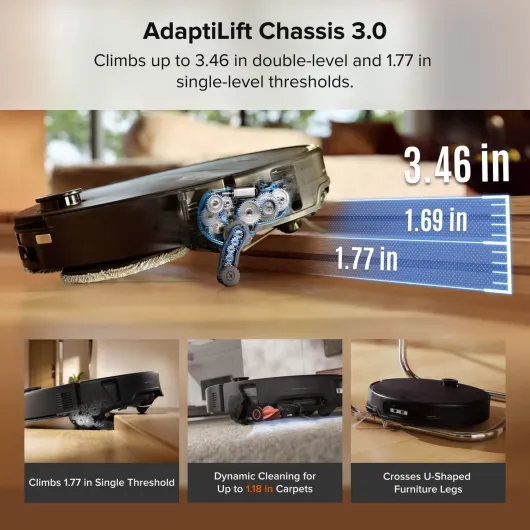
In terms of build quality, the S20 feels like a mid-range robot: not flimsy, not tank-like either. The plastics on the robot and the dock are solid enough, the hinges and clips haven’t felt loose so far, and nothing rattles during operation except the usual bumping against furniture. The LiDAR turret doesn’t wobble, and the wheels grip well even on slightly uneven tiles. It handles small thresholds and door strips without complaint.
Where durability really shows on these devices is in maintenance. You do need to put in a bit of work: empty the hair from the main roller, clean the side brush when it gets tangled, rinse or tap out the HEPA filter, and wash the mop cloths. If you ignore all that, performance will drop and you’ll probably start cursing the robot for getting stuck or leaving streaks. I got into the habit of giving it a quick check once a week, which is enough for my usage with one dog.
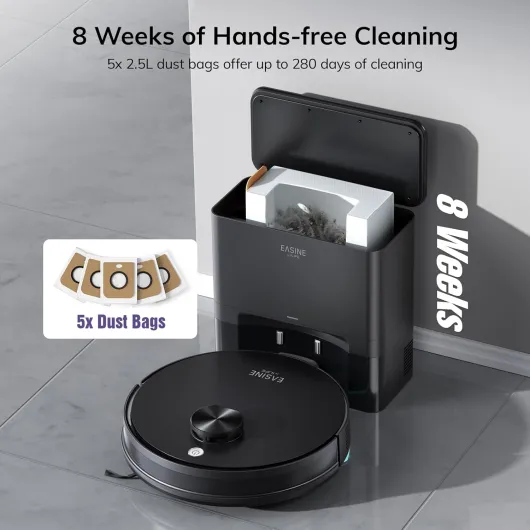
The self-empty station helps a lot on the dust side. Instead of having to empty the small bin after every run, the dock sucks it out and stores it in the bag. With 5 bags included, you’re set for several months, unless you live in a building site. The bags themselves feel sturdy and seal well when you pull them out, so you don’t end up with a dust cloud in your face. That’s a nice plus if you’re sensitive to dust.
Long-term durability obviously needs more time to judge, but based on the first months, I’d say it’s good enough for regular household use if you don’t abuse it. Don’t let it chew cables, don’t let it run over puddles, and do basic maintenance, and it should last. It’s not built like a premium flagship that costs twice as much, but for the price bracket, I don’t see any red flags in terms of construction or wear so far.
Performance: good suction, clever navigation, one big mop caveat
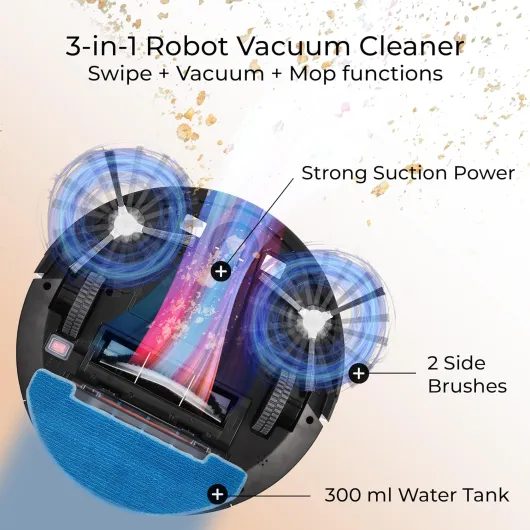
On the vacuum side, the S20 is pretty solid. The 5000Pa suction is more than enough for everyday dirt. On hard floors (tile and laminate), it picks up dust, hair and crumbs without any drama, even on the mid-level suction. On carpets, especially a medium-pile rug in the living room, I usually use the carpet boost mode. You can feel the difference: it digs in better and pulls out more hair and grit. It doesn’t beat a full-size upright vacuum for deep cleaning, but for day-to-day, it keeps the carpet from feeling gritty under bare feet.
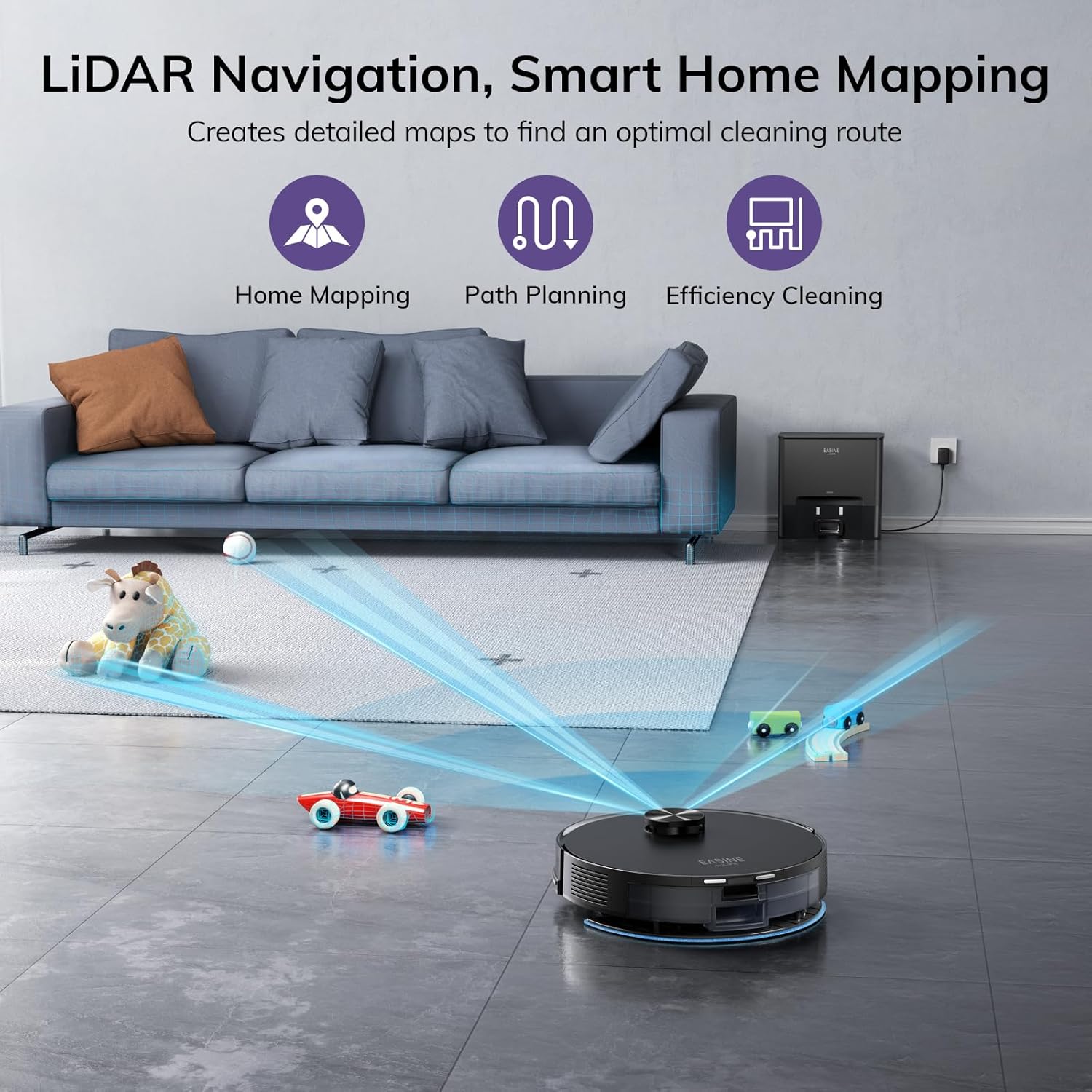
The LiDAR navigation is where it stands out compared to cheaper random models. The mapping phase took around 10 minutes for my ground floor, and the map it produced was accurate enough to split into rooms and zones. After that, it follows straight lines, covers the area logically, and doesn’t keep ramming the same wall like a drunk Roomba from 2010. It also handles table and chair legs decently: it weaves around them, though it sometimes needs a second pass to get all the dust in tight spots.
The big downside is the interaction between vacuuming and mopping zones. Like one of the Amazon reviewers mentioned, if you set an area as “no mop” to protect a rug, the robot can also end up not vacuuming that zone properly. I ran into the same thing: I tried to block mopping on a carpet but still wanted it vacuumed, and the logic just isn’t flexible enough. It’s either fully excluded or treated in a weird way. That’s annoying if you have rugs in the middle of hard floors and you want a mix of vacuum + mop around them.
In everyday use though, if you run it mainly in vacuum mode or you don’t overcomplicate the map with lots of mop restrictions, it performs well. It reliably picks up pet hair (my dog sheds a lot), and it rarely gets stuck. When it does, it’s usually because of a stray cable or a sock hidden under furniture – things that would trap any robot. For pure vacuum performance and navigation, I’m happy; for combined vacuum + mop management, it’s decent but clearly not perfect.
What you actually get with the EASINE S20
Out of the box, you get the robot itself, the self-empty station, 5 dust bags, 2 mop cloths, the mopping bracket, a spare HEPA filter, an extra side brush, a remote control with 2 AAA batteries, and the usual manual. So in terms of accessories, it’s decent: you’re covered for several months before needing to think about consumables. The self-empty station has a 2.5L bag, which for my usage (one run per day on the ground floor) fills slowly. After a few weeks, the first bag still wasn’t full.
The robot is the classic round puck shape, 33 cm wide and about 9.5 cm high. That height matters: it goes under some beds and cabinets but not all. In my case, it fits under the sofa and part of the bed but not under a lower TV unit. If you’re hoping it’ll clean every hidden corner, measure your furniture height first. Weight-wise, at 2.7 kg, it’s light enough to carry between floors if you want to use it upstairs occasionally.
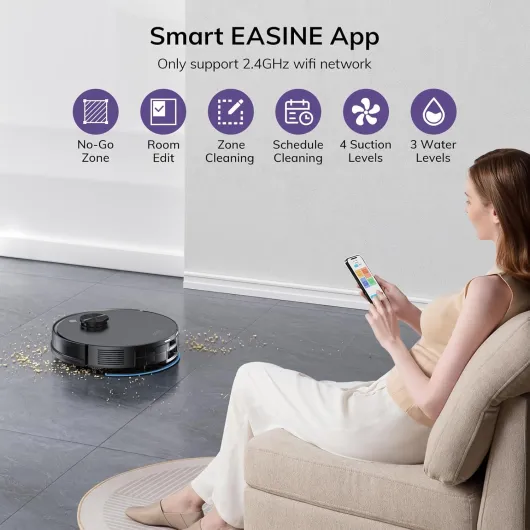
Function-wise, it’s a combo device: vacuum and mop in one go thanks to the 2-in-1 dustbin and water tank. You can choose suction power (4 levels) and water flow (Off/Low/Medium/High) in the app. It also supports room and zone cleaning, plus the classic auto mode where it just does the full mapped area. It’s compatible with Alexa and Google Home, but honestly I mostly used the app and sometimes the remote when my phone wasn’t nearby.
On paper, the big selling points are: 5000Pa suction, LiDAR smart mapping, self-empty station with up to 280 days of hands-free dust handling, and up to 180 minutes of battery life. In reality, those numbers are a bit optimistic like always, but the core is there: strong suction, decent mapping, and you don’t need to empty the dustbin every day. If you’ve never had a robot vacuum before, this is already a big step up from the cheap random-bump models.
Vacuum vs mop: good hoover, basic mopping helper
Let’s split it clearly: as a vacuum, it’s good. As a mop, it’s more of a maintenance tool than a real replacement for a manual mop. On the vacuum side, I tested it with daily dirt: pet hair, crumbs in the kitchen, dust along skirting boards, and the usual mess around the dining table. It does a solid job. After a week of daily runs, I noticed far less hair tumbleweeds under the bed and sofa. The roller does get wrapped in long hair (we’ve got long-haired humans too), but the robot warns you and it’s easy to clean with a pair of scissors.
On carpets, it lifts surface dust and pet hair well enough that I don’t feel the need to use the big vacuum every day. I still do a proper deep clean with a traditional vacuum maybe once every couple of weeks, but the S20 definitely stretches that interval. It also handles transitions between hard floors and carpets smoothly; it doesn’t get stuck on normal thresholds.
For the mopping, don’t expect miracles. It’s fine for keeping hard floors from feeling sticky or dusty, but it won’t remove dried-on stains in one pass. The electric water control is useful: I keep it on low or medium to avoid soaking the floor. The mop cloth glides behind the vacuum and picks up light marks and dust film. After a run, the water in the tank is visibly dirty, so it does something, but if you spill juice or let mud dry, you’ll still need a manual mop or at least a spot clean.
The real frustration, like I mentioned earlier, is managing areas where you want vacuum-only vs vacuum + mop. The logic is too rigid: if you have rugs in the kitchen or living room, setting no-mop zones can mess with the vacuum coverage. If you have mainly hard floors with no rugs, you’ll be happier with the mop feature. If you have a patchwork of carpets and hard floors, it’s a bit of a compromise. So overall: very effective as a daily vacuum helper, decent but not spectacular as a mop.
Pros
- Strong suction and good daily vacuum performance, even with pet hair and carpets
- LiDAR mapping and room/zone cleaning make it much smarter than random robots
- Self-empty station with 5 bags included cuts down on maintenance for months
Cons
- Mop/no-mop zone management is clunky and can interfere with vacuum coverage
- App is functional but not very polished compared to bigger brands
Conclusion
Editor's rating
In the end, the EASINE S20 does what most people actually need: it keeps floors reasonably clean with minimal effort. The vacuum side is strong, the LiDAR navigation is reliable, and the self-empty station really cuts down on day-to-day hassle. For busy households with pets and kids, that alone makes a big difference. You still need to do some manual cleaning now and then, but you’re no longer chasing hair and crumbs every day.
The weak point is the mop logic and the app’s handling of mixed areas with rugs and hard floors. If your layout is simple (mostly hard floors, few rugs), you’ll probably be happy with the mop function as a light maintenance tool. If your home is full of carpets and you want very precise control over where it mops vs where it only vacuums, you may find it frustrating, just like some of the Amazon reviewers did.
I’d recommend the S20 to people who want a practical robot hoover with self-emptying at a reasonable price, and who are okay with a basic but functional app. It suits busy families, pet owners, and anyone who hates daily sweeping. I’d say skip it if you’re very picky about smart home integration, want top-tier mopping, or you’re willing to pay more for a more polished ecosystem. For me, it’s a solid workhorse: not perfect, but it gets the job done and makes the house feel cleaner with little effort.