
Summary
Editor's rating
Is it worth the money?
Design: big dock, slim robot, very tech-heavy
Battery life and navigation: long runtimes, no drama
Build quality and how it holds up (so far)
Cleaning performance: strong suction and genuinely useful mopping
What you actually get with the Saros 20 Neo
Pros
- Very strong suction and genuinely effective mopping with spinning pads and warm water
- Zero-tangle brush and auto-empty dock reduce maintenance a lot, especially with pets
- Smart navigation, accurate mapping, and good threshold/rug handling mean fewer rescues
Cons
- High price and bulky dock that needs a dedicated space
- Object recognition is good but still not reliable enough to ignore small items and cables

Specifications
View full product page →| Brand | roborock |
A pricey robot that actually earns its keep
I’ve been using the Roborock Saros 20 Neo for a few weeks on a mixed setup: two bedrooms, hallway and living room with medium pile carpets, plus kitchen and entrance with tiles and laminate. I also have a dog that sheds a lot and a partner who hates vacuuming but notices every dust bunny. So this thing had a lot to prove, especially at this price.
Before this, I had a mid-range robot vacuum without a dock that could mop but basically just dragged a damp cloth around. It picked up crumbs, but hair wrapped around the brush, it got stuck on thresholds, and I still had to vacuum manually once a week. With the Saros 20 Neo, I wanted something closer to “set it up and forget it” rather than another gadget I need to babysit.
In practice, the Saros 20 Neo is clearly a premium robot: the dock is huge, the app is packed with options, and the robot itself is loaded with sensors. It’s not perfect, but it actually feels like a real step up from cheaper models, especially for hair, carpets, and the way it handles thresholds and edges. It’s also one of the first robots I don’t have to rescue every other run.
If you’re expecting magic where it cleans a Lego-strewn floor without ever touching anything, you’ll be disappointed. You still need some basic tidying. But if you’re okay with that, and the price doesn’t scare you off, this is one of the few robots I’d say can realistically replace most of your manual vacuuming and a good chunk of your mopping.
Is it worth the money?
Let’s be blunt: the Saros 20 Neo is not cheap. You’re paying premium money, and that will be a hard sell if your place is small and your floors are usually spotless anyway. For that kind of setup, a mid-range robot or even a decent cordless vacuum might be enough. Where this thing starts to make sense is in busy households with pets, kids, a mix of carpets and hard floors, and people who are tired of untangling hair and dragging a mop around.
What you’re really paying for here is a mix of strong cleaning performance, low maintenance, and smart navigation. The auto-empty, hot-water mop wash, and drying actually reduce how often you have to touch the machine. The zero-tangle brush saves a boring and annoying job. The mapping and room-based control let you set routines and forget about them. For me, that adds up to less time thinking about cleaning, which is the whole point of having a robot in the first place.
On the downside, the object recognition still isn’t perfect. It’s better than older models, but it’s not at the point where you can just leave cables and small toys everywhere and expect it to handle them. Also, the app is powerful but can feel like too much at first; if you hate tinkering with settings, the initial setup might annoy you. And again, that dock is big, so this isn’t ideal for someone who wants a tiny, discreet gadget.
Compared to cheaper robots, you’re paying a clear premium, but you are also genuinely getting more: better hair handling, real mopping, smarter navigation, and less hands-on maintenance. If you value your time and you have the budget, I’d say the price is high but defensible. If money is tight or your home layout is simple, you can definitely live with a cheaper unit and just accept more manual work.

Design: big dock, slim robot, very tech-heavy
Design-wise, there are two parts to talk about: the robot and the dock. The robot itself is fairly slim for something with LiDAR, because the LDS module retracts. That extra bit of clearance actually matters. It goes under my low TV unit and one sofa where my previous robot always bounced off. With around 3.13 in of height clearance and that liftable chassis, it gets into spots I usually only hit with a manual vacuum once in a while.
The finish is basic but decent: matte black plastic, nothing fancy, but it doesn’t feel cheap. It’s not a design object you’ll admire; it’s more like a functional box with wheels and sensors. The bumper has enough give to tap furniture without leaving marks. The FlexiArm edge-cleaning system is the interesting bit: it deploys to get closer to walls and corners and actually does reach areas where round robots normally leave a strip of dust. Corners aren’t perfectly spotless, but they’re clearly better than with my older unit.
The dock is where the design gets a bit intense. It’s big and tall, so you need a proper spot for it, ideally against a wall with space on both sides. If you live in a tiny flat, this may annoy you. On the other hand, that size is what lets it hold a dust bag, clean and dirty water tanks, and all the washing/drying hardware. Access to the tanks is simple: lids flip up, everything lifts out. It’s more like a small appliance than a simple charging stand.
In daily use, the design choices make sense. Cables are tucked away, the ramp is stable, and the robot rarely misdocks. The only thing I’m not a big fan of is the look of the dock in a living room – it’s just a big black tower. If you care about aesthetics a lot, you might want to hide it in a hallway or utility room. But functionally, both robot and dock are well thought-out and clearly built for people who’d rather not constantly fiddle with them.
Battery life and navigation: long runtimes, no drama
The stated battery life is up to 256 minutes, and while I didn’t sit there with a stopwatch, it’s clearly on the long side. My roughly 80 m² mixed floor (80% hard, 20% carpet) is cleaned in one go on a balanced suction + standard mop setting, with plenty of battery left. If I bump suction to max on carpets and use a more intensive mop mode, it obviously drains faster, but I’ve still never seen it die mid-clean. For larger houses, it will just return to the dock, recharge and resume, which works fine.
Navigation is one of the highlights. The retractable LDS plus camera and structured light give it a very methodical pattern. It maps rooms accurately, doesn’t miss big patches, and doesn’t keep bumping into the same chair leg like some older bots. Once the first map is done, you can rename rooms, merge or split them, and set specific cleaning intensity for each. For example, I run the kitchen with stronger mopping and two passes, but bedrooms with a single vacuum pass and no mopping.
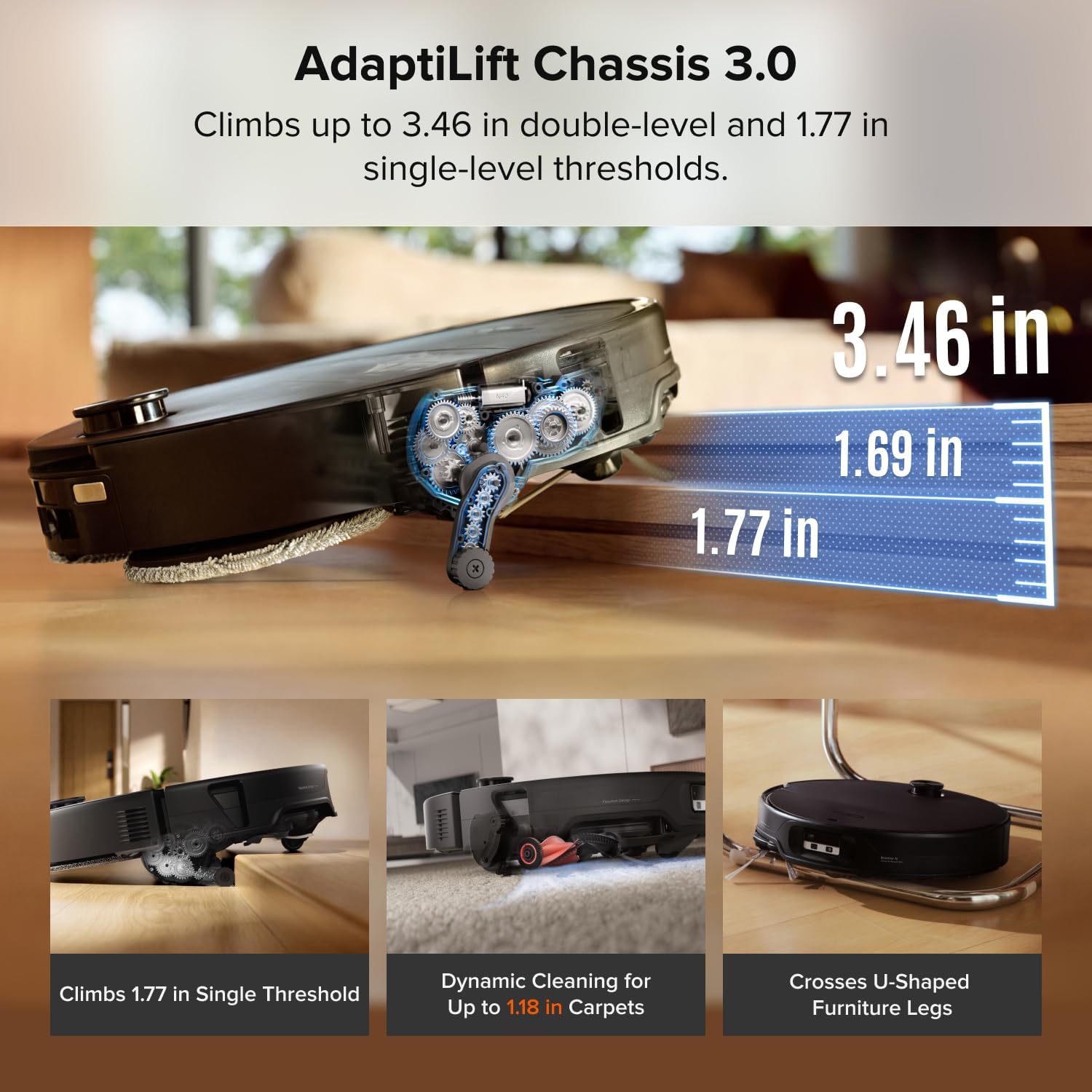
It also handles thresholds and uneven floors better than anything I’ve had before. I have one annoying metal strip between hallway and living room that my old robot sometimes refused to cross. The Saros 20 Neo just climbs over it, even when coming at a weird angle. Same with a thick rug in the bedroom – it lifts itself and gets on top without that back-and-forth struggle. That sounds minor, but it’s the difference between a robot that covers everything and one that leaves sections untouched.
Docking is very reliable. It always finds its way back, even from the far end of the flat, and aligns properly with the ramp. The only real annoyance with the whole battery/dock combo is the noise when it empties the dust bin. It’s loud for a few seconds, like a small vacuum cleaner running full blast. Not a dealbreaker, but you probably don’t want it to auto-empty in the middle of the night outside your bedroom.
Build quality and how it holds up (so far)
Obviously I haven’t used it for years yet, but based on a few weeks of daily to every-other-day runs, the build quality seems solid. The robot itself doesn’t feel flimsy: the wheels grip well, the bumpers still move smoothly, and there are no weird creaks or loose parts. The mops have been through many wash cycles in the dock and still look fine; they haven’t started fraying or losing shape.
The dock takes more abuse than you’d think – water tanks in and out, dust bags changed, occasional splashes. The plastics don’t feel high-end in a luxury sense, but they are thick enough and nothing feels like it’s going to snap off unless you’re really rough. The lids on the water compartments open and close cleanly, and the connectors for the robot’s water refilling haven’t leaked or misaligned so far.
From a maintenance point of view, the design helps with durability. Because the dock auto-cleans the mops with hot water and then dries them with warm air, you don’t get that damp, smelly cloth situation that can lead to mould or nasty buildup. Same for the self-cleaning dock base: it rinses itself, so you’re not constantly scrubbing out sludge by hand. That should help things last longer and stay hygienic, though of course there are still filters and bags you’ll have to replace periodically.
Long term, the main question is spare parts: brushes, mops, filters, and dust bags. Roborock usually supports their models decently, and given this is a premium unit, I’d expect parts to stay available for a while. But it’s worth factoring in the running costs: bags and detergents aren’t free. Overall, I’d say the hardware feels like it can handle daily duty without babying, but like any robot vacuum, it’ll need basic upkeep if you want it to last more than a couple of years.
Cleaning performance: strong suction and genuinely useful mopping
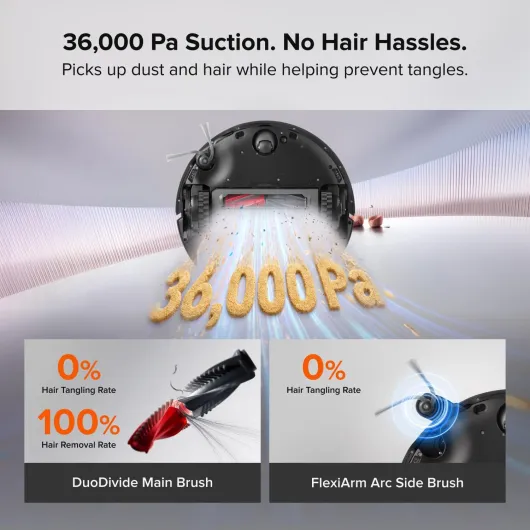
On the cleaning side, this thing is no joke. The 36,000 Pa suction figure sounds like marketing, but in practice, on carpets, it pulls up a lot more fine dust than my old robot. First run on my living room rug filled the dust bin with a mix of dog hair and that nasty grey dust you only usually see when you deep-clean. Since then, on regular runs, the bin content is lighter, which tells me it actually did a deeper first pass. Crumbs, sand from shoes and pet hair are all handled easily on both carpet and hard floors.
The zero-tangle system is one of the main reasons I like it. With my previous robot, I had to cut hair out of the brush every week. With the Saros 20 Neo, after a few weeks with two people and a dog, the brush is almost clean. A few strands here and there, but nothing wrapped tight around the roller. That alone saves time and is honestly one of the most practical differences compared to mid-range bots.
The mopping is also much better than the usual “wet cloth” style. The two spinning pads scrub at around 200 RPM with around 14 N of pressure. In real life, that means dried coffee drops and light kitchen grease disappear in one pass. For really baked-on stuff, like dried cereal or old sauce, it might need a second pass or a quick manual pre-wipe, but for normal daily mess it does a solid job. The warm water helps reduce streaks; my tiles look more like they’ve been mopped by hand than just wiped.
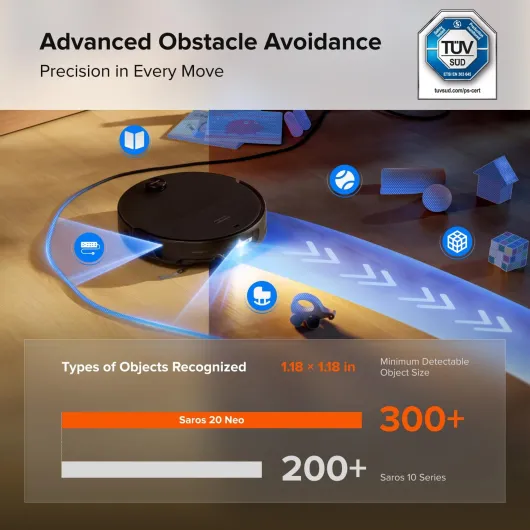
Edge and corner cleaning is where FlexiArm helps. It actually gets close to skirting boards and toe-kick areas. Is it perfect? No. You’ll still find the odd crumb in a tight corner, but less than with older round robots. For obstacle avoidance, it’s good but not magic. It usually avoids shoes and cables, but small toys or very thin wires can still confuse it occasionally. I wouldn’t leave a mess of cables on the floor and expect miracles. Overall, though, for general everyday dirt, hair and light stains, the performance is easily in the top tier of what I’ve used.
What you actually get with the Saros 20 Neo
Out of the box, you get the robot itself, the big 10‑in‑1 dock, the dock base, power cable, two rotating mop modules and a chunky quick-start guide. Setup is straightforward: plug in the dock, clip the ramp, stick the mops on, fill the water tank and add the robot in the app via QR code. First mapping run for my roughly 80 m² floor took under 15 minutes and was surprisingly precise, with clear room separation.
The dock is basically a maintenance station. It empties the dust bin into a bag (Roborock claims up to about two months, which seems realistic for my use), refills the robot’s water tank with warm water, washes the mops with 100°C hot water, and then dries them with warm air. You can also add detergent and let it auto-dose. This matters because it means less fiddling: I’m mostly just topping up water and changing the dust bag every few weeks.
The robot itself is a low-profile unit with a retractable LiDAR on top, plus front camera and structured light sensors. On paper, it can recognise 300+ objects and climb thresholds up to 3.46 in (double-layer) and carpets up to 1.81 in, with its AdaptiLift chassis lifting it over bumps. In real life, it does handle my thick rugs and door bars better than any robot I’ve used before, and it rarely gets stuck.
Control-wise, you’ve got three options: the app (which you’ll use 95% of the time), the buttons on the robot, and voice control via smart assistants. The app is where everything happens: map editing, custom room settings, schedules, stain-target modes, pet features, the whole lot. It’s powerful but also a bit overwhelming at first. You don’t have to use every option, but it takes a couple of days to dial in the behaviour you like.
Pros
- Very strong suction and genuinely effective mopping with spinning pads and warm water
- Zero-tangle brush and auto-empty dock reduce maintenance a lot, especially with pets
- Smart navigation, accurate mapping, and good threshold/rug handling mean fewer rescues
Cons
- High price and bulky dock that needs a dedicated space
- Object recognition is good but still not reliable enough to ignore small items and cables
Conclusion
Editor's rating
The Roborock Saros 20 Neo is a serious bit of kit for people who are done playing with basic robot vacuums. It vacuums well, mops better than most, handles thresholds and thick rugs without drama, and the zero‑tangle system actually cuts down on one of the most annoying chores: cleaning hair out of the brush. The big dock is not just for show; auto-emptying, hot-water mop washing, and drying make the whole setup feel much more hands-off than cheaper robots that pretend to be similar.
It’s not perfect. The price is high, the dock is bulky, and the object recognition is good but not magic. You still need to keep the worst cable mess off the floor, and the app takes a bit of time to configure. But once you’ve set it up, it’s one of the few robots I’d trust to keep a mixed floor (carpets + hard floors, plus pets) in decent shape with very little intervention.
If you live in a small, simple flat, don’t have pets, or don’t mind vacuuming yourself, this is probably overkill and you can save money with a simpler model. If you’ve got pets, kids, a fairly complex layout, and you want something that genuinely reduces your cleaning workload, the Saros 20 Neo is a strong option. It’s expensive, but it actually behaves like a premium tool, not just a fancy toy.