
Summary
Editor's rating
Value for money: solid, with a few trade‑offs
Design: simple, low profile, mostly practical
Battery life and charging: long runs, but not magic
Packaging and setup: safe, simple, and not too fussy
Performance: strong suction and decent navigation in real life
What you actually get with the Proscenic Q10
Vacuum + mop effectiveness: good for daily upkeep, not deep cleaning
Pros
- Strong suction and good pet hair pickup on hard floors and rugs
- LiDAR navigation with reliable mapping, room cleaning and no‑go zones
- Long battery life that easily covers small to medium homes in one run
Cons
- Mopping is light and doesn’t replace a proper manual mop for tough stains
- No self‑emptying dock and requires regular manual bin emptying and pad washing

Specifications
View full product page →| Brand | Proscenic |
A robot vacuum that actually does the boring stuff for you
I’ve been using the Proscenic Q10 for a few weeks in a flat with mixed floors: laminate in the living room, tiles in the kitchen and hallway, and a couple of medium‑pile rugs. We also have a dog that sheds like crazy, so the floor is never clean for long. I bought this mainly to stop vacuuming every day and to see if a mid‑range robot could actually handle pet hair without constant babysitting.
In day‑to‑day use, the Q10 feels like a practical bit of kit rather than a gadget you play with for two days and forget. I run it almost every day, usually on a schedule in the morning. It maps the place, goes around in a proper pattern instead of randomly bumping into walls, and then returns to the dock by itself. That’s the basic promise of any robot vacuum, and here it’s mostly delivered without drama.
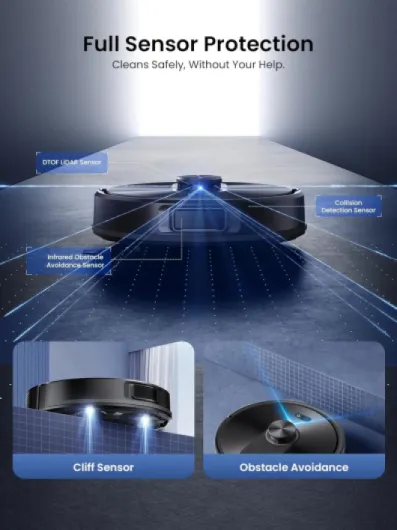
It’s not perfect though. The app is a bit clunky in places, the mopping is more of a light wipe than a deep clean, and you still have to do some manual vacuuming from time to time, especially corners and edges near clutter. Also, if you have a lot of cables lying around, you’ll need to tidy up or set up no‑go zones, otherwise it will occasionally get itself into dumb situations.
Overall, after a few weeks, my feeling is pretty simple: it gets a lot of the boring daily cleaning done, it saves me time, but it’s not magic. If you expect a robot to replace a proper deep vacuum and mop session completely, you’ll be disappointed. If you just want your floors to stay reasonably clean with minimal effort, it’s a solid helper.
Value for money: solid, with a few trade‑offs
Looking at the price range and what you actually get, the Q10 sits in a pretty reasonable spot. It’s not in the super cheap bracket, but it’s also not in the top tier with self‑emptying docks and fancy AI cameras. For the money, you get strong suction, LiDAR navigation, a combined vacuum and mop function, multi‑floor maps, and app control with no‑go zones. On paper, that’s a lot of features for what you pay.
In practice, the value comes down to how much you use it. If you’re going to run it once a week, it’s a bit of a waste. Where it makes sense is if you let it clean several times a week or daily. That’s when you really feel the time saved and see less dust and hair everywhere. In my case, it has cut down manual vacuuming time a lot, which for me justifies the cost. It’s still not replacing a proper deep clean, but it delays how often I need to do that.
There are some compromises because of the price. No self‑emptying base, no super advanced obstacle recognition with cameras, and the app isn’t as polished as some bigger brands. You also have to do some basic maintenance: empty the bin, rinse the filter, clean the brushes, and wash the mop pads regularly. If you want something totally hands‑off, you’ll need to spend more. But then again, those higher‑end models are often double the price or more.
Overall, I’d say the Q10 offers good value for money if your expectations are realistic. It’s a solid mid‑range robot that covers the basics well and throws in some extra features like multi‑map support and adjustable mopping. If you’re on a tighter budget and can live without LiDAR mapping, there are cheaper options. If you want luxury features, you’ll have to step up in price. For most people who just want their floors kept in check with minimal effort, this hits a good balance between cost and functionality.

Design: simple, low profile, mostly practical
The design is fairly standard: round, black, nothing flashy. That’s not a bad thing. It doesn’t scream for attention in the living room, and it hides dust and fingerprints better than white models I’ve had before. The top has the LiDAR turret in the middle, a single main button, and a simple logo. No useless shiny chrome bits that scratch after two days. It looks like what it is: a functional robot vacuum, not a piece of decor.
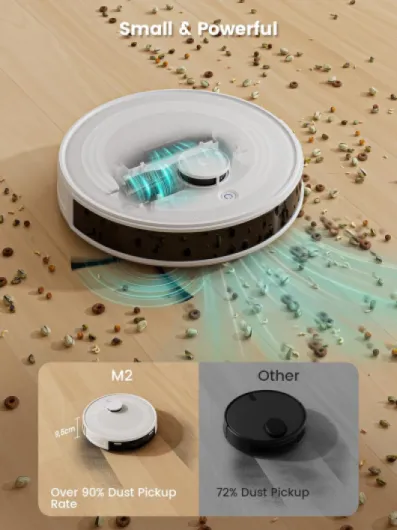
The low height (about 9.7 cm) actually matters. It manages to get under my sofa, TV unit, and bed where my old, slightly taller robot couldn’t. The first time I ran it, the dustbin filled up with all the grey fluff and dog hair that had been living under there for months, which was both gross and satisfying. That alone made a visible difference in how clean the place felt. The side brushes are a bit long and flexible, which helps pull debris from edges, but they can also sometimes flick lighter crumbs away if the angle is wrong.
On the downside, the glossy ring around the LiDAR turret picks up small scratches over time, especially if it brushes against low furniture. It doesn’t affect performance, but if you care about cosmetics, it will look a bit worn after a while. Also, because it’s round, it still struggles a bit to get into tight 90‑degree corners. That’s not unique to this model; it’s just how most round robots are. I still have to occasionally hit some corners with a handheld vacuum.
From a practical angle, the design is fine: easy to wipe, no weird crevices where dust gets stuck, and the bumpers do their job. It’s not pretty or premium‑looking, but it feels like something you don’t have to baby. I’d rather have that than a glossy showpiece that I’m scared to scratch.
Battery life and charging: long runs, but not magic
The battery is one of the stronger points here. The 3,200mAh battery is rated for up to 200 minutes, and in my real use that’s not too far off, depending on the suction level. On standard mode with some mixed hard floors and a couple of rugs, it usually finishes my 60 m² flat with 40–50% battery left. If I bump suction to high for the whole place, it drops faster, but it still finishes in one go. For a small to medium home, you probably won’t have to think about the battery at all.
If you have a larger place, it can still handle it thanks to the auto recharge and resume function. I tested this by setting it to clean the whole flat twice in a row. At some point it went back to the dock by itself, charged for a while, then went back out and continued from roughly where it left off. It’s not lightning fast to charge, but since it’s usually working when I’m out or doing something else, I don’t really care as long as it finishes the job in the end.
One thing to keep in mind is that battery life drops a bit if you constantly run it on max suction and high water flow for mopping. That’s normal, but worth mentioning. In that scenario, you’re looking more at around 90–120 minutes rather than the full 200. Still, that’s enough for a typical flat or even a small house floor. Also, if your place has a lot of obstacles, the constant stopping, turning, and re‑routing eats more battery than a clear open layout.
Overall, the battery and charging system are basically “set and forget”. I just make sure the dock has some space around it and the robot can see it on the map. As long as the dock isn’t hidden behind furniture or in a weird corner, the robot finds it reliably. You don’t get fancy fast charging or a self‑emptying station, but for the price point, the battery performance is more than decent.
Packaging and setup: safe, simple, and not too fussy
The packaging is pretty straightforward and actually reassuring. The robot comes in a sturdy outer box with an inner box, and everything is well protected with foam and cardboard. Nothing arrived scratched or loose. You can tell they thought at least a bit about making sure the robot survives shipping. There’s no fancy unboxing experience, but honestly I prefer that to excessive plastic and pointless layers.
Inside, everything is clearly separated: robot in the middle, dock and power adapter in one side compartment, accessories in another. The manual is basic but clear enough. It walks you through removing the protective films, plugging in the dock, charging the robot for the first time, and downloading the app. I had it unboxed, charging, and connected to Wi‑Fi in under 20 minutes without needing to search for online guides. The QR code in the manual links straight to the right app, which avoids confusion.
One thing I liked is that they include spare parts right away: extra side brushes, extra HEPA filters, and two mop pads. That means you can rotate things instead of having to buy replacements immediately. For someone who doesn’t want to think about consumables from day one, that’s practical. The only mildly annoying part is peeling off all the little bits of protective film, but that’s a one‑time thing.
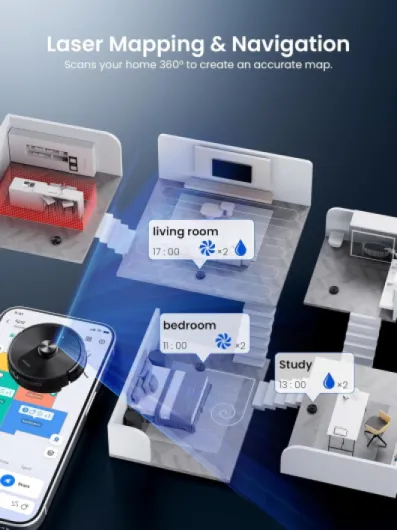
Once it’s set up, the first mapping run is simple: you just start a full cleaning and let it wander. It took about 15–20 minutes to map my flat, which matches what they claim. After that, you can label rooms, set no‑go zones, and tweak schedules. So from box to first proper mapped clean, you’re looking at less than an hour, including charging enough to run a mapping pass. Overall, packaging and setup are functional and user‑friendly, nothing fancy but no headaches either.
Performance: strong suction and decent navigation in real life
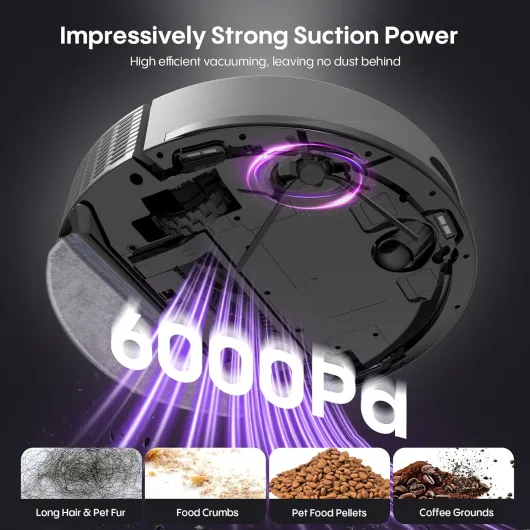
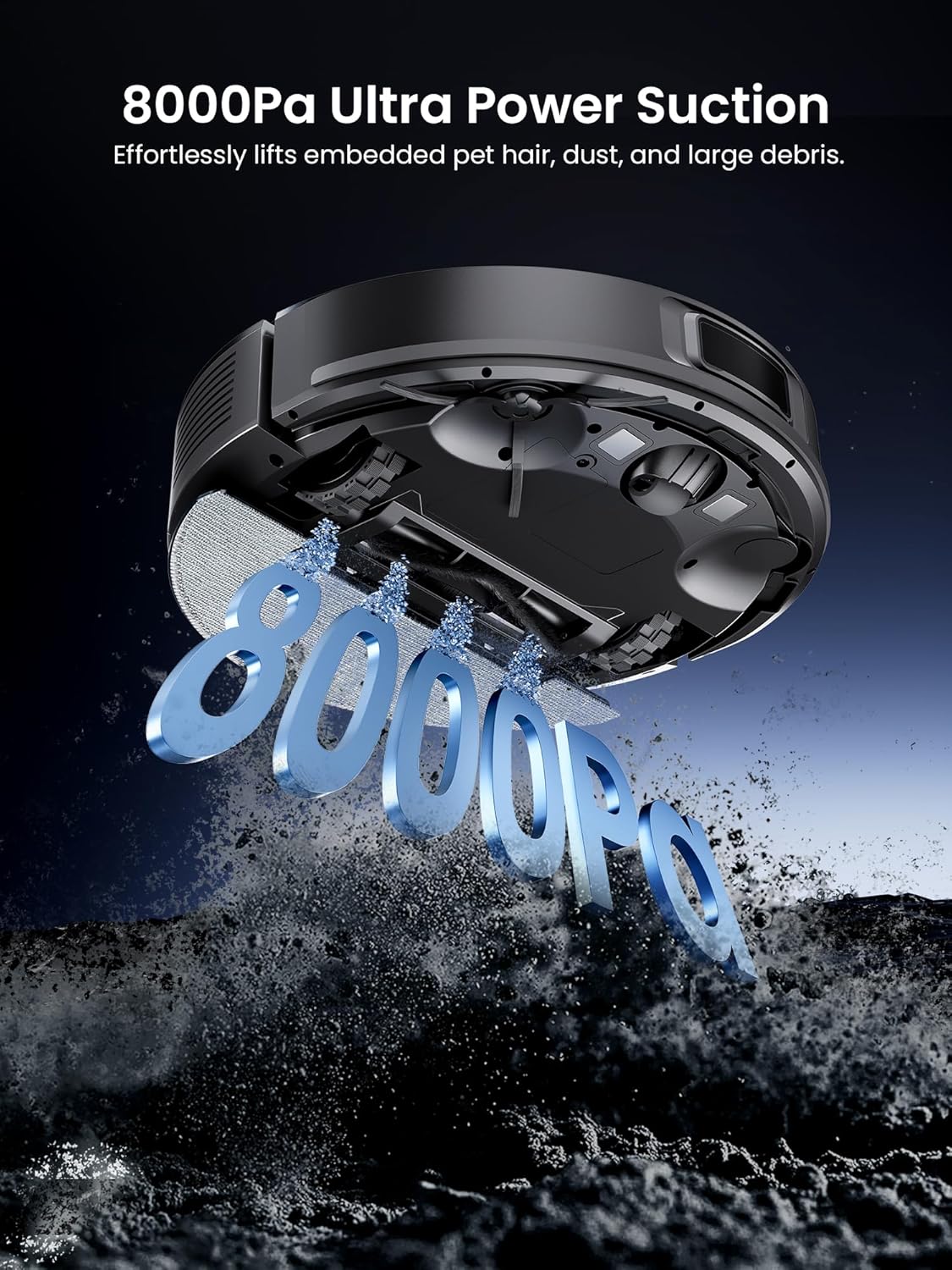
Performance‑wise, the Q10 is pretty solid. The 8000Pa suction number sounds like marketing, but in practice it does pick up a lot. On hard floors, it gets crumbs, pet hair, dust, and even sand‑like dirt near the entrance without needing multiple passes. On my medium‑pile rug, I usually set it to a higher suction level in the app, and you can hear it ramp up. It doesn’t dig as deep as a proper upright vacuum, but it gets enough out that the rug looks visibly cleaner and feels better underfoot.
The LiDAR navigation is what makes daily use bearable. It does proper straight lines in a zigzag pattern instead of randomly bouncing. My place was mapped in about 10–15 minutes on the first run, and since then it goes room by room in a logical order. It rarely misses areas unless there’s new clutter blocking it. It also handles light obstacles like chair legs and table bases without getting too confused. For things like cables and socks, though, it can still get stuck, so you either tidy up or set no‑go zones in the app.
Edge cleaning is okay but not perfect. It will follow along walls and try to reach into skirting board edges with the side brush, but if you have deep gaps or weird angles, it leaves a bit of dust behind. In those spots, I still do a manual vacuum every week or so. It does handle transitions between tiles, laminate, and rugs pretty well. It climbs onto my rugs without issue and doesn’t get stuck on the small threshold between kitchen and hallway.
Noise level is reasonable. On standard mode it’s around the background of a normal conversation. You can still watch TV but you’ll notice it. On max suction it’s louder, obviously, but still not insane. I wouldn’t run max mode if I was working on calls, but for normal cleaning when you’re doing something else, it’s fine. Overall, performance is good for daily maintenance. For deep spring cleaning, you’ll still want a normal vacuum, but you’ll need it a lot less often.
What you actually get with the Proscenic Q10
Out of the box, you get the robot itself, the charging base with power adapter, a couple of spare HEPA filters, extra side brushes, two mop pads, a small cleaning brush, and the manual. So you’re basically set for a while without needing to buy accessories immediately, which is nice. The robot is a standard round shape, about 32 cm in diameter and under 10 cm tall, so it fits under most beds and sofas in my place without getting stuck.
The specs look pretty strong on paper: 8000Pa suction, up to 200 minutes of runtime, a combined dustbin and 250 ml water tank, and LiDAR navigation that can store up to 5 floor maps. The app lets you set schedules, no‑go zones, virtual walls, and even different cleaning modes like zigzag or matrix. It also works with voice assistants if you’re into that, but honestly I mostly just use the app and the physical start/pause button.
Marketing aside, in practice the big points for me are: the suction power, how smart the navigation really is, and how often I have to empty the bin and clean the brushes. For a small to medium home, the bin size (around 350 ml dust capacity) is fine if you run it regularly. If you only run it once a week in a dusty place with pets, you’ll probably have to empty it mid‑run. The water tank is enough for a full pass of my 60 m² flat on medium water level without running dry.
Compared to cheaper random‑pattern robot vacuums I’ve tried before, this one feels more like an actual tool than a toy. It knows where it’s going, it doesn’t keep re‑doing the same spot ten times, and you can clearly see the map in the app. There’s no self‑emptying base or fancy docking station here, so if you want that kind of full‑on convenience, this isn’t it. But for the price bracket it sits in, the feature set is pretty complete.
Vacuum + mop effectiveness: good for daily upkeep, not deep cleaning
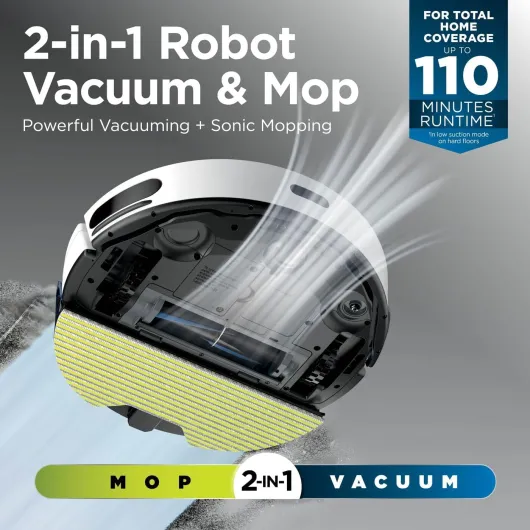
The Q10 is a 3‑in‑1 robot (vacuum, sweep with side brushes, and mop), and in practice it does a good job as a daily maintenance tool. For vacuuming, it’s clearly above the cheap robots I’ve used before. Pet hair is where it really proves itself: after a full run, the dustbin is usually full of hair and fine dust, and there’s less floating around on the floors and stuck to furniture. Our dog’s usual hair tumbleweeds in the hallway basically disappeared after a few days of running it regularly.
The mopping function is more of a constant light wipe than a scrub. The 250 ml water tank and 3‑level water control are decent. On medium setting, the mop pad gets evenly damp and leaves a slight sheen on the tiles and laminate, but it doesn’t soak the floor. It’s enough to pick up light footprints, dust, and small dried spots from everyday life. It will not remove old, sticky stains or dried food on the first pass. For that, I still grab a manual mop or a cloth. Think of it as something that keeps the floor fresher between proper mops.
One thing I liked is that you can choose cleaning patterns like zigzag or matrix. The matrix pattern (cross‑hatch) takes longer but does feel more thorough, especially in the kitchen where there’s often more grime. Still, if you spill something sugary or greasy, you’re not going to magically fix it with this robot. It’s good for prevention, not heavy recovery. Also, remember to wash the mop pads regularly; after two or three runs they start to smell a bit if you just leave them on the robot.
In terms of overall effectiveness, my flat clearly looks cleaner day to day. I vacuum manually maybe once every week or two instead of every other day. The robot keeps dust and hair under control, and the light mopping stops the floors from feeling gritty. If you expect spotless, hotel‑style floors, this won’t do that on its own. If you just want the place to stay reasonably clean without thinking about it, it does the job.
Pros
- Strong suction and good pet hair pickup on hard floors and rugs
- LiDAR navigation with reliable mapping, room cleaning and no‑go zones
- Long battery life that easily covers small to medium homes in one run
Cons
- Mopping is light and doesn’t replace a proper manual mop for tough stains
- No self‑emptying dock and requires regular manual bin emptying and pad washing
Conclusion
Editor's rating
After using the Proscenic Q10 regularly, my opinion is that it’s a solid, no‑nonsense robot vacuum for everyday cleaning, especially if you have pets or mixed flooring. The suction is strong enough to deal with hair and daily dirt, the LiDAR navigation means it doesn’t wander around like a drunk Roomba, and the battery easily covers small to medium homes in one go. The mopping function is more of a maintenance wipe than a deep clean, but it does help keep floors from feeling grimy between proper mop sessions.
It’s not flawless. The app could be smoother, the mopping won’t replace a real mop, and you still need to do some manual vacuuming in corners and for deep cleaning. There’s no self‑emptying dock, and you have to stay on top of simple maintenance like emptying the bin and washing the pads. But for the price, you get a good mix of features and real‑world usefulness. I’d recommend it to people who are tired of vacuuming every day, live with pets or kids, and want a practical helper rather than a luxury gadget. If you’re very picky about spotless floors or want a completely hands‑off system with auto‑empty and advanced obstacle detection, you’ll probably want to look at higher‑end (and more expensive) options.